Loading the question bank
Lorry and bus · DVSA-based revision questions
Vehicle loading
70 LGV and PCV theory test questions on vehicle loading. Preview the questions below, or open one to read its answer and continue through the whole topic.
Practise
Be marked as you go
A session draws from all 70 of these, weakest first, and marks each answer the moment you give it. Nothing here needs an account.
The questions
20 of 70The first 20 in the order the pack holds them. Open the answer when you want to check yourself; a session draws from all 70 and marks you instead.
How should you load a vehicle?
Spread the load evenly
Load it towards the rear
Load it towards the front
Arrange the load to make it easy for unloading
Show the answer
Spread the load evenlyThis was the right answer
It's your responsibility to make sure that the vehicle's load is spread evenly, to avoid overloading individual axles. Overloading carries severe penalties for the driver and operator.
You're going to drive an articulated lorry with an ISO container on the trailer. How should the container be secured to the trailer?
The container must be secured by ropes
The container must be secured using the locking levers
The container must be held up against the headboard
The container must be sealed
Show the answer
The container must be secured using the locking leversThis was the right answer
ISO (International Standards Organization) cargo containers should only be carried on lorries or trailers with the appropriate securing points. These are designed to lock into the container body.
You're using three sheets to cover your load. Which is the correct overlap?
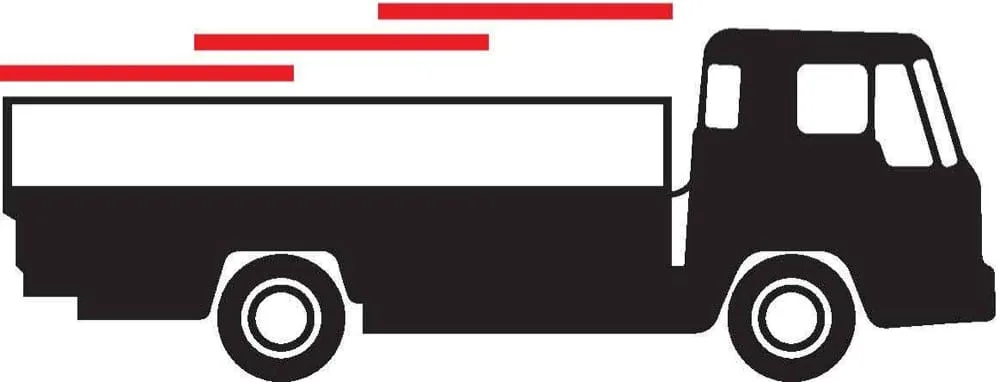
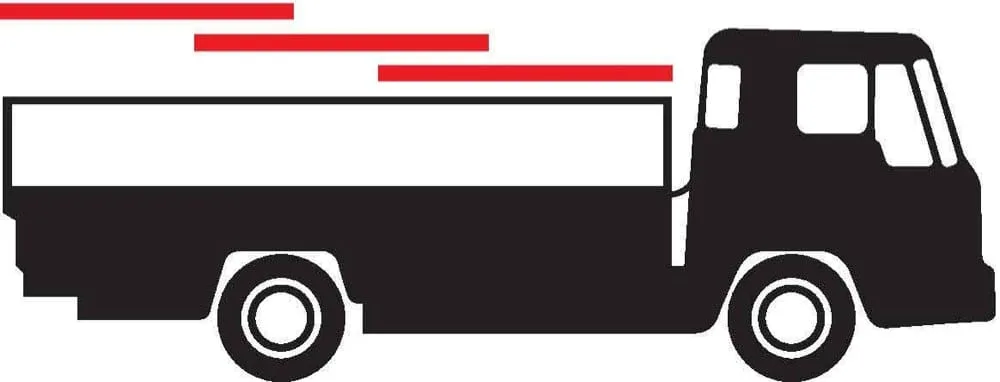
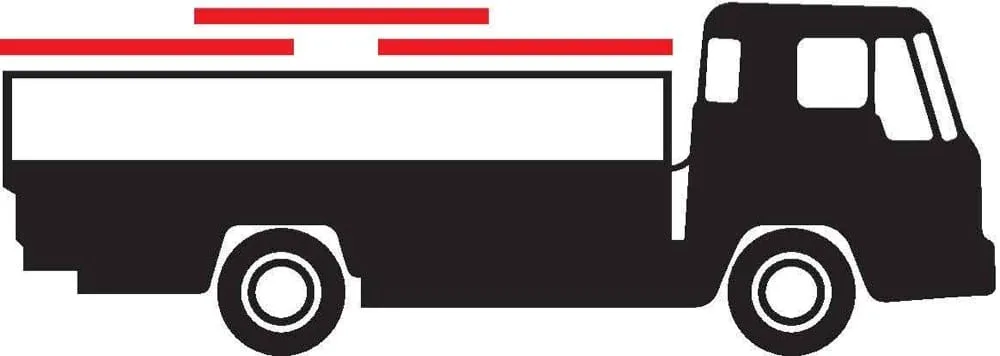
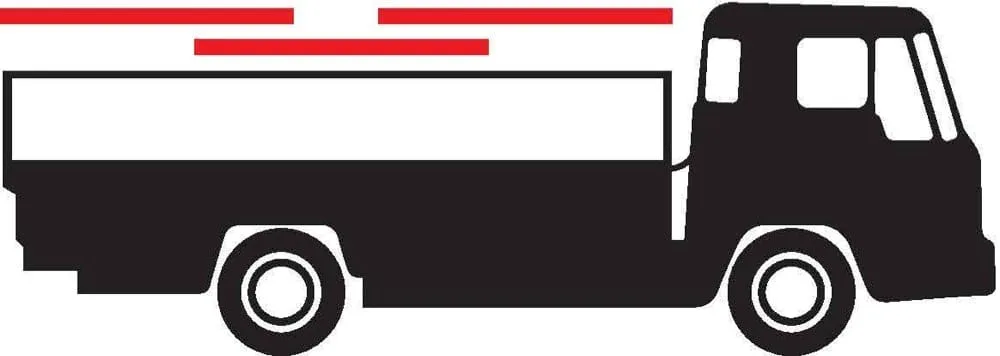
Show the answer
This was the right answerKeep a check in your mirrors as you're driving to make sure that the sheets are secure. Air can force itself under the sheets and work them loose.
You're covering a load using more than one sheet. Why should you start with the rearmost sheet, then work forwards?
To stop you tripping when walking on the load
To stop wind and rain from getting under the sheets
To make it much easier to fold up the sheets
To make it easier to carry longer loads
Show the answer
To stop wind and rain from getting under the sheetsThis was the right answer
If the load is sheeted incorrectly, the wind may get underneath a sheet, making it flap about. This is dangerous, as it can catch unsuspecting pedestrians or cyclists, and it can also seriously reduce the driver's view of what's happening behind.
Under current DVSA guidance, what should secure a load during a journey?
A rated restraint system suitable for the load
A reef knot
A slip knot
A bowline knot
Show the answer
A rated restraint system suitable for the loadThis was the right answer
Use the load plan’s suitable rated restraints and anchorage points. Rope is not a suitable journey load restraint; it may attach a lightweight cover after the load itself is secure. A particular knot does not overcome rope’s uncertain capacity or deterioration.
Why are ropes unsuitable to tie down a load of scrap metal?
Ropes are hard to tie
Ropes will loosen in rain
Ropes are hard to untie
Ropes can wear and snap
Show the answer
Ropes can wear and snapThis was the right answer
Sharp scrap can abrade or cut a rope, causing failure. More generally, current DVSA guidance does not accept rope as journey load restraint. Use the load’s suitable rated restraint system, protecting it from sharp edges.
You're driving an open tipper lorry carrying loose dry sand. Why should you sheet this load?
To stop the handling from being affected
To stop the load from shifting
To stop the load from blowing away
To stop the tipper mechanism from accidentally operating
Show the answer
To stop the load from blowing awayThis was the right answer
If you're carrying a load that consists of loose materials, it must be covered by suitable sheeting. You mustn't risk losing any part of your load. This could cause damage or injury to other road users, and you would be responsible.
What should you do if the load on your lorry becomes insecure?
Continue at a slower speed to ensure the load doesn't fall off
Attach 'hazard' boards to the load to warn other road users
Park and resecure the load before continuing
Inform base at the earliest opportunity
Show the answer
Park and resecure the load before continuingThis was the right answer
Slow down smoothly and find a safe place to stop. Re-secure the load only if you can do so safely and do not continue until it is secure. If it is dangerously unstable, threatens traffic or cannot be recovered safely, stay clear, call 999 and wait for responders.
Tankers carrying liquids can experience the 'wave effect'. What helps to reduce this problem?
Spray guards
Harsh braking
Baffle plates
Wind deflectors
Show the answer
Baffle platesThis was the right answer
Baffles reduce liquid movement and the forces produced during changes of speed or direction, but do not eliminate surge. Some tanks are unbaffled, so know the actual tank and drive smoothly.
You're driving an articulated tanker on a straight road. How will the liquid load affect the vehicle as you brake to a stop?
It will try to push the vehicle forward
It will try to push the vehicle to the side
It will make the trailer wheels bounce
It will make the trailer wheels skid
Show the answer
It will try to push the vehicle forwardThis was the right answer
As the vehicle slows, the liquid tends to keep moving forward and can surge against the front of the tank. Brake early and smoothly with steady pressure, avoiding premature release while coming to a stop. Follow the actual vehicle’s instructions for securing it once stopped.
You're driving a tanker that's half full. The inside of the tank isn't divided into compartments. How should you use the footbrake when you're stopping?
Keep pressure on the brake pedal until you've stopped
Relax pressure on the brake pedal before you've stopped
Pump the brake pedal rapidly
Use the footbrake and parking brake together
Show the answer
Keep pressure on the brake pedal until you've stoppedThis was the right answer
In the stated partly filled, uncompartmented tank, liquid surge can push the vehicle forward. Apply smooth, steady brake pressure and do not release too soon while stopping. Do not pump the brakes or use the parking brake as an extra moving service brake.
Which of these loads is especially vulnerable to road shock and benefits from a suitable air-suspension transport system?
Steel
Timber
Glass
Cables
Show the answer
GlassThis was the right answer
Glass can be damaged by vertical shocks from uneven roads. Suitable air suspension can reduce those shocks, alongside the necessary racks, padding and load restraints. It does not permit faster cornering or replace secure support.
Under the Special Types guidance, which width must a vehicle exceed before an attendant is required on width grounds?
2.6 metres (8 feet 5 inches)
3.0 metres (9 feet 9 inches)
3.3 metres (10 feet 9 inches)
3.5 metres
Show the answer
3.5 metresThis was the right answer
The width condition is more than 3.5 metres, not simply reaching that width. Length and projections can also require an attendant. Check the complete authorisation and route requirements.
On otherwise comparable articulated vehicles, which loading condition can make wheel lock and jack-knifing more likely under harsh braking?
When it's carrying a high load
When its load is carried at the rear of the trailer
When it's unloaded
When it's fully loaded
Show the answer
When it's unloadedThis was the right answer
An empty combination can have less grip available for its strong brakes. Locking trailer wheels can cause trailer swing; loss of tractor stability can produce a jack-knife. Brake early and smoothly. This is not an unconditional ranking across different vehicles or a guarantee of stopping distance.
After visually checking the fifth-wheel jaws and fitting the safety clip, how should you carry out the controlled coupling tug test?
Try to move forward with the trailer parking brake on
Reverse with the trailer parking brake on
Try to move forward with the trailer parking brake off
Reverse with the trailer parking brake off
Show the answer
Try to move forward with the trailer parking brake onThis was the right answer
With the trailer parking brake applied, make the instructed low-gear forward tug to check engagement. The visual inspection and safety clip come before this test. Follow the complete procedure for the actual coupling, including the tractor parking brake and safe line connection stages.
What must you check first when uncoupling or recoupling your trailer?
The lights are working
The tilt-cab mechanism is secure
The trailer brake is applied
The air lines are safely stowed
Show the answer
The trailer brake is appliedThis was the right answer
Check that the trailer parking brake is applied before the coupling or uncoupling operation. Use firm level ground and follow the complete vehicle-specific procedure, including tractor parking-brake use, support legs, connection checks and line handling.
You're uncoupling a lorry and trailer. What should you do after disconnecting the electrical line?
Stow it away safely
Drive forward slowly
Lower the landing gear
Apply the trailer brake
Show the answer
Stow it away safelyThis was the right answer
Disconnect and stow the electrical line safely so that it cannot trail or be damaged. During uncoupling, the trailer brake and lowered landing legs must already secure the trailer before the tractor pulls clear. Follow the full procedure for the actual combination.
Your lorry has a demountable body. What should you check before demounting the body?
The rear doors are open
The legs are up
The body is unloaded and empty
The surface is firm and level
Show the answer
The surface is firm and levelThis was the right answer
If you demount the body on a poor or soft surface, there's a danger of it sinking and becoming difficult to handle. Always think carefully before you demount the body and be sure that the site is suitable.
How should you adjust your mirrors after recoupling your trailer?
To give a full view of your load
To give a clear view of both pairs of rear wheels
To give a view down each side of the trailer
To give a view of the road on the other side
Show the answer
To give a view down each side of the trailerThis was the right answer
The view you get in your mirrors may vary, depending on the size of the trailer and the load it carries. Always adjust your mirrors to ensure that you have the best possible view down each side of the trailer before you drive away.
Your empty short-wheelbase lorry is bouncing on an uneven road. How should you respond before the next bend?
Accelerate sharply to settle the suspension
Assume an empty vehicle can corner faster
Reduce speed smoothly before entering the bend
Brake sharply while turning
Show the answer
Reduce speed smoothly before entering the bendThis was the right answer
Noticeable bouncing can reduce control. Slow smoothly before the bend rather than rely on an empty vehicle’s apparent agility. Vehicle design, loading and road surface all affect its response.
More lorry and bus topics
14 moreEvery question in this bank sits in one of these, and each one is a page like this.
Braking systems65 questionsCarrying passengers69 questionsDrivers' hours and rest periods78 questionsEnvironmental issues70 questionsEssential documents31 questionsIncidents, accidents and emergencies61 questionsLeaving the vehicle26 questionsOther road users83 questionsRestricted view38 questionsRoad and traffic signs85 questionsThe driver102 questionsThe road140 questionsVehicle condition102 questionsVehicle weights and dimensions76 questionsAll lorry and bus questionsThe whole bank, in 15 topics