Loading the question bank
Lorry and bus · DVSA-based revision questions
Environmental issues
70 LGV and PCV theory test questions on environmental issues. Preview the questions below, or open one to read its answer and continue through the whole topic.
Practise
Be marked as you go
A session draws from all 70 of these, weakest first, and marks each answer the moment you give it. Nothing here needs an account.
The questions
20 of 70The first 20 in the order the pack holds them. Open the answer when you want to check yourself; a session draws from all 70 and marks you instead.
Your lorry has been fitted with wind deflectors. How will they affect your vehicle?
They'll increase the fuel consumption
They'll reduce the stability
They'll require increased tyre pressures
They'll reduce the wind resistance
Show the answer
They'll reduce the wind resistanceThis was the right answer
Wind deflectors direct the wind either around or over your vehicle, so reducing the wind resistance. The vehicle then requires less power to make progress against the wind, and so will use less fuel.
What can cab-mounted wind deflectors reduce?
Journey times
Load capacity
Tyre wear
Fuel consumption
Show the answer
Fuel consumptionThis was the right answer
A wind deflector redirects the air flow around the vehicle. This reduces the amount of energy required to drive the vehicle forward and so saves fuel.
How could you reduce your lorry's fuel consumption?
Fit new brake linings
Fit a high-level exhaust pipe
Fit a larger fuel tank
Fit wind deflectors
Show the answer
Fit wind deflectorsThis was the right answer
Wind deflectors reduce a vehicle's wind resistance and so help reduce fuel consumption.
You're a driver who's certified to carry dangerous goods. How long is your certificate valid?
One year
Two years
Five years
Ten years
Show the answer
Five yearsThis was the right answer
The operator of a UK-registered vehicle engaged in the carriage of dangerous goods should make sure that the driver has a valid vocational training certificate. These certificates are valid for five years.
What would help to reduce the impact that your lorry has on the environment?
Driving through town centres
Braking in good time
Planning routes to avoid motorways
Racing to make up time
Show the answer
Braking in good timeThis was the right answer
Noise, vibration, exhaust emissions and fuel consumption all contribute to the environmental impact made by a lorry.
Good anticipation and forward planning will help to reduce these effects. Braking in good time saves fuel and so helps reduce exhaust emissions. It also helps reduce wear on the vehicle, its tyres and the road surface.
What's reduced by fitting a fly sheet tightly over a tipper body?
Drag effect
Steering effort
Legal load weight
Load capacity
Show the answer
Drag effectThis was the right answer
Drag is caused by wind entering the cavity of an uncovered tipper. If the cavity is covered, then the drag is reduced.
How could you reduce the fuel consumption of your lorry?
Brake late as often as you can
Fit a cab-mounted wind deflector
Avoid sheeting any bulky loads
Try to increase your overall speed
Show the answer
Fit a cab-mounted wind deflectorThis was the right answer
Wind deflectors lower a vehicle's wind resistance. The vehicle therefore requires less energy to drive it forward, and this reduces its fuel consumption. Fuel-efficient driving techniques, correct tyre pressures and proper maintenance all help to maximise fuel efficiency.
When may red diesel be used?
For operators to reduce running costs
For authorised purposes only
For garages to test-drive repaired vehicles
For environmental purposes
Show the answer
For authorised purposes onlyThis was the right answer
Red diesel is subject to less excise duty than standard diesel, so it's considerably cheaper. It may only be used for authorised purposes. Any driver whose vehicle is found to be using this fuel illegally faces penalties.
You're driving a lorry with a loaded skip. Why should the skip be covered with a net?
To prevent rubbish from falling out of it
To protect the contents from the weather
To make it more visible to other traffic
To stop others from adding to the load
Show the answer
To prevent rubbish from falling out of itThis was the right answer
If the load isn't covered, rubbish can be blown onto the carriageway. This can cause danger for other road users, as well as environmental damage. It may also lead to legal action against both the driver and the operator.
What must you do when you park a lorry weighing more than 7.5 tonnes on a verge for essential loading?
Sign the collection note
Display an orange badge
Obtain the owner's permission
Make sure the lorry is always attended
Show the answer
Make sure the lorry is always attendedThis was the right answer
Goods vehicles with a maximum authorised mass of more than 7.5 tonnes (including any trailer) mustn't be parked on a verge without police permission. The only exception is when this is essential for loading and unloading. In these cases, the vehicle mustn't be left unattended.
What must you have before you can leave a lorry weighing more than 7.5 tonnes unattended on a verge?
Police permission
A warning triangle
The owner's permission
A loading permit
Show the answer
Police permissionThis was the right answer
If your vehicle is to be left unattended on a verge, you must first get permission from the police.
What can help to reduce fuel consumption?
Changing filters regularly
Keeping tyres under-inflated
Always using gears in sequence
Keeping the rev counter in the amber band
Show the answer
Changing filters regularlyThis was the right answer
Poorly maintained engines use more fuel and emit more exhaust fumes than those that are well maintained. Filters need to be changed on a regular basis. Remember that members of the public are encouraged to report vehicles emitting excessive exhaust fumes.
What will a correctly adjusted air deflector do?
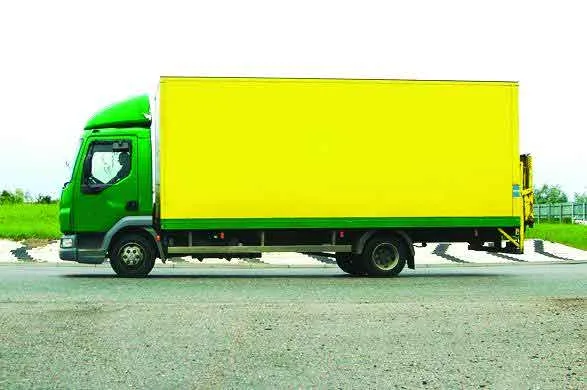
Save fuel
Reduce tyre wear
Reduce road-surface wear
Cut loading time
Show the answer
Save fuelThis was the right answer
Correctly adjusted air deflectors will save fuel. They should be adjusted to guide the airflow over the highest point at the front of the trailer or load and body.
What would staff from HM Revenue and Customs (HMRC) be looking for at a roadside check?
Red diesel
Vehicle defects
Drivers' hours records
Exhaust emissions
Show the answer
Red dieselThis was the right answer
HMRC officers can check and sample fuel to establish whether rebated red diesel is being used lawfully. Permission depends on an eligible machine and permitted use; construction work does not provide a general exemption. Ordinary road freight must not treat red diesel as a cheaper substitute.
Why should the height of a load be kept to a minimum?
To reduce aerodynamic drag
To increase rolling resistance
To increase momentum
To reduce unloading time
Show the answer
To reduce aerodynamic dragThis was the right answer
Keeping the height of the load as low as possible will reduce the wind resistance of the vehicle. This will help to save fuel. It's particularly relevant when using a flat-bodied lorry or trailer.
What would be affected by a vehicle with faulty suspension?
Overhead gantries
Road surfaces
Tyre pressures
Engine performance
Show the answer
Road surfacesThis was the right answer
Faulty suspension, including ineffective dampers, can increase changing wheel loads and road deterioration. The vehicle’s static weight already acts on the road with sound suspension. Report the defect and arrange repair; there is no universal damage percentage or automatic conclusion about nearby buildings or buried services.
Why does the tram shown avoid diesel or petrol engine exhaust along its route?
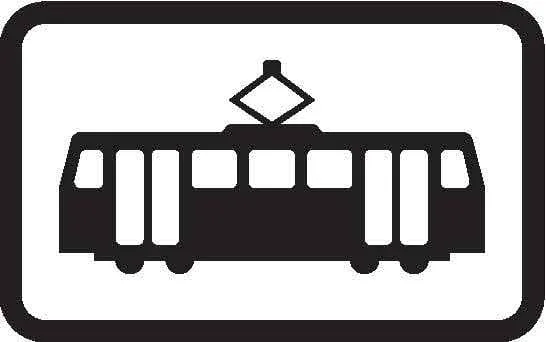
It uses solar power
It uses diesel fuel
It uses electricity
It uses unleaded fuel
Show the answer
It uses electricityThis was the right answer
The tram is electrically powered rather than burning diesel or petrol in an onboard engine. This avoids that local engine exhaust. Electricity generation, manufacturing and wear still have environmental impacts, so electric traction is not a claim of zero lifecycle pollution.
Which vehicles are most likely to cause severe damage to road surfaces?
Lorries
Cars
Motorcycles
Bicycles
Show the answer
LorriesThis was the right answer
Lorries and buses are much heavier than cars and will have a greater impact on the road surface.
What is a purpose of a load-equalising, road-friendly air-suspension system?
The fuel system
Tachograph accuracy
Engine emissions
To help protect the load, chassis and road
Show the answer
To help protect the load, chassis and roadThis was the right answer
A suitably designed system adapts springing to the load and equalises axle loading, helping protect the load, chassis and road. It does not permit overloading or prove that every air suspension reduces vibration in buried services.
How can you help to reduce the impact of road transport on the environment?
By avoiding high gears
By reducing rest periods
By braking in good time
By increasing your overall speed
Show the answer
By braking in good timeThis was the right answer
Good forward planning will reduce fuel consumption and engine emissions. This will cause less wear on the vehicle and its tyres, as well as reducing environmental pollution.
More lorry and bus topics
14 moreEvery question in this bank sits in one of these, and each one is a page like this.
Braking systems65 questionsCarrying passengers69 questionsDrivers' hours and rest periods78 questionsEssential documents31 questionsIncidents, accidents and emergencies61 questionsLeaving the vehicle26 questionsOther road users83 questionsRestricted view38 questionsRoad and traffic signs85 questionsThe driver102 questionsThe road140 questionsVehicle condition102 questionsVehicle loading70 questionsVehicle weights and dimensions76 questionsAll lorry and bus questionsThe whole bank, in 15 topics