Loading the question bank
Lorry and bus · DVSA-based revision questions
Carrying passengers
69 LGV and PCV theory test questions on carrying passengers. Preview the questions below, or open one to read its answer and continue through the whole topic.
Practise
Be marked as you go
A session draws from all 69 of these, weakest first, and marks each answer the moment you give it. Nothing here needs an account.
The questions
20 of 69The first 20 in the order the pack holds them. Open the answer when you want to check yourself; a session draws from all 69 and marks you instead.
What's your main responsibility as a bus driver?
The safety and comfort of your passengers
Keeping to a strict timetable
The collecting of fares
The issuing of tickets
Show the answer
The safety and comfort of your passengersThis was the right answer
Your passengers should be your first consideration. It's your responsibility to deliver them to their destination safely and on time. You should also treat passengers courteously at all times.
How can a bus driver show care for their passengers?
By taking fares while moving, to save time
By reaching destinations early
By not speaking when taking fares
By stopping close to the kerb
Show the answer
By stopping close to the kerbThis was the right answer
At bus stops, stop close to the kerb, where it's safe and convenient for your passengers to get on and off. Accelerating as you move off can easily unsteady a passenger. Try to wait until all passengers are seated or settled before moving off.
What's the main reason for using smooth acceleration when you're driving a bus?
To reduce wear on the tyres
To reduce wear on the engine
To improve fuel consumption
To improve passenger comfort
Show the answer
To improve passenger comfortThis was the right answer
Operators often publicise journeys as being comfortable, convenient and fast. You play an important part in delivering this standard of service.
How can you avoid harsh braking?
Pump the brakes when approaching a bus stop
Use only the gears to slow down
Use the parking brake just before stopping
Plan ahead and take early action on all stops
Show the answer
Plan ahead and take early action on all stopsThis was the right answer
Your first duty is to your paying customers, who want to reach their destination comfortably and safely. Harsh braking can cause your passengers to be thrown forward on the bus, so avoid this by looking and planning well ahead. Give yourself plenty of time to react to traffic situations.
Where are passengers likely to be thrown when a bus driver brakes harshly?
To the front of the bus
To the rear of the bus
To the nearside
To the offside
Show the answer
To the front of the busThis was the right answer
When approaching hazards or bus stops, you should always be aware of how your passengers will be affected by the change in speed. Late, harsh braking as passengers leave their seats can take them by surprise and cause them to fall towards the front of the bus, possibly injuring themselves or others. Wherever possible, avoid harsh braking by planning ahead, giving yourself time to reduce speed smoothly.
How can you avoid harsh braking?
Gently apply the parking brake
Plan ahead and take early action
Slow down by using your gears only
Pump the brake pedal several times
Show the answer
Plan ahead and take early actionThis was the right answer
Always look well ahead. Early planning and anticipation will help you avoid the need to brake harshly. It's important that you give your passengers a smooth journey, especially if any of them are having to stand.
When would passengers be most likely to notice weight transfer?
When the vehicle is parking
When the vehicle is cornering
When the vehicle is reversing
When the vehicle is overtaking
Show the answer
When the vehicle is corneringThis was the right answer
A smooth ride at all times isn't always easy to achieve. However, scanning ahead for hazards will help you avoid late braking and cornering too fast.
Well ahead of you are traffic lights on green. What should you do in case the lights change to red?
Accelerate to make sure you can cross before they change
Slow down to avoid the need to stop suddenly
Accelerate, but warn your passengers you may have to stop
Carry on at a constant speed, but be ready to sound your horn
Show the answer
Slow down to avoid the need to stop suddenlyThis was the right answer
If you're approaching a set of traffic lights and you can see they've been on green for a while, be prepared for them to change. Ease off the accelerator and be ready to come to a gradual stop if you need to. Don't try to beat the red light; it may change as you come closer, causing you to brake late and harshly. Think of your passengers.
Why should a bus driver avoid stopping harshly?
To preserve the tyres
To avoid wear on the brakes
To keep the passengers safe
To stop the suspension bouncing
Show the answer
To keep the passengers safeThis was the right answer
Passengers are very vulnerable when they're standing in a moving vehicle. Inconsiderate use of the footbrake can easily cause them injury - especially if they're young or infirm. Some passengers may not wait until you've stopped before leaving their seat. If you seem to be in a hurry, they may even leave their seat early because they don't want to feel responsible for holding you up.
Where may passengers be thrown when a bus takes a bend too fast?
Towards the outside of the bend
Towards the inside of the bend
Towards the front of the bus
Towards the rear of the bus
Show the answer
Towards the outside of the bendThis was the right answer
Turning corners or travelling around bends too quickly will push passengers towards the outside of the bend. In addition, the weight of the passengers being transferred to one side of the vehicle will make the bus even more unstable. This will make steering out of the bend more difficult.
What would contribute to the safety and comfort of your passengers?
Giving change on the move
Driving with the door open
Thinking and planning well ahead
Braking hard before reaching a bend
Show the answer
Thinking and planning well aheadThis was the right answer
Thinking and planning well ahead will help you to deal competently and safely with hazards and other road users. A safe, comfortable ride, even when you're under pressure, will be appreciated by your passengers.
What should you be most aware of before moving off from a standstill?
Passengers making phone calls
Passengers smoking on the bus
Passengers asking you directions
Passengers getting off the bus
Show the answer
Passengers getting off the busThis was the right answer
Check your nearside external and internal mirrors before you move away, in case anyone is attempting to board or leave your vehicle. Always give passengers time to be seated safely before you move away.
Your bus is fitted with seat belts. When should a seated passenger aged 14 or over, with no applicable exemption, wear one while travelling?
During journeys of more than 20 minutes
Only when travelling in EU countries
Only when travelling on motorways
At all times
Show the answer
At all timesThis was the right answer
A seated passenger aged 14 or over must use the fitted belt unless an applicable exemption applies. This is not limited to motorways or journeys over a particular duration. A belt reduces the risk of being thrown into interior fittings during a collision or sudden braking.
Which of these is a legal requirement for every bus?
A fire extinguisher
A current timetable
A mobile phone or radio
A working tachograph
Show the answer
A fire extinguisherThis was the right answer
Every bus must carry a fire extinguisher. Make sure that you know where it's located and how to use it, so that you're fully prepared in the event of a fire.
A bus must carry a first-aid kit, stored in a closed compartment. Which location must be clearly labelled?
The location of the air vents
The location of the first-aid equipment
The location of the security cameras
The location of the bus station
Show the answer
The location of the first-aid equipmentThis was the right answer
The kit’s receptacle or closed storage compartment must be clearly marked so it can be found quickly. Check that the required kit is accessible and in good condition. First-aid-kit requirements differ for local-service buses and other vehicle types; know the equipment required on your vehicle.
A passenger is boarding your bus. What does it mean if they're carrying a white stick with a red ring painted on it?
They have a learning difficulty
They have poor vision and hearing
They have a physical disability
They have a speech problem
Show the answer
They have poor vision and hearingThis was the right answer
A person carrying a white stick or a long white cane may be visually impaired. If the stick has a red ring or red-and-white checks painted on it, they also have impaired hearing. Be prepared to help if they appear to need it, or if they ask for assistance.
What should a bus driver do to help passengers have a good journey?
Keep to the timetable regardless of comfort
Drive on before people are seated
Look ahead when issuing tickets
Be courteous and polite
Show the answer
Be courteous and politeThis was the right answer
Nobody likes to be late, but you shouldn't let the pressure of your timetable make you feel you have to rush people. Being pleasant to your passengers and showing them some common courtesies will encourage them to use your service again.
Why should you look at passengers when you're collecting fares from them?
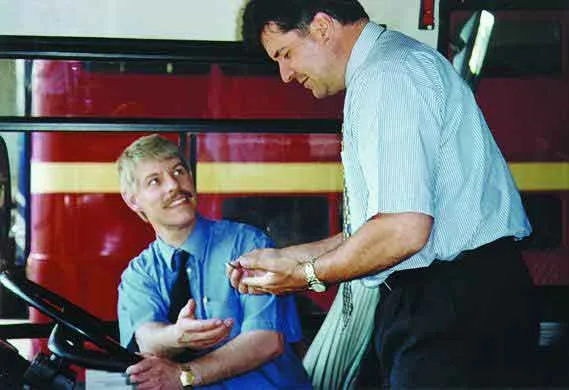
To see if they're carrying bags
To remove the threat of violence
To be courteous and polite
To show them you're in charge
Show the answer
To be courteous and politeThis was the right answer
You're a representative of your company, so showing passengers that their custom is appreciated will encourage them to travel with you again.
What should you do when dealing with passengers who have hearing difficulties?
Shout as loudly as you can
Ask another passenger to help them
Hurry to get them to their seats
Look at them when speaking to them
Show the answer
Look at them when speaking to themThis was the right answer
Passengers who are hard of hearing may want to lip read. Make sure that they're able to see your face clearly when you speak to them.
What's the purpose of a kneeling bus?
To improve passenger comfort on bumpy roads
To help with access under low bridges
To allow the step height to be raised and lowered
To give more clearance over speed ramps
Show the answer
To allow the step height to be raised and loweredThis was the right answer
A kneeling bus uses air suspension to lower the front entrance, giving easier access for passengers. This is especially helpful for people who have difficulty climbing steps, are disabled or use wheelchairs. Make sure you're properly trained to use this equipment.
More lorry and bus topics
14 moreEvery question in this bank sits in one of these, and each one is a page like this.
Braking systems65 questionsDrivers' hours and rest periods78 questionsEnvironmental issues70 questionsEssential documents31 questionsIncidents, accidents and emergencies61 questionsLeaving the vehicle26 questionsOther road users83 questionsRestricted view38 questionsRoad and traffic signs85 questionsThe driver102 questionsThe road140 questionsVehicle condition102 questionsVehicle loading70 questionsVehicle weights and dimensions76 questionsAll lorry and bus questionsThe whole bank, in 15 topics