Loading the question bank
Lorry and bus · DVSA-based revision questions
Road and traffic signs
85 LGV and PCV theory test questions on road and traffic signs. Preview the questions below, or open one to read its answer and continue through the whole topic.
Practise
Be marked as you go
A session draws from all 85 of these, weakest first, and marks each answer the moment you give it. Nothing here needs an account.
The questions
20 of 85The first 20 in the order the pack holds them. Open the answer when you want to check yourself; a session draws from all 85 and marks you instead.
You're driving a lorry with a maximum authorised mass of 38 tonnes on a single carriageway road in England. What's the speed limit for your vehicle after passing this sign?
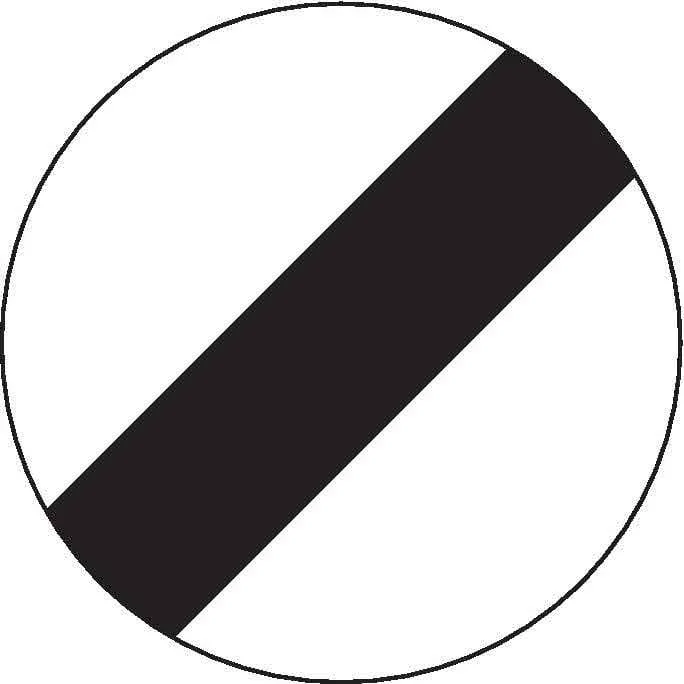
40 mph
50 mph
60 mph
70 mph
Show the answer
50 mphThis was the right answer
The national speed limit for a goods vehicle exceeding 7.5 tonnes on a single carriageway road in England and Wales is 50 mph. In Scotland, the limit is 40 mph. The national speed limit varies for different vehicle categories. You must know the limit that applies to the vehicle you're driving.
You're driving a laden articulated lorry with a maximum authorised mass of 38 tonnes on a dual carriageway in England. What speed limit applies to your vehicle after passing this sign?
40 mph
50 mph
60 mph
70 mph
Show the answer
60 mphThis was the right answer
60 mph may be the legal speed limit for a goods vehicle on a dual carriageway in England and Wales, but it doesn't mean that it's safe to drive at that speed. You should always take into account the road, weather and traffic conditions, and maintain safety margins.
You're driving an articulated lorry. What should you do when you see this sign?
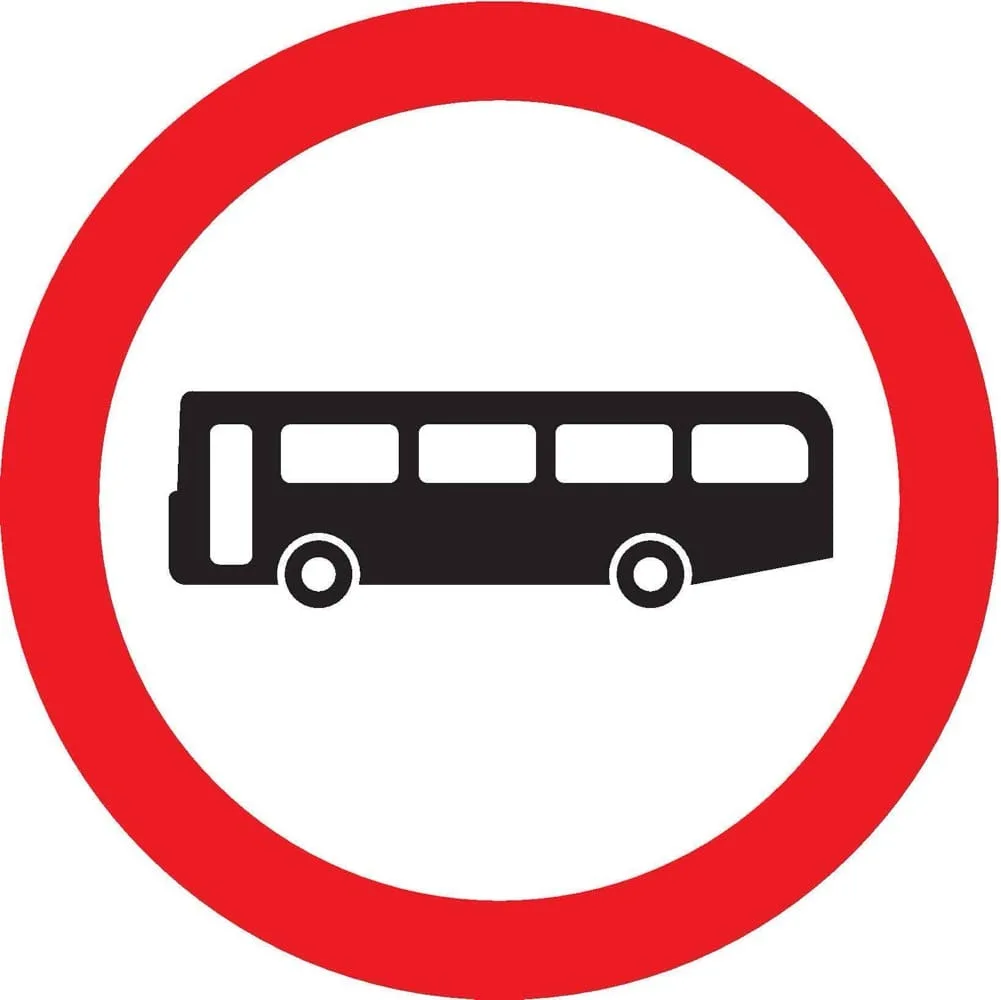
Turn round and find an alternative route
Park safely and arrange alternative transport for the goods
Inform your vehicle operator and await further instructions
Drive past the sign because it doesn't apply to you
Show the answer
Drive past the sign because it doesn't apply to youThis was the right answer
The sign prohibits buses and coaches with more than eight passenger seats and so doesn't apply to you.
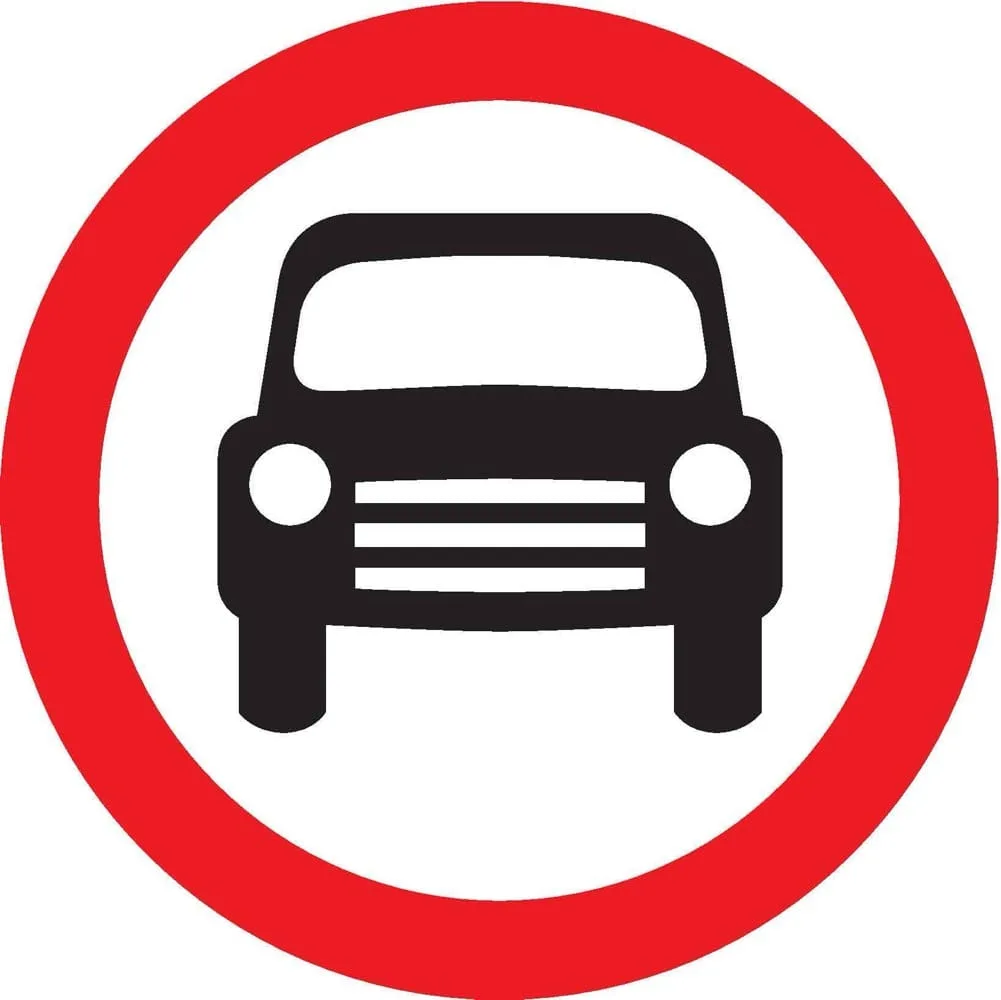
Which of these signs means you can't drive your lorry past this point?
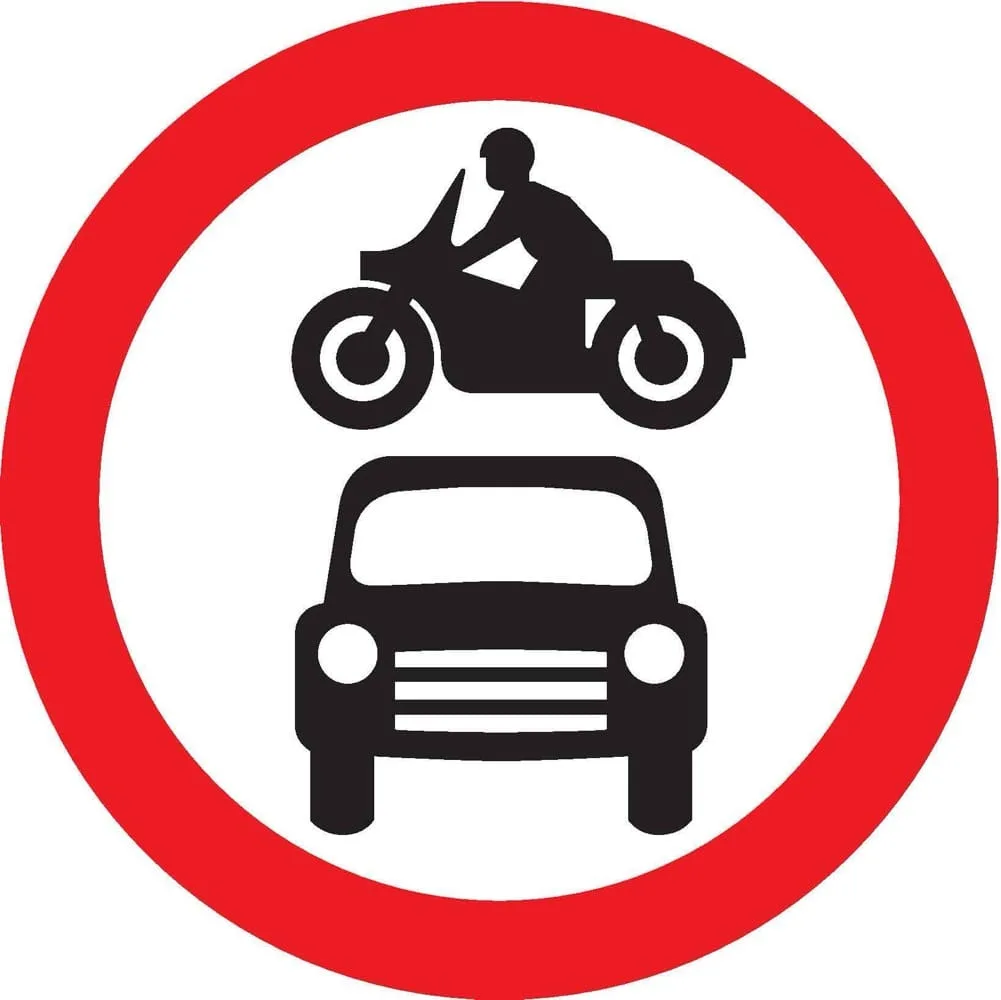
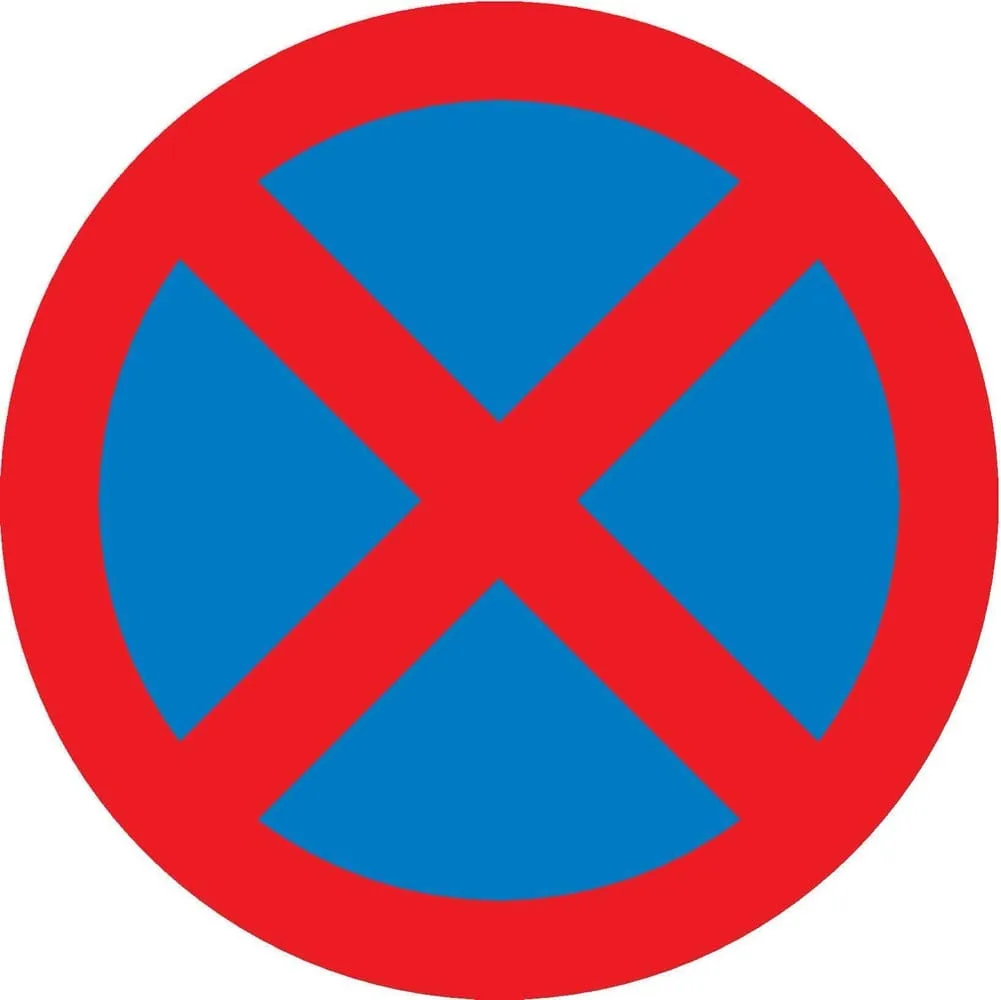
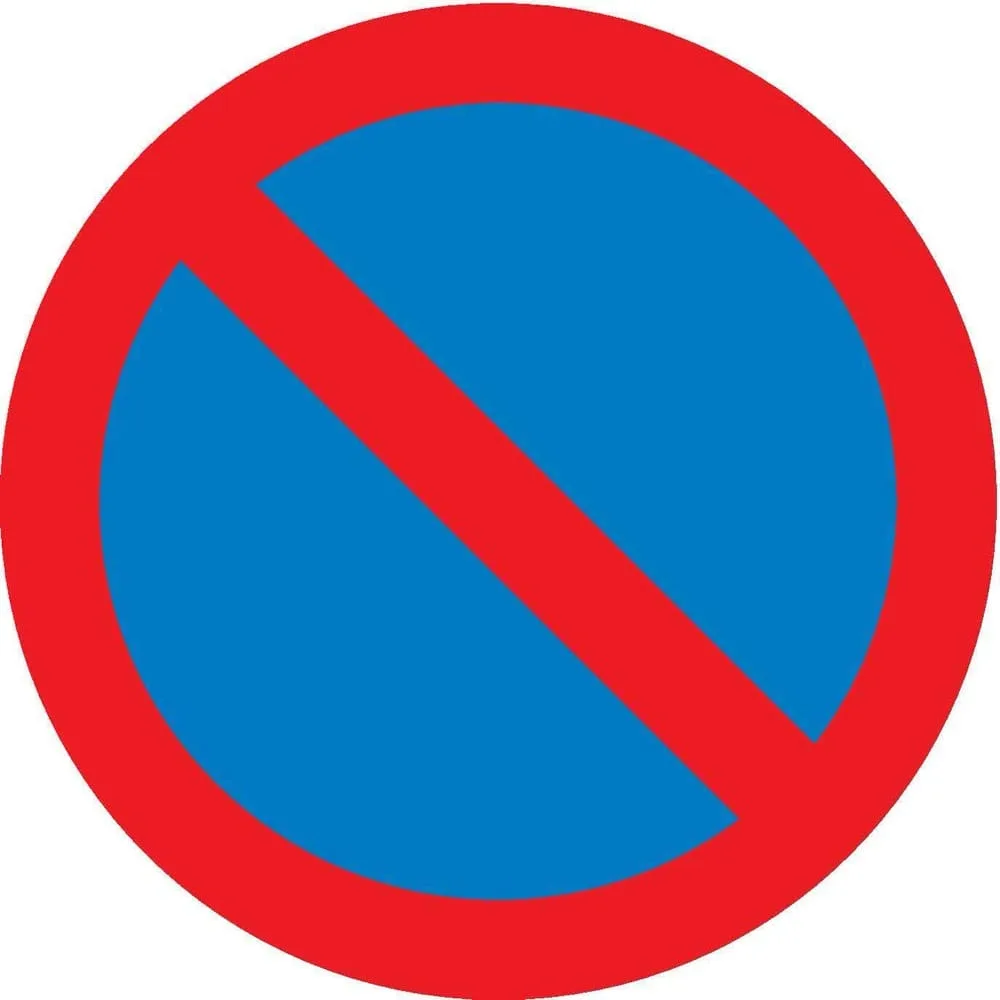
Show the answer
This was the right answerNo motor vehicles are allowed past this sign. Although a motorcycle and car are shown, the restriction applies to all motor vehicles.
You're driving a lorry 30 feet long and towing a trailer 15 feet long. What should you do when you see this sign?
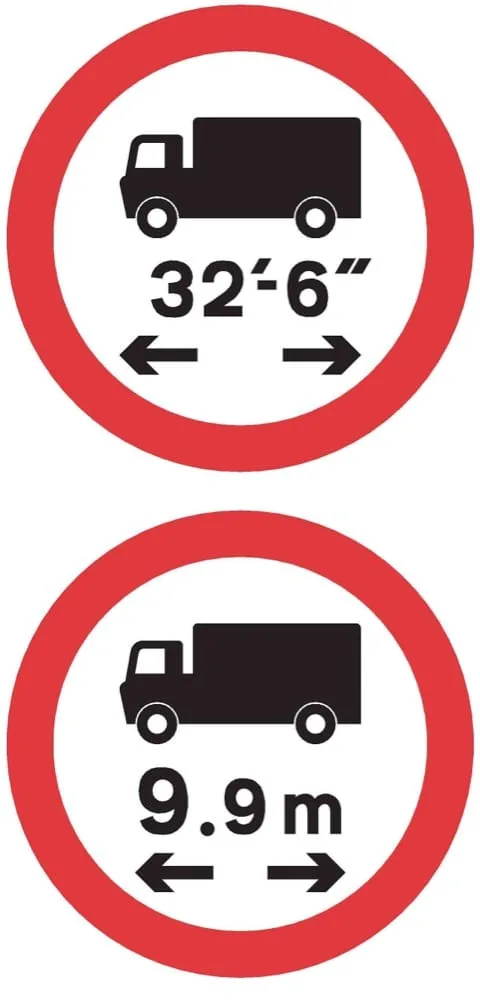
Find an alternative route to your destination
Stop and wait for a police escort
Continue past the sign but reduce your speed
Carry on; the sign applies to the towing vehicle only
Show the answer
Find an alternative route to your destinationThis was the right answer
The maximum permitted length of vehicle includes any trailer being towed. Make sure you know the total length of your vehicle.
You're driving a lorry that's carrying a heavy load. What should you be prepared to do when you see this sign ahead?
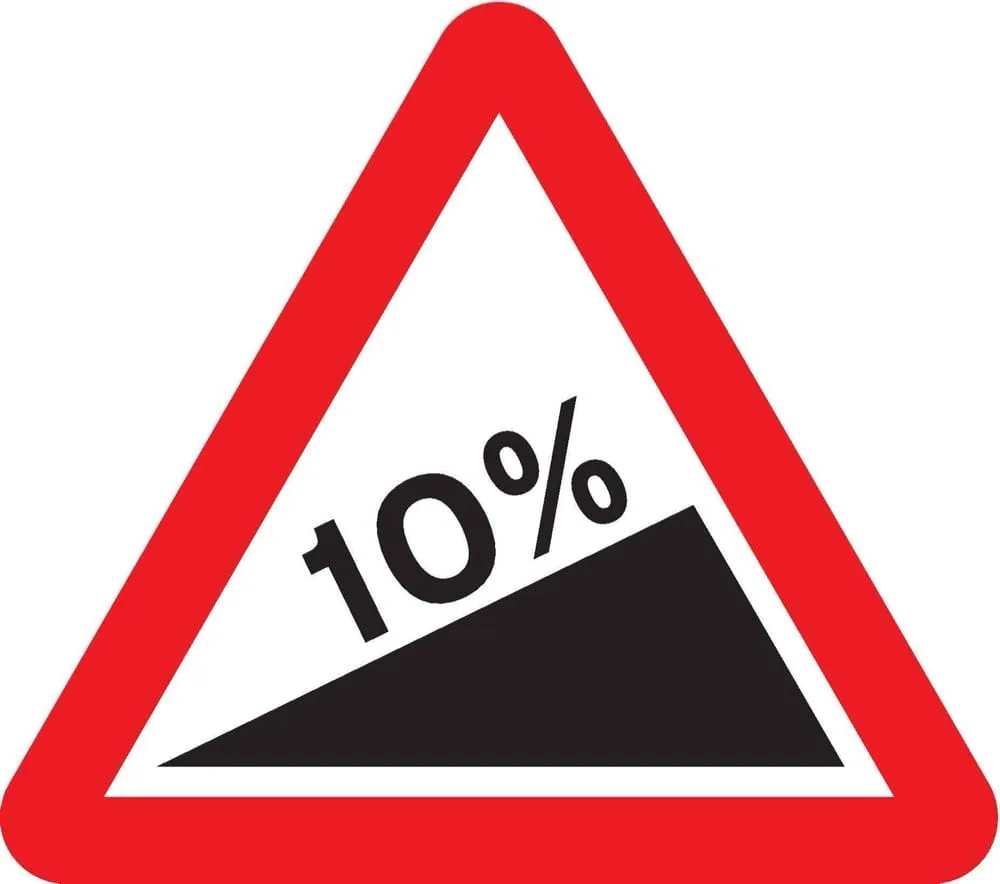
Brake to a lower speed
Change to a higher gear
Stop to check your load
Change to a lower gear
Show the answer
Change to a lower gearThis was the right answer
A heavy vehicle will lose speed when climbing a steep hill. Changing to a lower gear will help you to maintain an appropriate speed.
You're on a motorway. Your lorry has a maximum authorised mass of more than 7.5 tonnes. What does this sign mean to you?
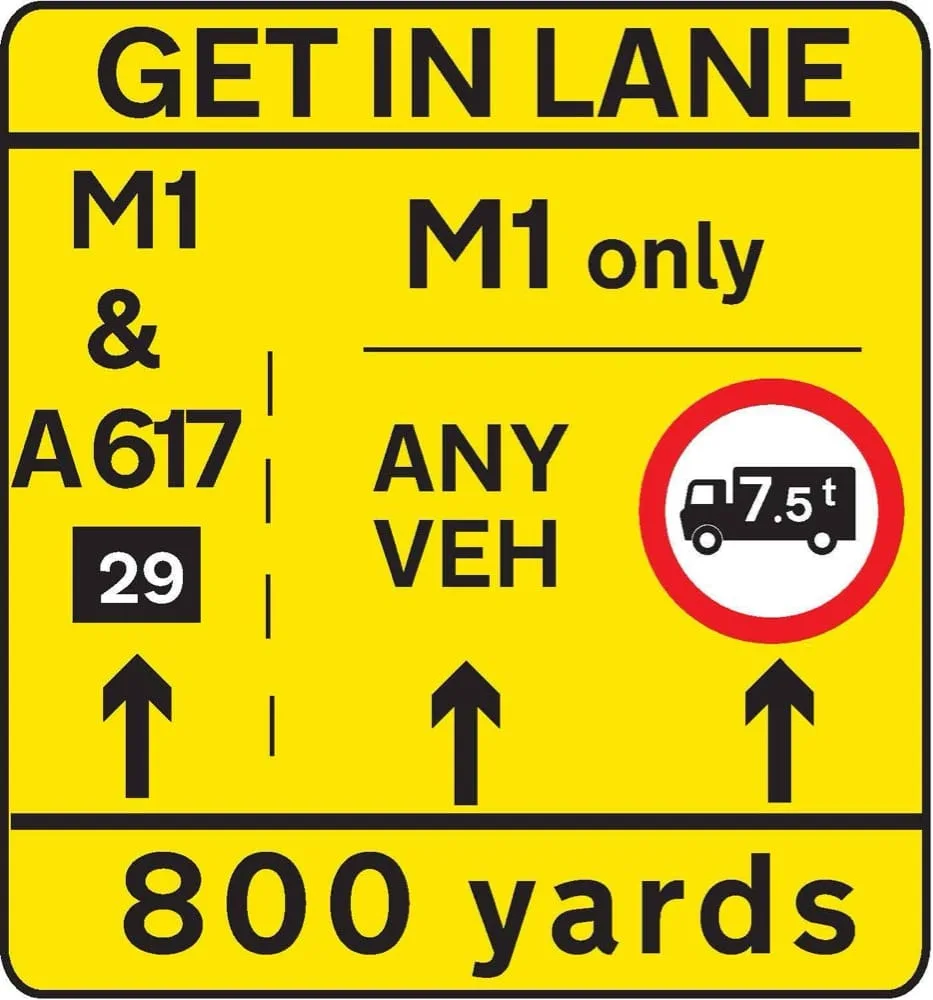
You mustn't use the right-hand lane
You can only use the right-hand lane
You can't leave the motorway at this junction
You can use the middle or right-hand lane
Show the answer
You mustn't use the right-hand laneThis was the right answer
At motorway roadworks, some lanes may be narrower than normal and large vehicles may not be allowed to use those lanes. Look for weight-limit signs to check for any lanes that you can't use. Move to the appropriate lane in good time.
What is the national motorway speed limit for a goods vehicle with a maximum authorised mass over 7.5 tonnes?
50 mph (80 km/h)
55 mph (88 km/h)
60 mph (96 km/h)
70 mph (112 km/h)
Show the answer
60 mph (96 km/h)This was the right answer
The national motorway limit for this goods vehicle is 60 mph. Maximum authorised mass, not its actual load today, identifies the category. Obey any lower displayed limit and drive more slowly when conditions require. A speed limiter setting does not authorise exceeding any road limit.
Under the Construction and Use rules, when are both end and side projection markers required for a load projecting forwards?
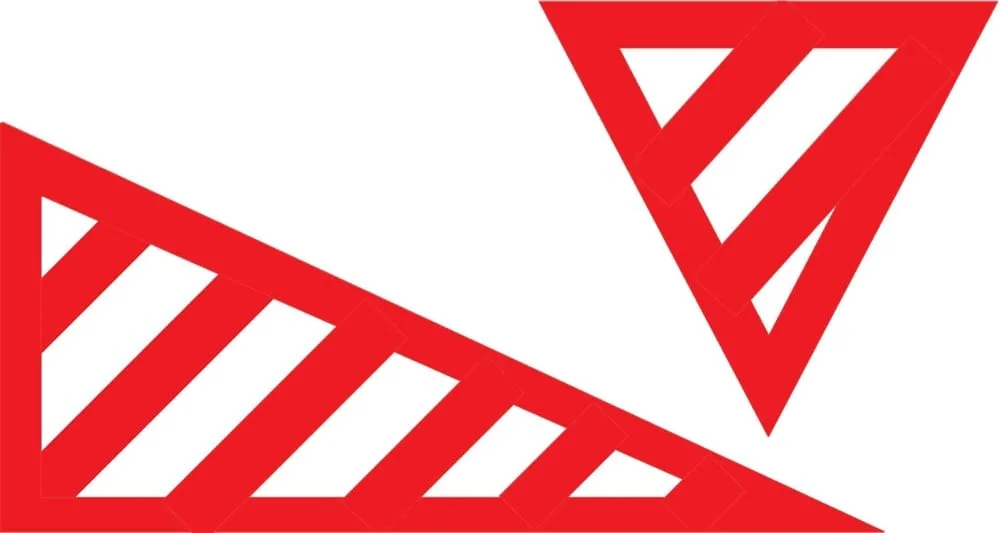
When you're carrying a load that overhangs the front or rear of the vehicle by more than 1 metre (3 feet 3 inches)
Whenever your vehicle is being towed
Whenever a police escort is required
When the load projects forwards by more than 2 metres (6 feet 6 inches)
Show the answer
When the load projects forwards by more than 2 metres (6 feet 6 inches)This was the right answer
For a forward projection over 2 metres, prescribed end and side markers are required. The ordinary rearward threshold differs: end marking is required over 2 metres, while side markers are required over 3 metres. Keep markers clean and visible and illuminate them with shielded lamps between sunset and sunrise. Attendance, notification and further markers may also be required for the complete load.
You're driving a lorry weighing more than 7.5 tonnes on a motorway. What does this sign mean?
Maximum speed 40 mph
Maximum speed 50 mph
Maximum speed 60 mph
Maximum speed 70 mph
Show the answer
Maximum speed 60 mphThis was the right answer
The maximum speed for lorries over 7.5 tonnes maximum authorised mass on a motorway is 60 mph. However, it may not always be appropriate or possible to drive at this speed, because of the weather, volume of traffic and other factors.
You're driving a lorry weighing more than 7.5 tonnes on a dual carriageway in England. What does this sign mean?
Maximum speed 40 mph
Maximum speed 50 mph
Maximum speed 60 mph
Maximum speed 70 mph
Show the answer
Maximum speed 60 mphThis was the right answer
The maximum speed for lorries over 7.5 tonnes maximum authorised mass on a dual carriageway in England and Wales is 60 mph. In Scotland, the limit is 50 mph. Be aware of the speed limits applying to different types of vehicle on particular roads. This is the maximum speed allowed, but it may not always be safe to drive at this speed, because of the weather, volume of traffic and other factors.
You're driving a lorry weighing more than 7.5 tonnes on a single carriageway road in England. What does this sign mean?
Maximum speed 30 mph
Maximum speed 40 mph
Maximum speed 50 mph
Maximum speed 60 mph
Show the answer
Maximum speed 50 mphThis was the right answer
In England and Wales, the national speed limit for lorries over 7.5 tonnes maximum authorised mass on a single carriageway road is 50 mph. In Scotland, the limit is 40 mph.
What's prohibited when a Red Route is in operation?
Stopping or parking
Overtaking
Changing lanes
Straddling the lines
Show the answer
Stopping or parkingThis was the right answer
The hours of operation of Red Routes vary from one area to another. As a rule, you mustn't stop on a Red Route, but there may be special marked boxes where loading and unloading can be carried out at certain times. Look out for signs giving information about the restrictions in place.
What does this sign mean?
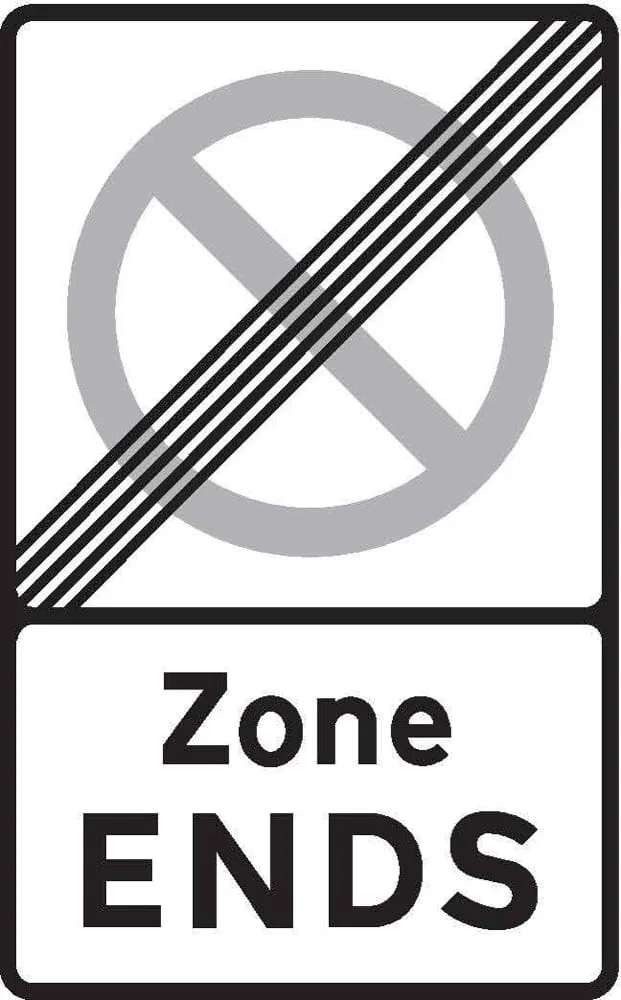
End of restricted speed area
End of restricted parking area
End of clearway
End of cycle route
Show the answer
End of restricted parking areaThis was the right answer
This sign ends the controlled parking zone. It does not cancel separately signed restrictions, loading controls or rules against dangerous parking and obstruction. Check the restrictions at the place where you intend to stop.
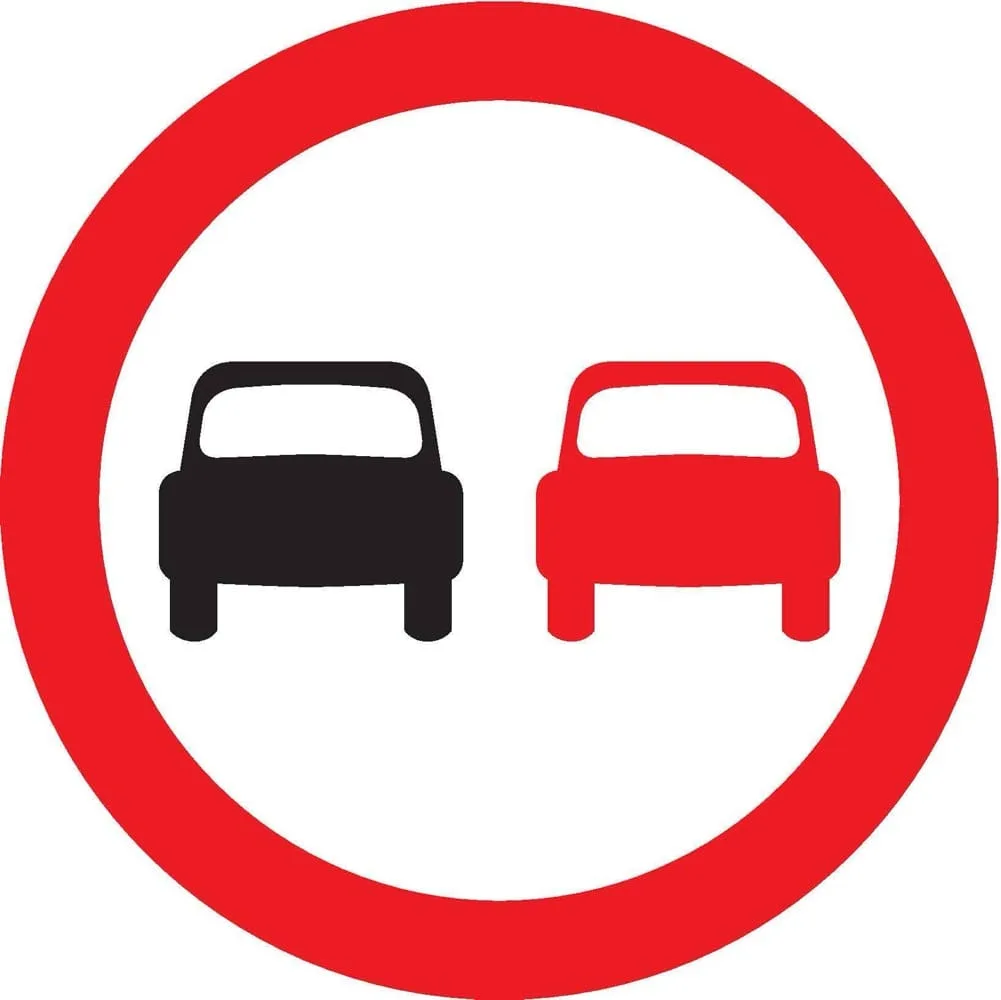
Which sign means 'No stopping'?
Show the answer
This was the right answerStopping where you see this sign is likely to cause an obstruction, which could lead to traffic delays. Obeying the sign will help keep the traffic flowing.
What does this sign mean?
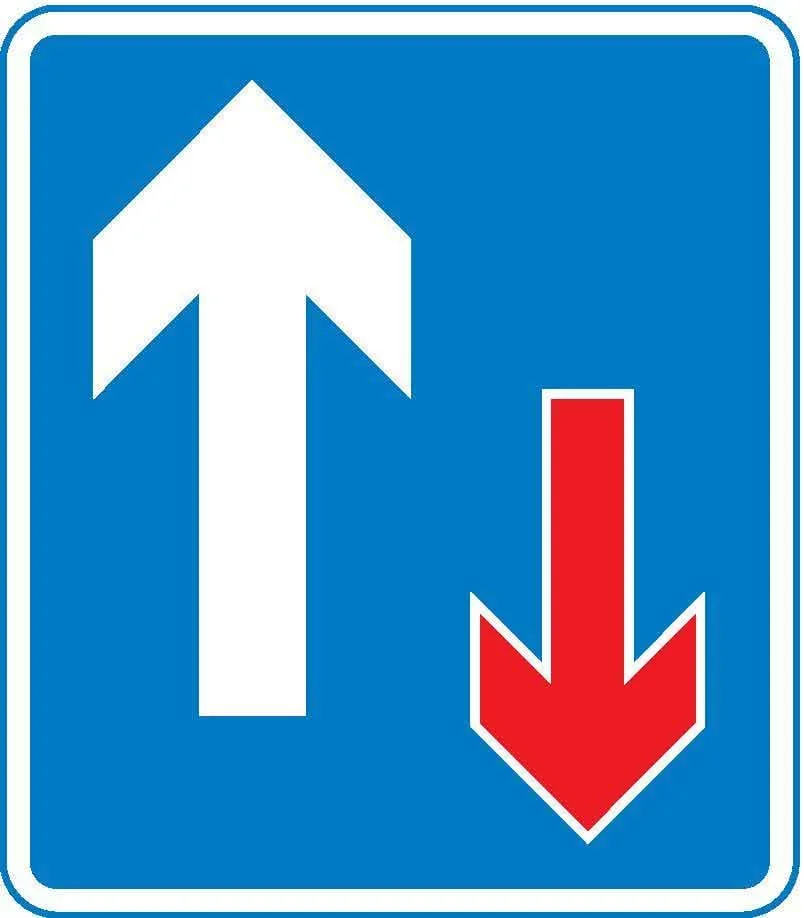
Give way to traffic from the opposite direction
You're entering a one-way street
Two-way traffic ahead
You have priority over vehicles from the opposite direction
Show the answer
You have priority over vehicles from the opposite directionThis was the right answer
You have priority over vehicles from the opposite direction. However, if a vehicle approaching from the opposite direction isn't going to stop, you should slow down and give way to avoid confrontation or an incident.
At a junction, you see this sign partly covered by snow. What does it mean?

Crossroads
Give way
Stop
Turn right
Show the answer
StopThis was the right answer
The 'Stop' sign is the only sign that's octagonal. This helps you to recognise it even when the wording can't be seen.
What does this sign mean?
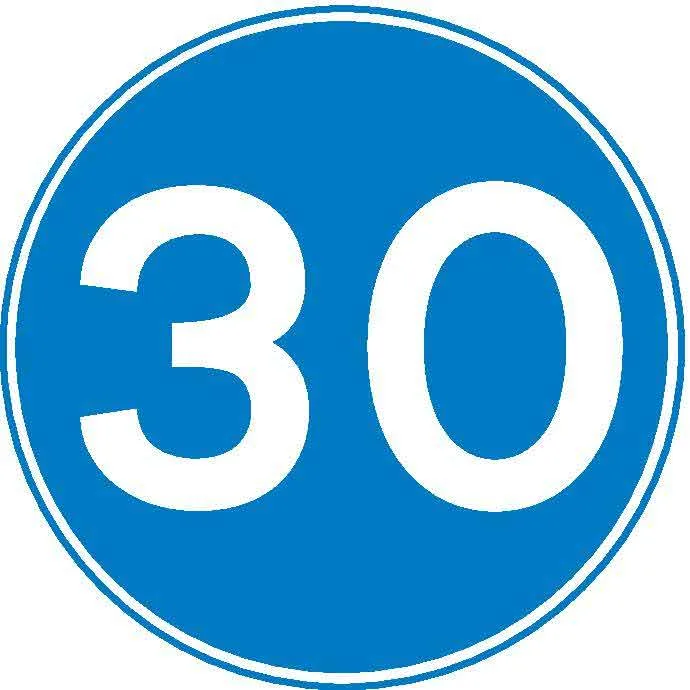
Service area 30 miles ahead
Maximum speed 30 mph
Minimum speed 30 mph
Lay-by 30 miles ahead
Show the answer
Minimum speed 30 mphThis was the right answer
This sign is shown where slow-moving vehicles would block the flow of traffic. However, if you need to slow down to avoid an incident, you should do so.
Which of these signs means turn left ahead?
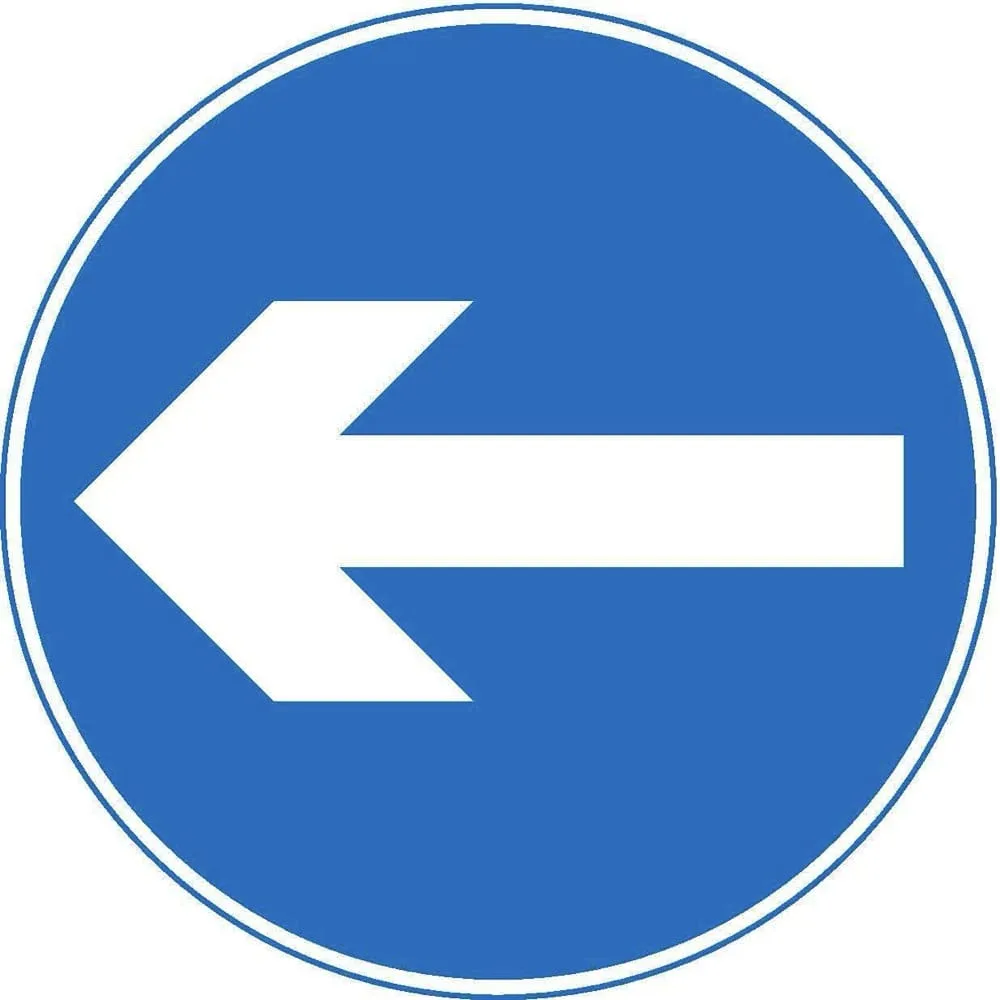
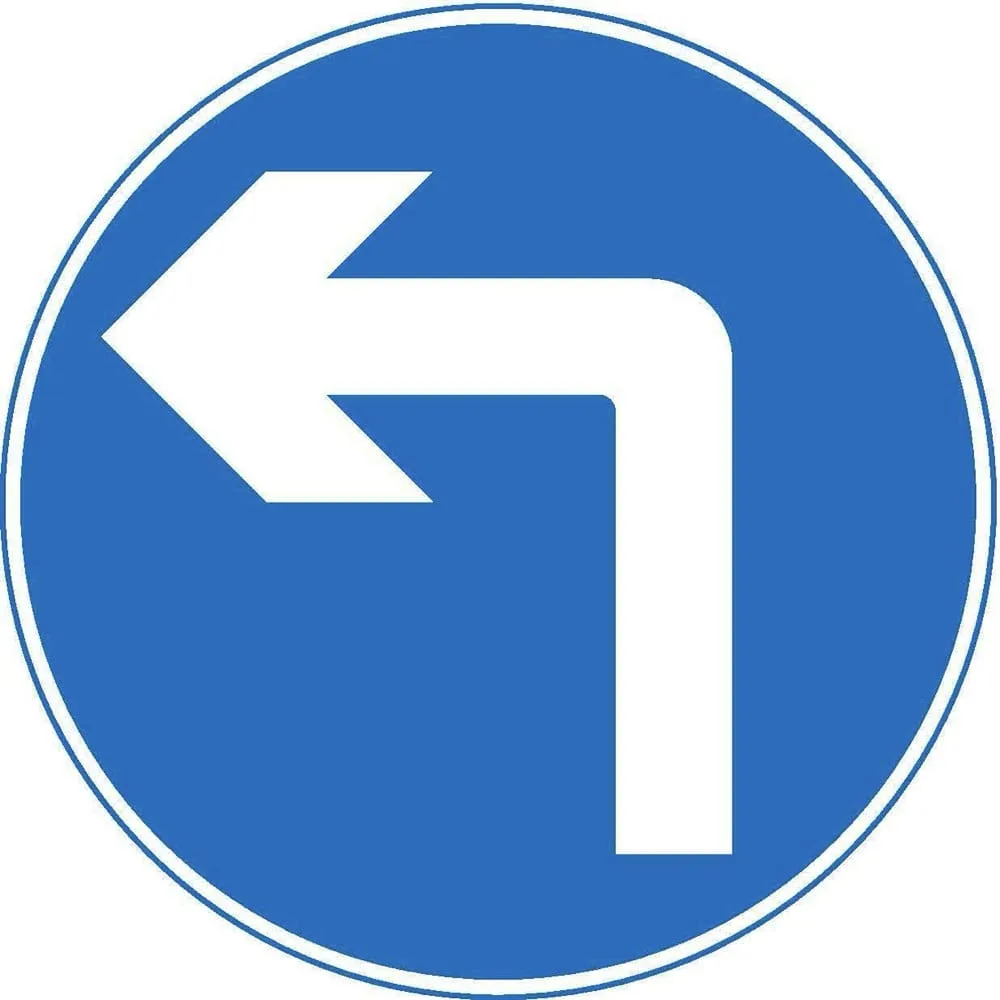
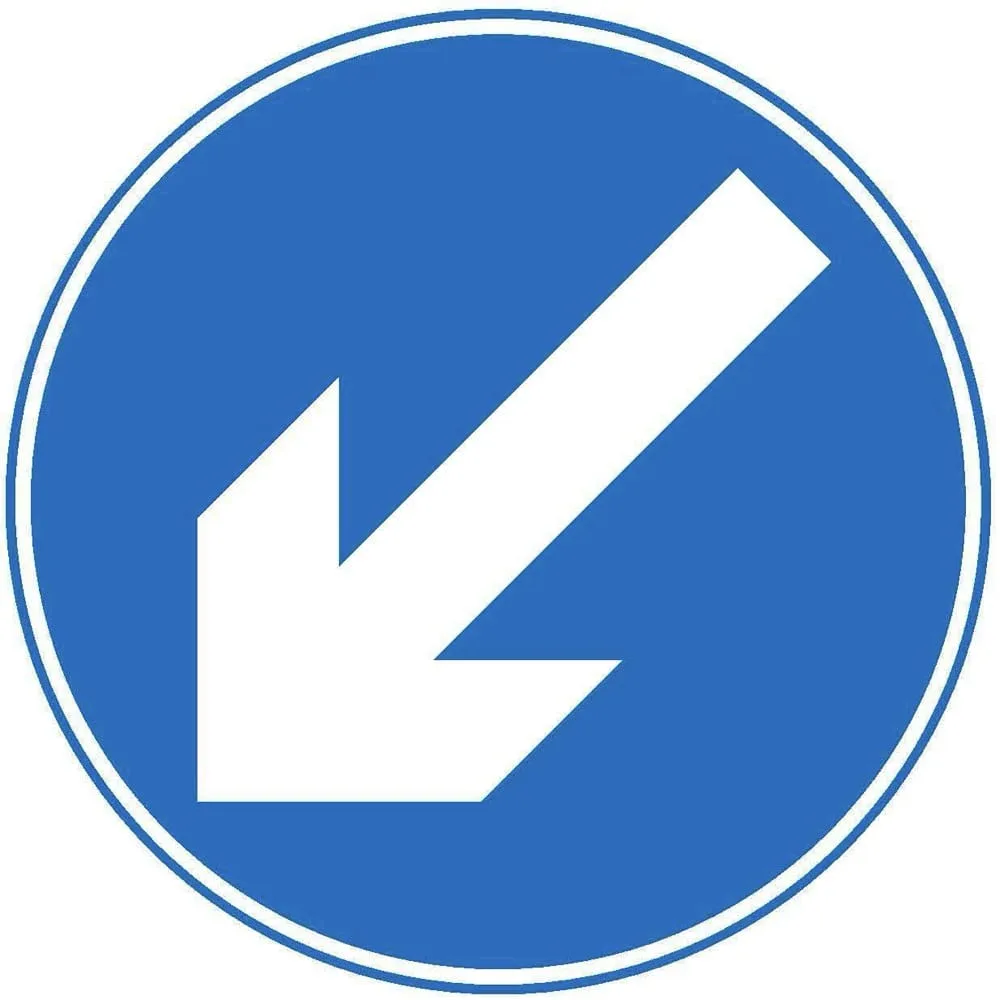
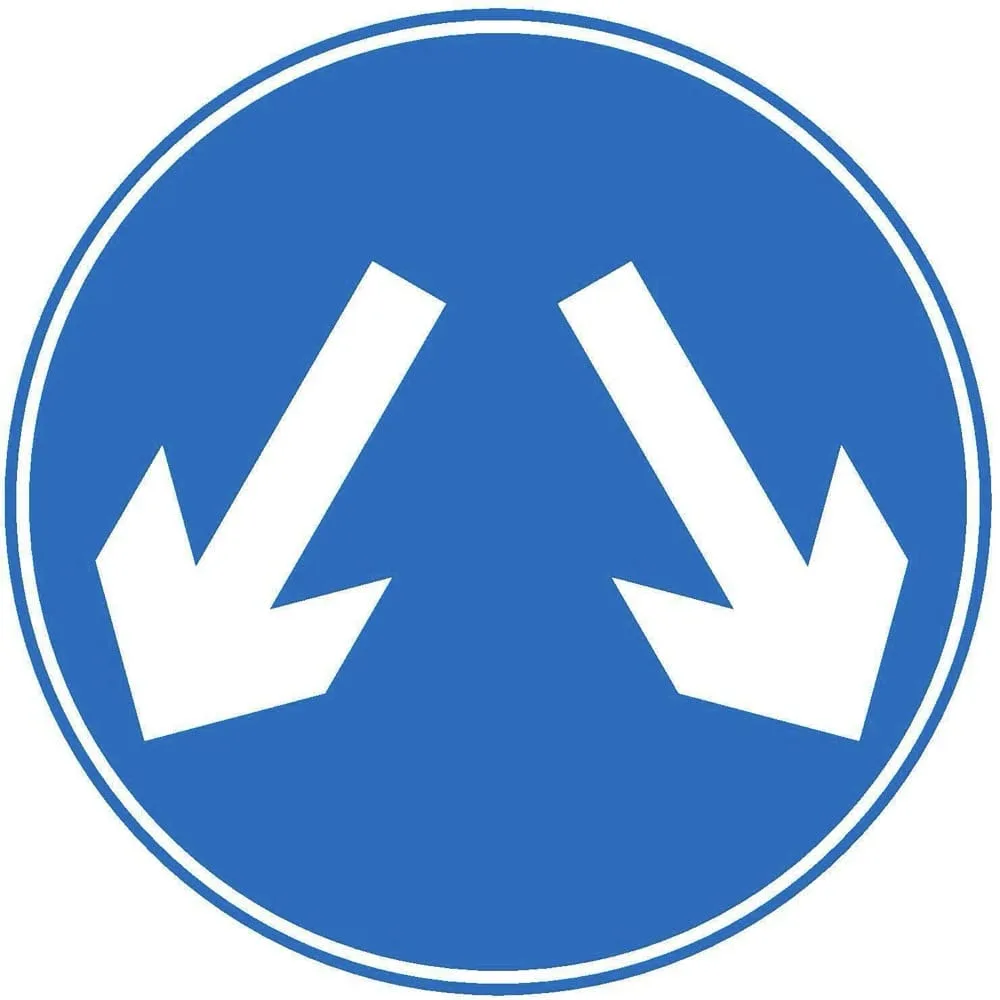
Show the answer
This was the right answerThis sign gives a clear instruction. You should prepare to negotiate a left-hand turn.
What does this sign mean?
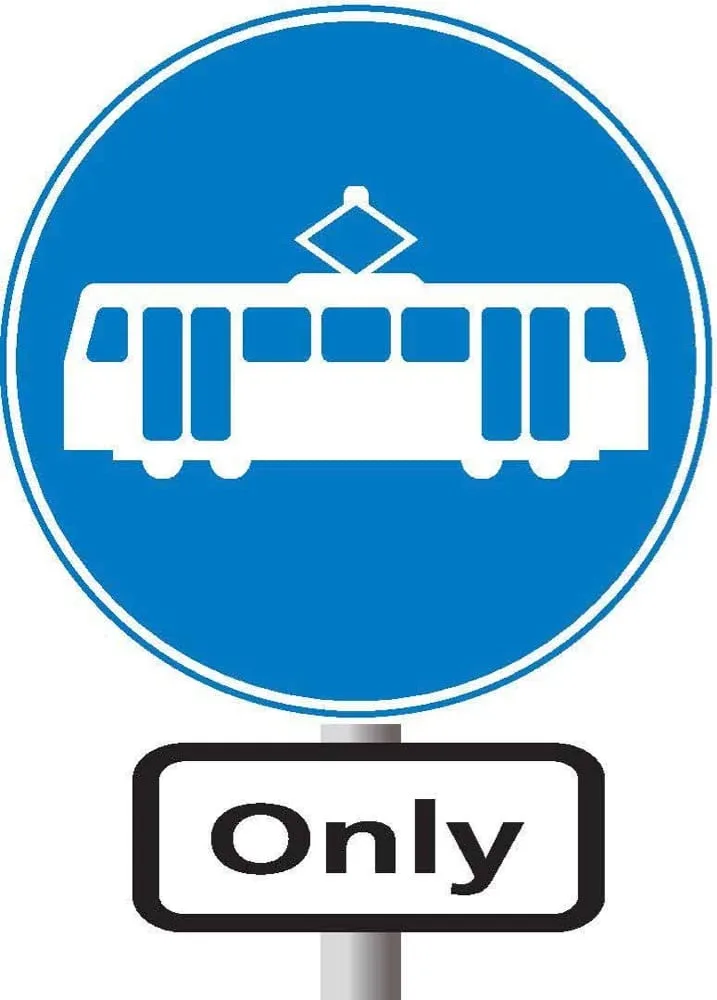
Route for trams
Give way to trams
Route for buses
Give way to buses
Show the answer
Route for tramsThis was the right answer
Take extra care when you're driving on roads where trams operate. Look out for road markings and signs that tell you to expect them. Modern trams are very quiet and you might not hear them approaching.
More lorry and bus topics
14 moreEvery question in this bank sits in one of these, and each one is a page like this.
Braking systems65 questionsCarrying passengers69 questionsDrivers' hours and rest periods78 questionsEnvironmental issues70 questionsEssential documents31 questionsIncidents, accidents and emergencies61 questionsLeaving the vehicle26 questionsOther road users83 questionsRestricted view38 questionsThe driver102 questionsThe road140 questionsVehicle condition102 questionsVehicle loading70 questionsVehicle weights and dimensions76 questionsAll lorry and bus questionsThe whole bank, in 15 topics