Loading the question bank
Car · DVSA-based revision questions
Vehicle handling
45 car theory test questions on vehicle handling. Preview the questions below, or open one to read its answer and continue through the whole topic.
Practise
Be marked as you go
A session draws from all 45 of these, weakest first, and marks each answer the moment you give it. Nothing here needs an account.
The questions
20 of 45The first 20 in the order the pack holds them. Open the answer when you want to check yourself; a session draws from all 45 and marks you instead.
When may you overtake another vehicle on their left?
When you’re in a one-way street
When approaching a motorway slip road where you’ll be turning off
When the vehicle in front is signalling to turn left
When a slower vehicle is travelling in the right-hand lane of a dual carriageway
Show the answer
When you’re in a one-way streetThis was the right answer
You may pass slower vehicles on their left while travelling along a one-way street. Be aware of drivers who may need to change lanes and may not expect faster traffic passing on their left.
You're travelling in very heavy rain. How is this likely to affect your overall stopping distance?
It will be doubled
It will be halved
It will be ten times greater
It will be no different
Show the answer
It will be doubledThis was the right answer
The road will be very wet and spray from other vehicles will reduce your visibility. Tyre grip will also be reduced, increasing your stopping distance. You should at least double your separation distance to make sure you can stop safely in the space you've allowed.
What should you do when you're overtaking at night?
Wait until a bend so that you can see oncoming headlights
Sound your horn twice before moving out
Go past slowly so that you can react to unseen hazards
Beware of bends in the road ahead
Show the answer
Beware of bends in the road aheadThis was the right answer
Don't overtake if there’s a possibility of a road junction, bend or brow of a bridge or hill ahead. There are many hazards that are difficult to see in the dark. Only overtake if you’re certain that the road ahead is clear. Don’t take a chance.
When may you wait in a box junction?
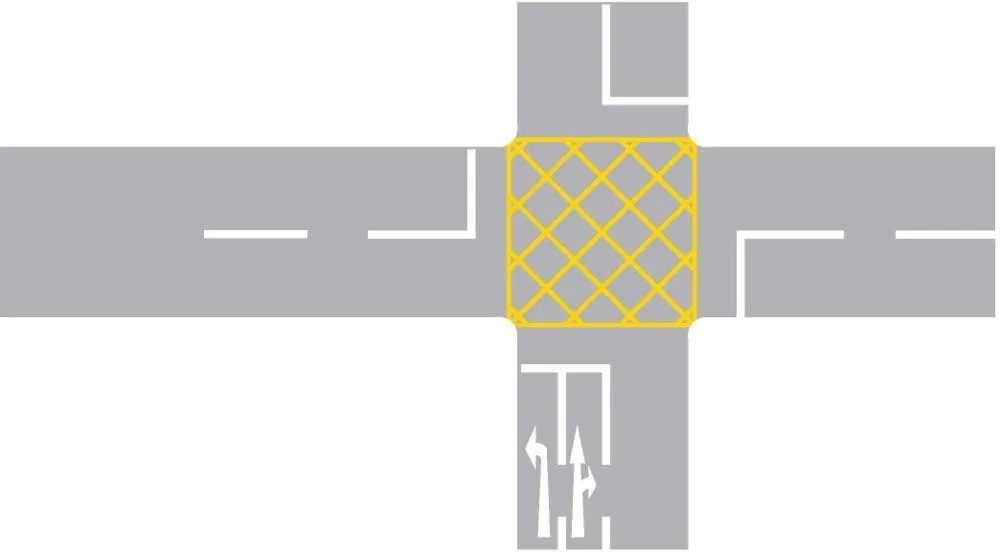
When you're stationary in a queue of traffic
When approaching a pelican crossing
When approaching a zebra crossing
When oncoming traffic prevents you turning right
Show the answer
When oncoming traffic prevents you turning rightThis was the right answer
The purpose of a box junction is to keep the junction clear by preventing vehicles from stopping in the path of crossing traffic.
You mustn't enter a box junction unless your exit is clear. However, you may enter the box and wait if you want to turn right and are only prevented from doing so by oncoming traffic.
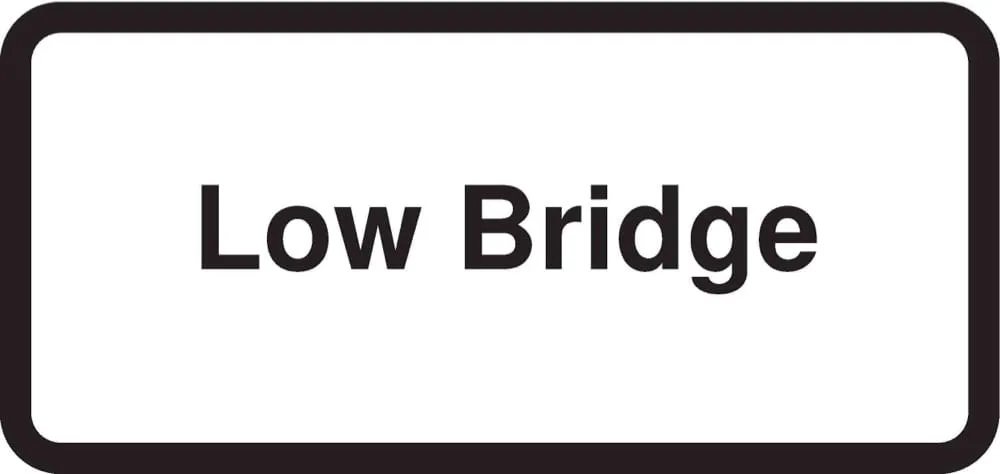
Which plate may appear with this road sign?
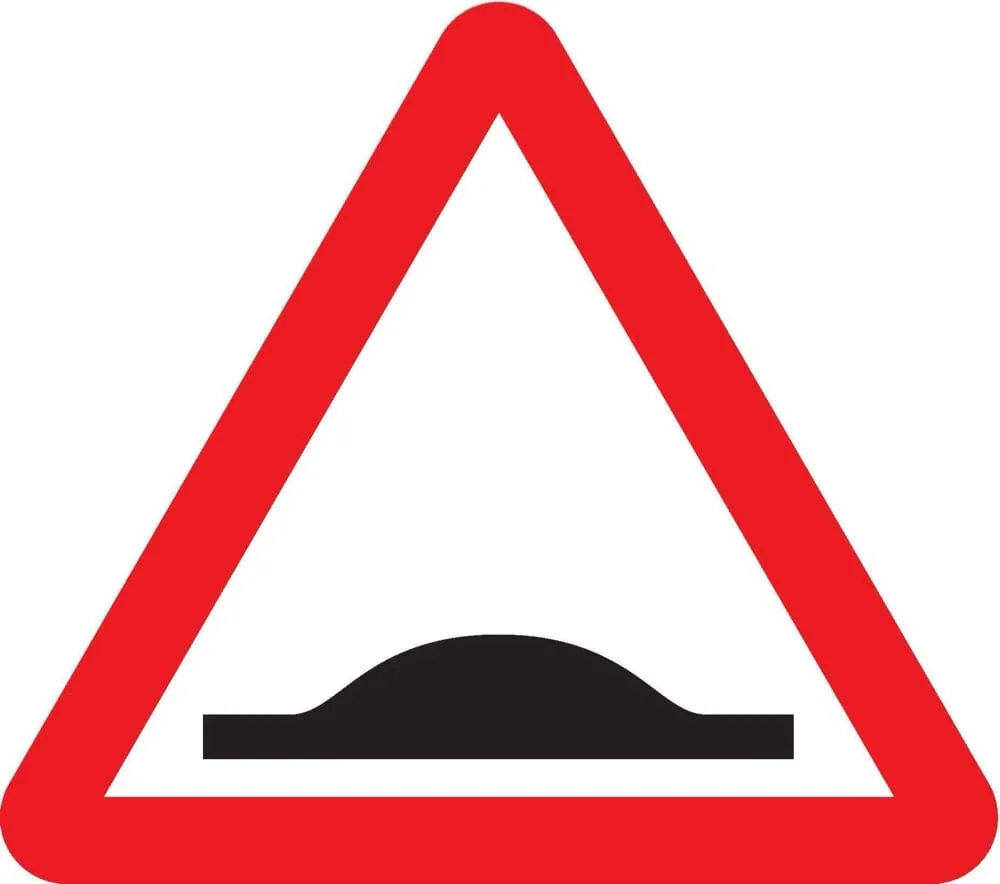
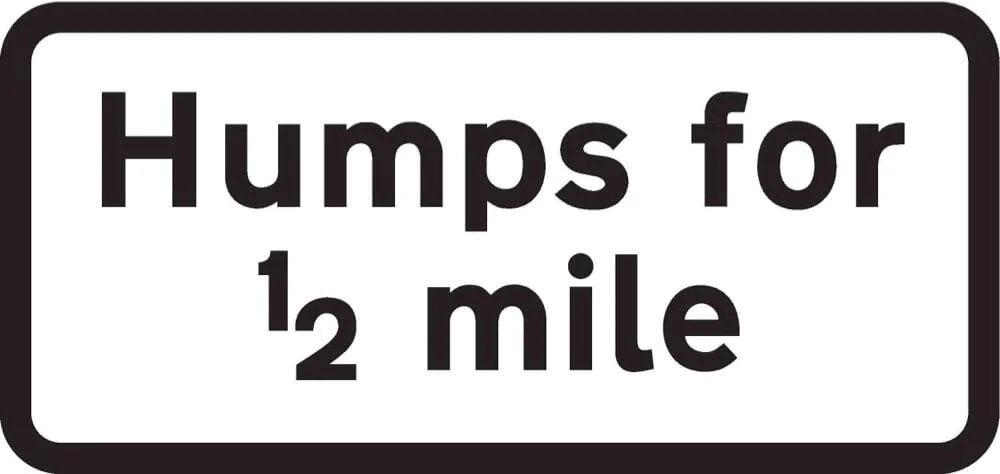
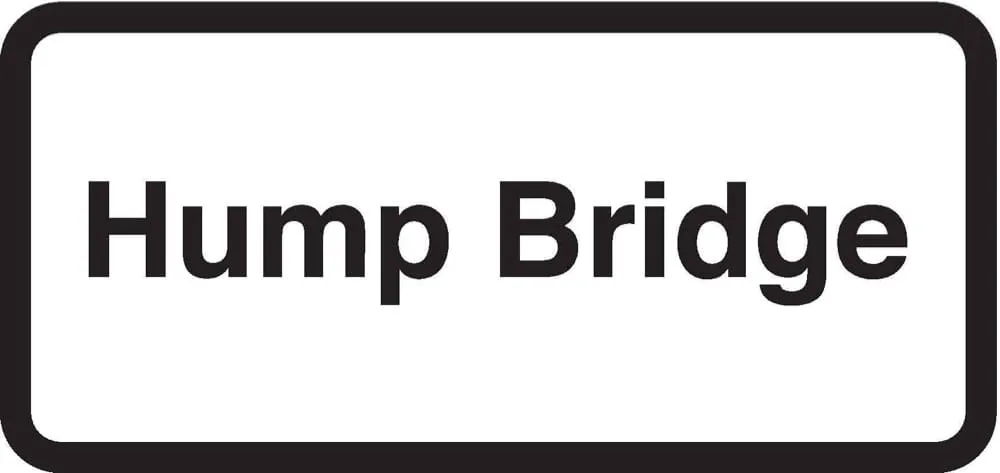

Show the answer
This was the right answerRoad humps are used to slow down traffic. They're found in places where there are often pedestrians, such as
• shopping areas
• near schools
• residential areas.
Watch out for people close to the kerb or crossing the road.
What's the reason for traffic-calming measures?
To stop road rage
To make overtaking easier
To slow traffic down
To make parking easier
Show the answer
To slow traffic downThis was the right answer
Traffic-calming measures make the roads safer for vulnerable road users, such as cyclists, pedestrians and children. These can be designed as chicanes, road humps or other obstacles that encourage drivers and riders to slow down.
What colour are the reflective studs along the left-hand edge of the motorway?
Green
Amber
Red
White
Show the answer
RedThis was the right answer
Reflective studs are used to help you in poor visibility. Different colours are used so that you’ll know which lane you're in. These are
• red on the left-hand edge of the carriageway
• white between lanes
• amber on the right-hand edge of the carriageway
• green between the carriageway and slip roads.
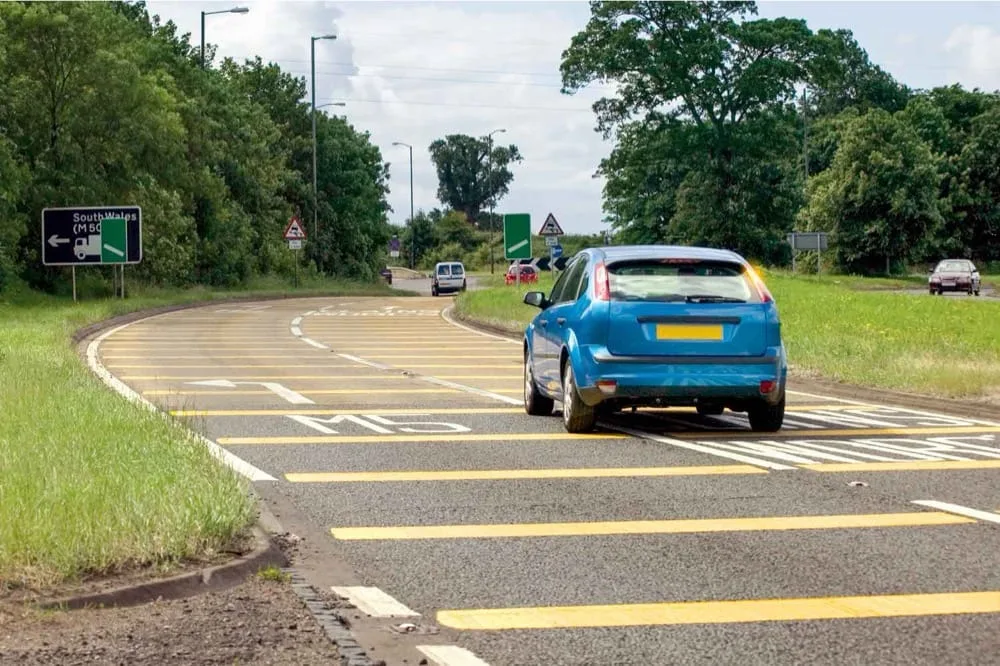
What's a rumble device designed to do?
Give directions
Prevent cattle escaping
Alert you to low tyre pressure
Alert you to a hazard
Show the answer
Alert you to a hazardThis was the right answer
A rumble device consists of raised markings or strips, designed to give drivers an audible, visual and tactile warning. These devices are used in various locations, including in the line separating the hard shoulder and the left-hand lane on the motorway and on the approach to some hazards, to alert drivers to the need to slow down.
What should you do if you have to make a journey in foggy conditions?
Follow other vehicles’ tail lights closely
Avoid using dipped headlights
Leave plenty of time for your journey
Keep two seconds behind the vehicle ahead
Show the answer
Leave plenty of time for your journeyThis was the right answer
If you’re planning to make a journey when it’s foggy, listen to the weather reports. If visibility is very poor, avoid making unnecessary journeys. If you do travel, leave plenty of time – and if someone is waiting for you to arrive, let them know that your journey will take longer than normal. This will also take off any pressure you may feel to rush.
What must you do when you're overtaking a car at night?
Flash your headlights before overtaking
Select a higher gear
Switch your headlights to main beam before overtaking
Make sure you don't dazzle other road users
Show the answer
Make sure you don't dazzle other road usersThis was the right answer
To prevent your headlights from dazzling the driver of the car in front, wait until you’ve passed them before switching to main beam.
You're travelling on a road that has road humps. What should you do when the driver in front is travelling more slowly than you?
Sound your horn
Overtake as soon as you can
Flash your headlights
Slow down and stay behind
Show the answer
Slow down and stay behindThis was the right answer
Be patient and stay behind the car in front. You shouldn't normally overtake other vehicles in areas subject to traffic calming. If you overtake here, you may easily exceed the speed limit, defeating the purpose of the traffic-calming measures.
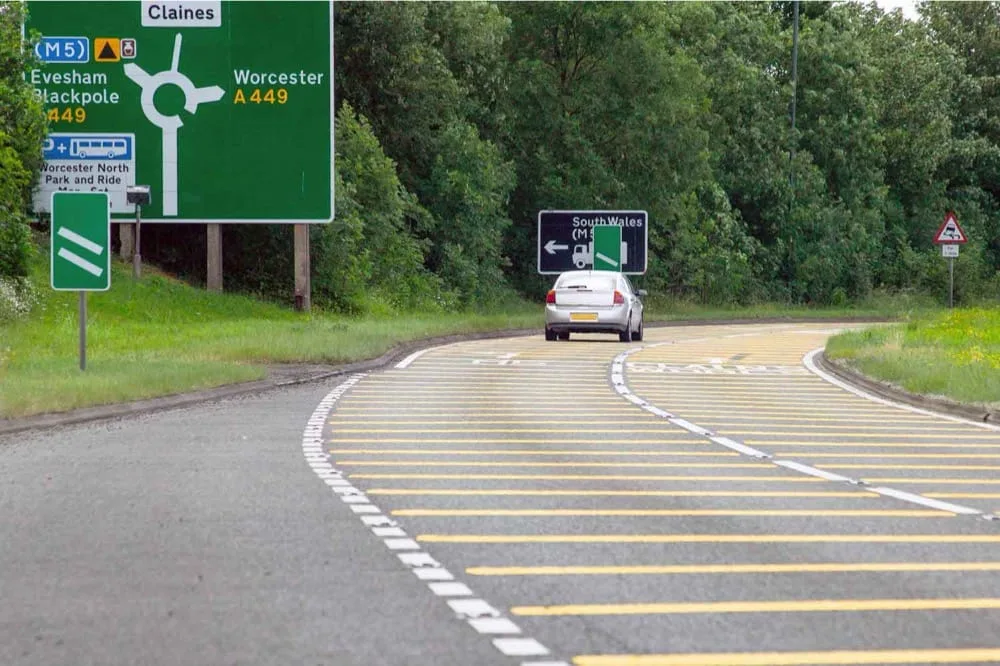
What’s the purpose of the yellow lines painted across the road?
To show a safe distance between vehicles
To keep the area clear of traffic
To make you aware of your speed
To warn you to change direction
Show the answer
To make you aware of your speedThis was the right answer
These lines may be painted on the road on the approach to a roundabout, a village or a particular hazard. The lines are raised and painted yellow, and their purpose is to make you aware of your speed. Reduce your speed in good time so that you avoid having to brake harshly over the last few metres before reaching the junction.
What should you do when you meet an oncoming vehicle on a single-track road?
Reverse back to the main road
Carry out an emergency stop
Stop at a passing place
Switch on your hazard warning lights
Show the answer
Stop at a passing placeThis was the right answer
Take care when using single-track roads. It can be difficult to see around bends, because of hedges or fences, so expect to meet oncoming vehicles. Drive carefully and be ready to pull into or stop opposite a passing place, where you can pass each other safely.
The road is wet. Why would a motorcyclist steer around drain covers while they were cornering?
To avoid puncturing the tyres on the edge of the drain covers
To prevent the motorcycle sliding on the metal drain covers
To help judge the bend using the drain covers as marker points
To avoid splashing pedestrians on the pavement
Show the answer
To prevent the motorcycle sliding on the metal drain coversThis was the right answer
Other drivers or riders may have to change course due to the size or characteristics of their vehicle. Understanding this will help you to anticipate their actions. Motorcyclists and cyclists will be checking the road ahead for uneven or slippery surfaces, especially in wet weather. They may need to move across their lane to avoid surface hazards such as potholes and drain covers.
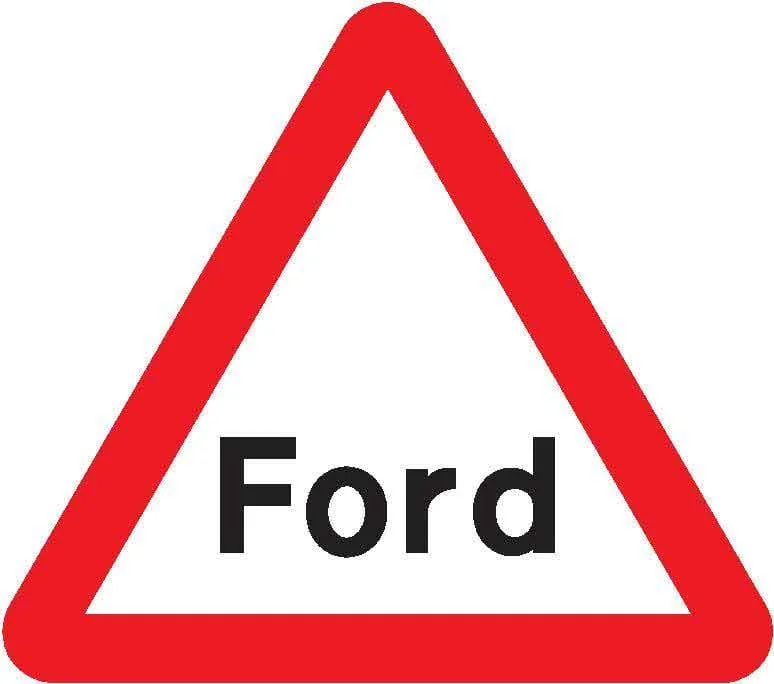
Why should you test your brakes after this hazard?
You'll be on a slippery road
Your brakes will be wet
You'll be going down a long hill
You'll have just crossed a long bridge
Show the answer
Your brakes will be wetThis was the right answer
A ford is a crossing over a stream that’s shallow enough to drive or ride through. After you’ve gone through a ford or deep puddle, your brakes will be wet and they won't work as well as usual. To dry them out, apply a light brake pressure while moving slowly. Don’t travel at normal speeds until you're sure your brakes are working properly again.
Why should you reduce your speed when you're driving or riding in fog?
The brakes don't work as well
You'll be dazzled by other headlights
The engine will take longer to warm up
It's more difficult to see what's ahead
Show the answer
It's more difficult to see what's aheadThis was the right answer
You won’t be able to see as far ahead in fog as you can on a clear day. You'll need to reduce your speed so that, if a hazard looms out of the fog, you have the time and space to take avoiding action.
Travelling in fog is hazardous. If you can, try to delay your journey until it has cleared.
What will happen to your car when you drive up a steep hill?
The high gears will pull better
The steering will feel heavier
Overtaking will be easier
The engine will work harder
Show the answer
The engine will work harderThis was the right answer
The engine will need more power to pull the vehicle up the hill. When approaching a steep hill you should select a lower gear to help maintain your speed. You should do this without hesitation, so that you don’t lose too much speed before engaging the lower gear.
You're driving on the motorway in windy conditions. What should you do as you overtake a high-sided vehicle?
Increase your speed
Be wary of a sudden gust
Drive alongside very closely
Expect normal conditions
Show the answer
Be wary of a sudden gustThis was the right answer
The draught caused by other vehicles – particularly those with high sides – could be strong enough to push you out of your lane. Be prepared for a sudden gust of wind as you overtake large vehicles. Keep both hands on the steering wheel to help you keep full control.
You're driving in fog. Why should you keep well back from the vehicle in front?
In case it changes direction suddenly
In case its fog lights dazzle you
In case it stops suddenly
In case its brake lights dazzle you
Show the answer
In case it stops suddenlyThis was the right answer
If you’re following another road user in fog, stay well back. The driver in front won’t be able to see hazards until they’re close and might need to brake suddenly. Also, the road surface is likely to be wet and could be slippery.
What should you do if you park on the road when it's foggy?
Leave parking lights switched on
Leave dipped headlights and fog lights switched on
Leave dipped headlights switched on
Leave main-beam headlights switched on
Show the answer
Leave parking lights switched onThis was the right answer
If you have to park your vehicle in foggy conditions, try to find a place to park off the road. If this isn’t possible, park on the road facing in the same direction as the traffic. Leave your parking lights switched on and make sure they're clean.
More car topics
13 moreEvery question in this bank sits in one of these, and each one is a page like this.
Alertness26 questionsAttitude39 questionsEssential documents28 questionsHazard awareness78 questionsIncidents, accidents and emergencies48 questionsMotorway rules57 questionsOther types of vehicle22 questionsRoad and traffic signs133 questionsRules of the road67 questionsSafety and your vehicle77 questionsSafety margins34 questionsVehicle loading21 questionsVulnerable road users71 questionsAll car questionsThe whole bank, in 14 topics