Loading the question bank
Car · DVSA-based revision questions
Safety margins
34 car theory test questions on safety margins. Preview the questions below, or open one to read its answer and continue through the whole topic.
Practise
Be marked as you go
A session draws from all 34 of these, weakest first, and marks each answer the moment you give it. Nothing here needs an account.
The questions
20 of 34The first 20 in the order the pack holds them. Open the answer when you want to check yourself; a session draws from all 34 and marks you instead.
How much can stopping distances increase in icy conditions?
Two times
Three times
Five times
Ten times
Show the answer
Ten timesThis was the right answer
Tyre grip is greatly reduced in icy conditions. For this reason, you need to allow up to ten times the stopping distance you would allow on dry roads.
What requires extra care when you're driving or riding in windy conditions?
Using the brakes
Moving off on a hill
Turning into a narrow road
Passing pedal cyclists
Show the answer
Passing pedal cyclistsThis was the right answer
Always give cyclists plenty of room when overtaking them. You need to give them even more room when it’s windy. A sudden gust could easily blow them off course and into your path.
Why should you keep well to the left as you approach a right-hand bend?
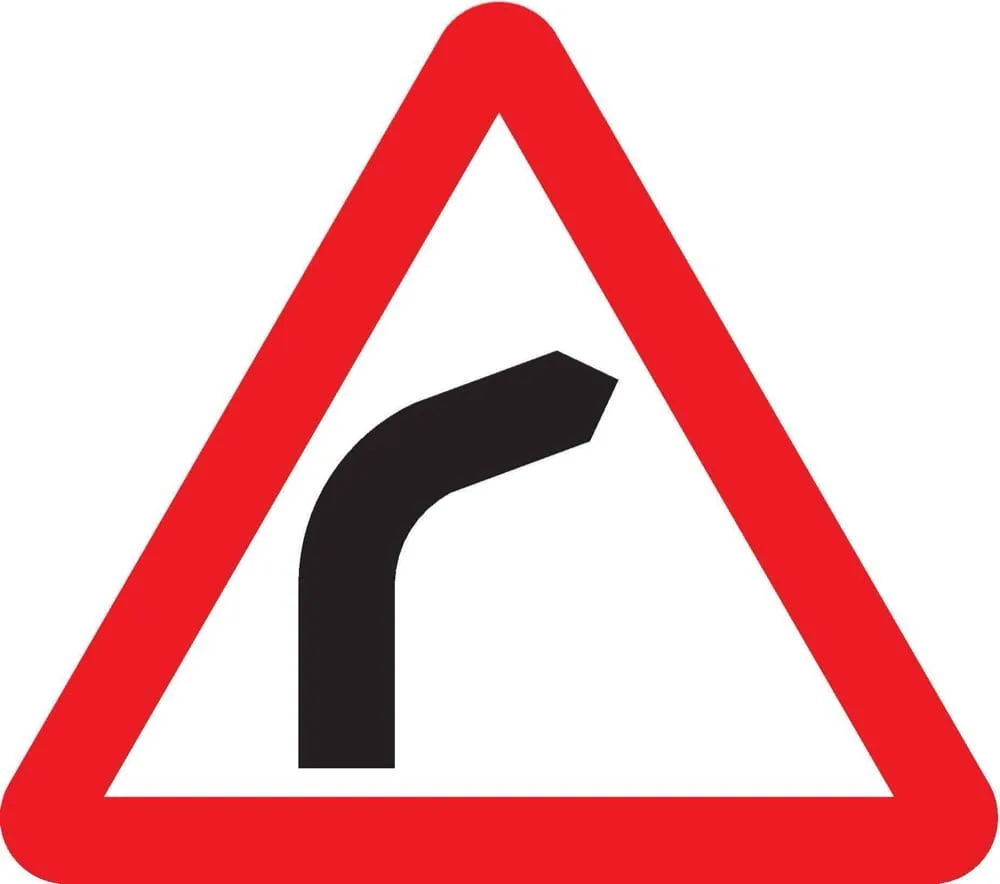
To improve your view of the road
To overcome the effect of the road’s slope
To let faster traffic from behind overtake
To be positioned safely if you skid
Show the answer
To improve your view of the roadThis was the right answer
Keeping to the left as you approach right-hand bends will give you an earlier view around the bend and enable you to see any hazards sooner. It also reduces the risk of collision with any oncoming vehicle that may have drifted over the centre line while taking the bend.
You’ve just gone through flood water. What should you do to make sure your brakes are working properly?
Accelerate and keep to a high speed for a short time
Go slowly while gently applying the brakes
Avoid using the brakes at all for a few miles
Stop for at least an hour to allow them time to dry
Show the answer
Go slowly while gently applying the brakesThis was the right answer
Water on the brakes will act as a lubricant, causing them to work less efficiently. Using the brakes lightly as you go along will quickly dry them out.
What will be affected if the road surface becomes soft in very hot weather?
The suspension
The exhaust emissions
The fuel consumption
The tyre grip
Show the answer
The tyre gripThis was the right answer
If the road surface becomes very hot, it can soften. Tyres are unable to grip a soft surface as well as they can a firm dry one. Take care when cornering and braking.
Where is your vehicle most likely to be affected by side winds?
On a narrow country lane
On an open stretch of road
On a busy stretch of road
On a long, straight road
Show the answer
On an open stretch of roadThis was the right answer
In windy conditions, care must be taken on exposed roads. A strong gust of wind can blow you off course. Watch out for other road users who are particularly likely to be affected, such as cyclists, motorcyclists, high-sided lorries and vehicles towing trailers.
You're following a vehicle on a wet road. You stay a safe distance behind it. What should you do if a driver overtakes you and pulls into the gap you've left?
Flash your headlights as a warning
Try to overtake safely as soon as you can
Drop back to regain a safe distance
Stay close to the other vehicle until it moves on
Show the answer
Drop back to regain a safe distanceThis was the right answer
Wet weather will affect the time it takes for you to stop and can affect your control. Your speed should allow you to stop safely and in good time. If another vehicle pulls into the gap you’ve allowed, ease back until you’ve regained your stopping distance.
You're travelling on the motorway. How can you lower the risk of a collision when the vehicle behind is following too closely?
Increase your distance from the vehicle in front
Brake sharply
Switch on your hazard warning lights
Move onto the hard shoulder and stop
Show the answer
Increase your distance from the vehicle in frontThis was the right answer
On busy roads, traffic may still travel at high speeds. Don’t follow the vehicle in front too closely. If a driver behind seems to be ‘pushing’ you, gradually increase your distance from the vehicle in front by slowing down gently. This will give you more space in front if you have to brake, and will reduce the risk of a collision involving several vehicles.
You're following other vehicles in fog. You have your headlights on dipped beam. What else can you do to reduce the chances of being in a collision?
Keep close to the vehicle in front
Use main beam instead of dipped headlights
Keep up with the faster vehicles
Keep a safe distance from the vehicle in front
Show the answer
Keep a safe distance from the vehicle in frontThis was the right answer
When it’s foggy, use your headlights on dipped beam. This will help you see and be seen by other road users. If visibility is seriously reduced, consider using front and rear fog lights if you have them. Keep to a sensible speed and don’t follow the vehicle in front too closely. If the road is wet and slippery, you’ll need to allow twice the normal stopping distance.
What should you do when you're using a contraflow system?
Choose an appropriate lane in good time
Switch lanes to make better progress
Increase speed to get through the contraflow more quickly
Follow other motorists closely to avoid long queues
Show the answer
Choose an appropriate lane in good timeThis was the right answer
In a contraflow system, you'll be travelling close to oncoming traffic and sometimes in narrow lanes. You should get into the correct lane in good time, obey any temporary speed-limit signs and keep a safe separation distance from the vehicle ahead.
How can you avoid wheelspin when you're driving on an icy road?
Drive at a slow speed in the highest gear possible
Use the parking brake if the wheels start to slip
Brake gently and repeatedly
Drive in a low gear at all times
Show the answer
Drive at a slow speed in the highest gear possibleThis was the right answer
If you’re travelling on an icy road, extra caution will be required to avoid loss of control. Keeping your speed down and using the highest gear possible will reduce the risk of the tyres losing their grip on this slippery surface.
What's the main cause of skidding?
The weather
The driver
The vehicle
The road
Show the answer
The driverThis was the right answer
Skidding is usually caused by driver error. You should always adjust your driving to take account of the road and weather conditions.
You're driving in freezing conditions. What should you do as you approach a sharp bend?
Coast into the bend
Apply your parking brake
Firmly use your footbrake
Slow down gently
Show the answer
Slow down gentlyThis was the right answer
Harsh use of the accelerator, brakes or steering is likely to lead to skidding, especially on slippery surfaces. Avoid steering and braking at the same time. In icy conditions, it’s very important that you constantly assess what’s ahead so that you can take appropriate action in plenty of time.
You're about to start a journey in freezing weather. What part of your vehicle should you clear of ice and snow?
The aerial
The windows
The bumper
The boot
Show the answer
The windowsThis was the right answer
Driving in bad weather increases your risk of having a collision. If you absolutely have to travel, clear your lights, mirrors, number plates and windows of any snow or ice, so that you can see and be seen.
What will help you to move off on a snowy surface?
Using the car's lowest gear
Using a higher gear than normal
Using a high engine speed
Using the parking brake and footbrake together
Show the answer
Using a higher gear than normalThis was the right answer
If you attempt to move off in a low gear, there'll be more torque (turning force) at the driven wheels than if you use a higher gear. More torque makes it easier for the tyres to lose grip and so spin the wheels.
What should you do when you're driving in snowy conditions?
Brake firmly and quickly
Be ready to steer sharply
Use sidelights only
Brake gently in plenty of time
Show the answer
Brake gently in plenty of timeThis was the right answer
In snowy conditions, be careful with the steering, accelerator and brakes. Braking sharply while you're driving on snow is likely to make your car skid.
What's the main benefit of driving a four-wheel-drive vehicle?
Improved grip on the road
Lower fuel consumption
Shorter stopping distances
Improved passenger comfort
Show the answer
Improved grip on the roadThis was the right answer
By driving all four wheels, the vehicle has maximum grip on the road. This grip is especially helpful when travelling on slippery or uneven surfaces. However, having four-wheel drive doesn't replace the skills you need to drive safely.
You're about to go down a steep hill. What should you do to control the speed of your vehicle?
Select a high gear and use the brakes carefully
Select a high gear and use the brakes firmly
Select a low gear and use the brakes carefully
Select a low gear and avoid using the brakes
Show the answer
Select a low gear and use the brakes carefullyThis was the right answer
When driving down a steep hill, gravity will cause your vehicle to speed up. This will make it more difficult for you to stop. To help keep your vehicle's speed under control, select a lower gear to give you more engine braking and make careful use of the brakes.
What should you do when you park a car facing downhill?
Turn the steering wheel towards the kerb
Park close to the bumper of another car
Park with two wheels on the kerb
Turn the steering wheel away from the kerb
Show the answer
Turn the steering wheel towards the kerbThis was the right answer
Turning the wheels towards the kerb will allow them to act as a chock, preventing any forward movement of the vehicle. It will also help to leave your car in gear, or select ‘Park’ if you have an automatic.
You're driving in a built-up area that has traffic-calming measures. What should you do when you approach a road hump?
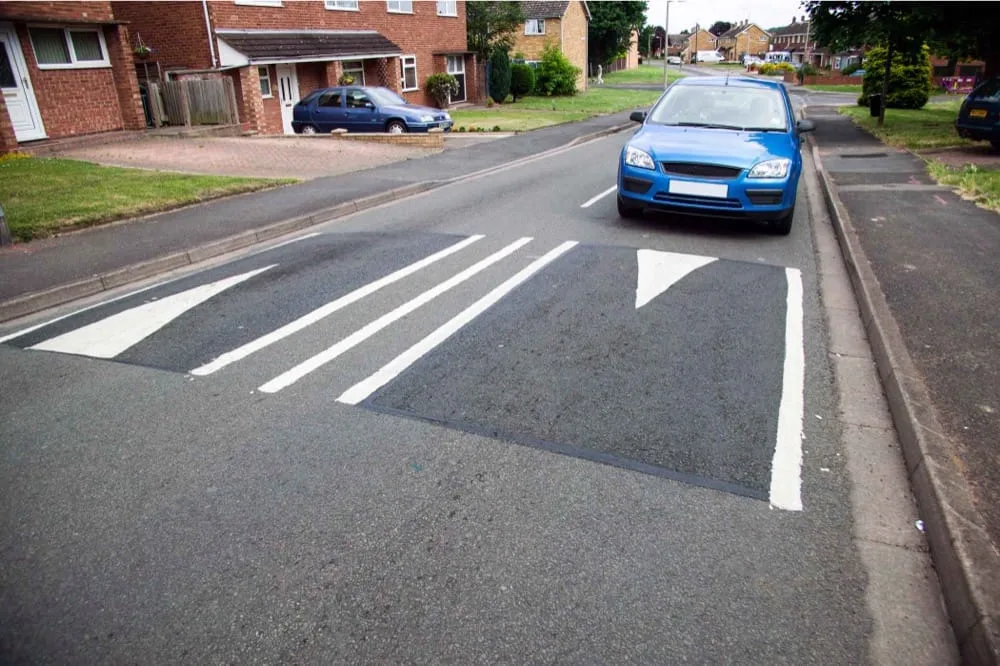
Move across to the left-hand side of the road
Wait for any pedestrians to cross
Check your mirror and slow down
Stop and check both pavements
Show the answer
Check your mirror and slow downThis was the right answer
Many towns have road humps as part of traffic-calming measures, designed to slow down traffic. Reduce your speed when driving over them. If you go too fast, you could lose control or damage your car. Look out for pedestrians or cyclists while you're driving in these areas.
More car topics
13 moreEvery question in this bank sits in one of these, and each one is a page like this.
Alertness26 questionsAttitude39 questionsEssential documents28 questionsHazard awareness78 questionsIncidents, accidents and emergencies48 questionsMotorway rules57 questionsOther types of vehicle22 questionsRoad and traffic signs133 questionsRules of the road67 questionsSafety and your vehicle77 questionsVehicle handling45 questionsVehicle loading21 questionsVulnerable road users71 questionsAll car questionsThe whole bank, in 14 topics