Loading the question bank
Car · DVSA-based revision questions
Attitude
39 car theory test questions on attitude. Preview the questions below, or open one to read its answer and continue through the whole topic.
Practise
Be marked as you go
A session draws from all 39 of these, weakest first, and marks each answer the moment you give it. Nothing here needs an account.
The questions
20 of 39The first 20 in the order the pack holds them. Open the answer when you want to check yourself; a session draws from all 39 and marks you instead.
What must you do when the amber light is flashing at a pelican crossing?
Stop and wait for the green light
Stop and wait for the red light
Give way to pedestrians waiting to cross
Give way to pedestrians already on the crossing
Show the answer
Give way to pedestrians already on the crossingThis was the right answer
Pelican crossings are signal-controlled crossings operated by pedestrians. Push-button controls change the signals. Pelican crossings have no red-and-amber stage before green; instead, they have a flashing amber light. This means you must give way to pedestrians who are on the crossing but if the crossing is clear you can continue.
Why should you never wave people across at pedestrian crossings?
Another vehicle may be coming
They may not be looking
It's safer for you to carry on
They may not be ready to cross
Show the answer
Another vehicle may be comingThis was the right answer
If people are waiting to use a pedestrian crossing, slow down and be prepared to stop. Don't wave them across the road, because another driver may not have seen them, may not have seen your signal, and may not be able to stop safely.
Why is it dangerous to travel too close to the vehicle ahead?
Your engine will overheat
Your mirrors will need adjusting
Your view of the road ahead will be restricted
Your sat nav will be confused
Show the answer
Your view of the road ahead will be restrictedThis was the right answer
‘Tailgating’ is the term used when a driver or rider follows the vehicle in front too closely. It's dangerous because it restricts your view of the road ahead and leaves no safety margin if the vehicle in front needs to slow down or stop suddenly. Tailgating is often the underlying cause of rear-end collisions or multiple pile-ups.
What will happen if you follow this vehicle too closely?
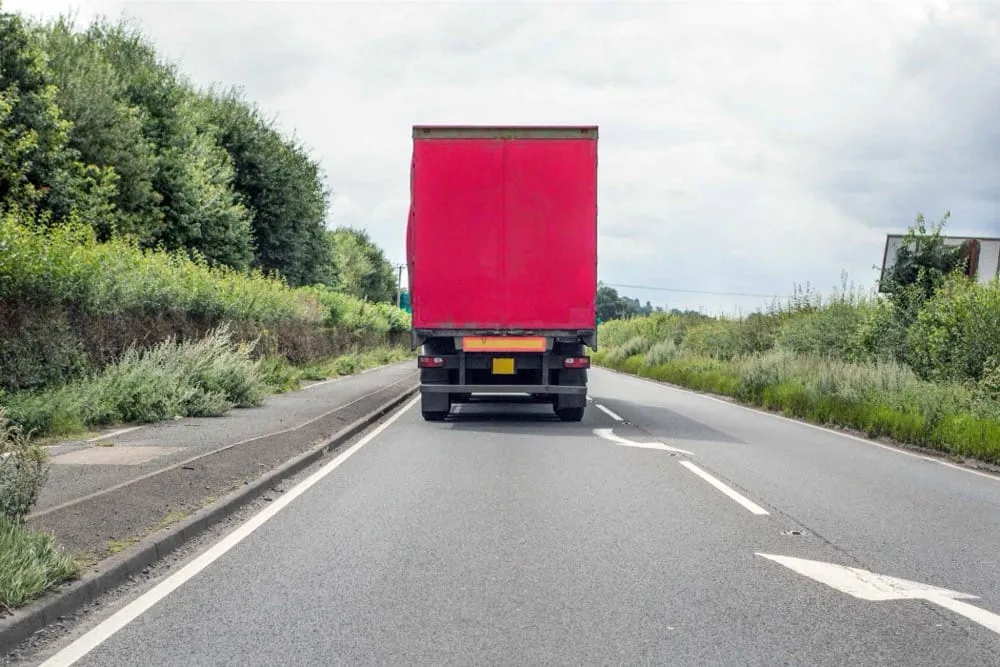
Your brakes will overheat
Your fuel consumption will be increased
Your engine will overheat
Your view ahead will be reduced
Show the answer
Your view ahead will be reducedThis was the right answer
Staying back will increase your view of the road ahead. This will help you to see any hazards that might occur and give you more time to react.
What's the minimum time gap you should leave when following a vehicle on a wet road?
One second
Two seconds
Three seconds
Four seconds
Show the answer
Four secondsThis was the right answer
Water will reduce your tyres' grip on the road. The safe separation gap of at least two seconds in dry conditions should be doubled, to at least four seconds, in wet weather.
You're being overtaken by a long, heavily laden lorry. What should you do if it's taking a long time for it to overtake?
Speed up
Slow down
Hold your speed
Change direction
Show the answer
Slow downThis was the right answer
A long lorry with a heavy load will need more time to pass you than a car, especially on an uphill stretch of road. Slow down and allow the lorry to pass.
Which vehicle will use a blue flashing beacon?
Motorway maintenance
Bomb disposal
Snow plough
Breakdown recovery
Show the answer
Bomb disposalThis was the right answer
Emergency vehicles use blue flashing lights. If you see or hear one, move out of its way as soon as it's safe and legal to do so.
What should you do if you're being followed by an ambulance showing flashing blue lights?
Pull over as soon as it's safe to do so
Accelerate hard to get away from it
Maintain your speed and course
Brake harshly and stop well out into the road
Show the answer
Pull over as soon as it's safe to do soThis was the right answer
Pull over in a place where the ambulance can pass safely. Check that there are no bollards or obstructions in the road that will prevent it from passing.
What type of emergency vehicle is fitted with a green flashing beacon?
Fire engine
Road gritter
Ambulance
Doctor's car
Show the answer
Doctor's carThis was the right answer
A green flashing beacon on a vehicle means the driver or passenger is a doctor on an emergency call. Give way to them if it's safe to do so. Be aware that the vehicle may be travelling quickly or may stop in a hurry.
Who should obey diamond-shaped traffic signs?
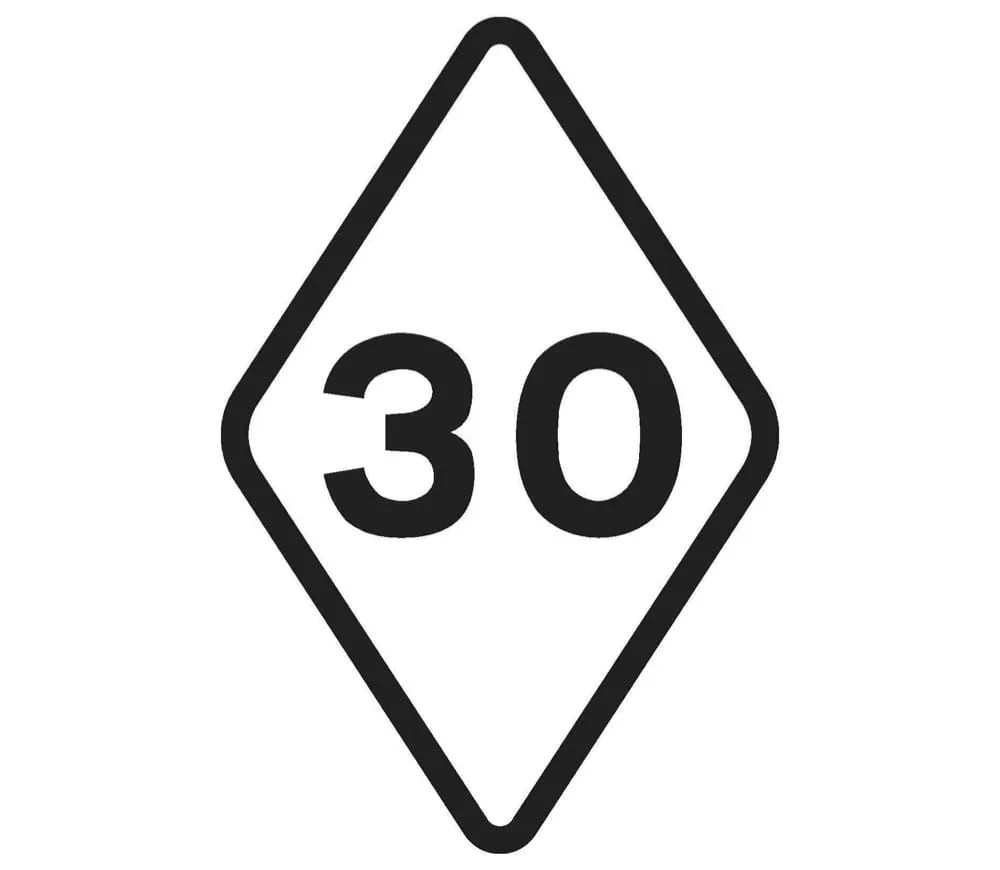
Tram drivers
Bus drivers
Lorry drivers
Taxi drivers
Show the answer
Tram driversThis was the right answer
These signs apply only to tram drivers, but you should know their meaning so that you're aware of the priorities and are able to anticipate the actions of the driver.
On a road where trams operate, which vehicles will be most at risk from the tram rails?
Cars
Cycles
Buses
Lorries
Show the answer
CyclesThis was the right answer
The narrow wheels of a bicycle can become stuck in the tram rails, causing the cyclist to stop suddenly, wobble or even lose balance altogether. The tramlines are also slippery, which could cause a cyclist to slide or fall off.
When should you use your vehicle's horn?
To alert others to your presence
To allow you right of way
To greet other road users
To signal your annoyance
Show the answer
To alert others to your presenceThis was the right answer
You mustn't use your vehicle's horn between 11.30 pm and 7 am in a built-up area or when you're stationary, unless a moving vehicle poses a danger. Its function is to alert other road users to your presence.
You're in a one-way street and want to turn right. Where should you position your vehicle when there are two lanes?
In the right-hand lane
In the left-hand lane
In either lane, depending on the traffic
Just left of the centre line
Show the answer
In the right-hand laneThis was the right answer
When you’re in a one-way street and want to turn right, you should take up a position in the right-hand lane. This will allow other road users, not wishing to turn, to pass on the left. Indicate your intention and take up the correct position in good time.
You wish to turn right ahead. Why should you take up the correct position in good time?
To allow other drivers to pull out in front of you
To give a better view into the road that you're joining
To help other road users know what you intend to do
To allow drivers to pass you on the right
Show the answer
To help other road users know what you intend to doThis was the right answer
If you wish to turn right into a side road, take up your position in good time. Move to the centre of the road when it's safe to do so. This will allow vehicles to pass you on the left. Early planning will show other traffic what you intend to do.
Which type of crossing allows cyclists to ride across with pedestrians?
Toucan
Puffin
Pelican
Zebra
Show the answer
ToucanThis was the right answer
A toucan crossing is designed to allow pedestrians and cyclists to cross at the same time. Look out for cyclists approaching the crossing at speed.
You're travelling at the legal speed limit. What should you do if the vehicle behind approaches quickly, flashing its headlights?
Accelerate to make a gap behind you
Touch the brakes sharply to show your brake lights
Maintain your speed to prevent the vehicle from overtaking
Allow the vehicle to overtake
Show the answer
Allow the vehicle to overtakeThis was the right answer
Don’t enforce the speed limit by blocking another vehicle’s progress. This will only cause frustration. Allow the other vehicle to pass when you can do so safely.
When should you flash your headlights at other road users?
When showing that you're giving way
When showing that you're about to turn
When telling them that you have right of way
When letting them know that you're there
Show the answer
When letting them know that you're thereThis was the right answer
You should only flash your headlights to warn others of your presence. Don't use them to greet others, show impatience or give priority to other road users, because they could misunderstand your signal.
You're approaching an unmarked crossroads. How should you deal with the junction?
Accelerate and keep to the middle
Slow down and keep to the right
Accelerate and look to the left
Slow down and look both ways
Show the answer
Slow down and look both waysThis was the right answer
Be cautious, especially when your view is restricted by hedges, bushes, walls, large vehicles, etc. In the summer months, these junctions can become more difficult to deal with, because growing foliage may further obscure your view.
The conditions are good and dry. When should you use the 'two-second rule'?
Before restarting the engine after it has stalled
When checking your gap from the vehicle in front
Before using the 'Mirrors - Signal - Manoeuvre' routine
When traffic lights change to green
Show the answer
When checking your gap from the vehicle in frontThis was the right answer
In good conditions, the 'two-second rule' can be used to check the distance between your vehicle and the one in front. This technique works on roads carrying faster traffic. Choose a fixed object, such as a bridge, sign or tree. When the vehicle ahead passes this object, say to yourself 'Only a fool breaks the two-second rule.' If you reach the object before you finish saying this, you're too close.
Which colour follows the green signal at a puffin crossing?
Steady red
Flashing amber
Steady amber
Flashing green
Show the answer
Steady amberThis was the right answer
Puffin crossings have infra-red sensors that detect when pedestrians are crossing and hold the red traffic signal until the crossing is clear. The use of a sensor means there's no flashing amber phase as there is with a pelican crossing.
More car topics
13 moreEvery question in this bank sits in one of these, and each one is a page like this.
Alertness26 questionsEssential documents28 questionsHazard awareness78 questionsIncidents, accidents and emergencies48 questionsMotorway rules57 questionsOther types of vehicle22 questionsRoad and traffic signs133 questionsRules of the road67 questionsSafety and your vehicle77 questionsSafety margins34 questionsVehicle handling45 questionsVehicle loading21 questionsVulnerable road users71 questionsAll car questionsThe whole bank, in 14 topics