Loading the question bank
Car · DVSA-based revision questions
Hazard awareness
78 car theory test questions on hazard awareness. Preview the questions below, or open one to read its answer and continue through the whole topic.
Practise
Be marked as you go
A session draws from all 78 of these, weakest first, and marks each answer the moment you give it. Nothing here needs an account.
The questions
20 of 78The first 20 in the order the pack holds them. Open the answer when you want to check yourself; a session draws from all 78 and marks you instead.
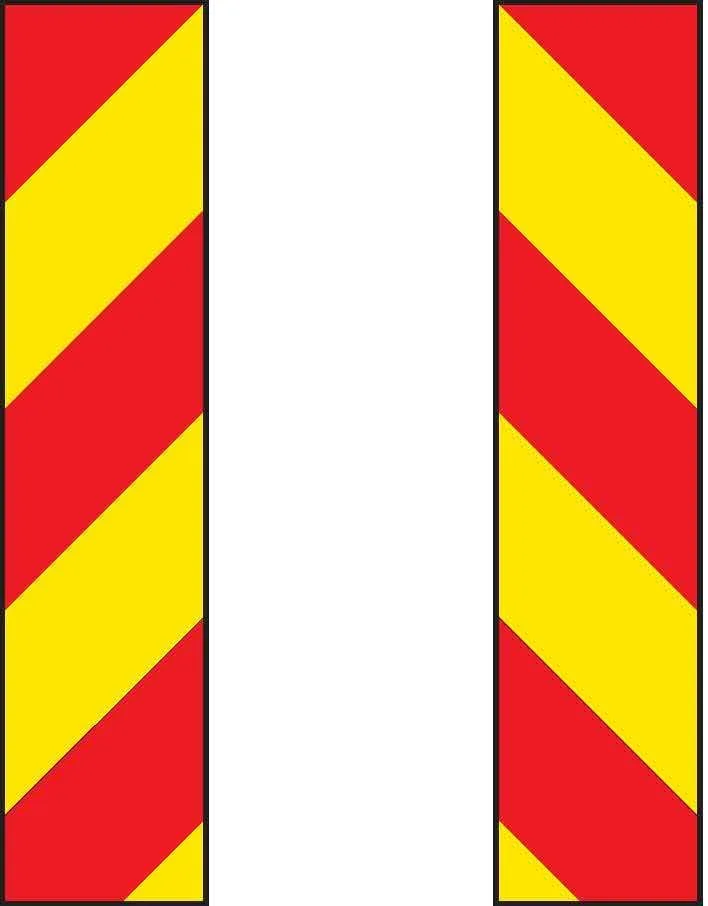
Where would you expect to see these markers?
On a motorway sign
On a railway bridge
On a heavy goods vehicle
On a diversion sign
Show the answer
On a heavy goods vehicleThis was the right answer
These markers must be fitted to vehicles over 13 metres long, heavy goods vehicles, and rubbish skips placed in the road. They're reflective to make them easier to see in the dark.
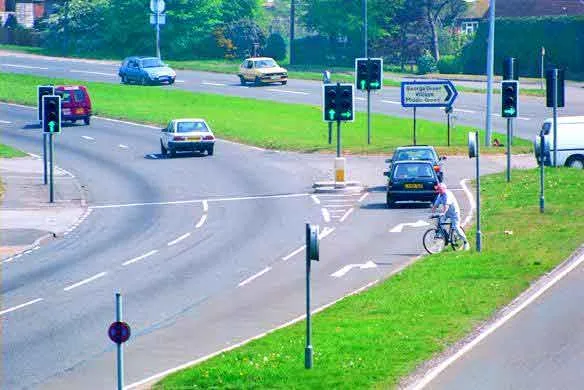
What's the main hazard shown in this picture?
Vehicles turning right
Vehicles doing U-turns
The cyclist crossing the road
Parked cars around the corner
Show the answer
The cyclist crossing the roadThis was the right answer
Look at the picture carefully and try to imagine you're there. The cyclist in this picture appears to be trying to cross the road. You must be able to deal with the unexpected, especially when you're approaching a hazardous junction. Look well ahead to give yourself time to deal with any hazards.
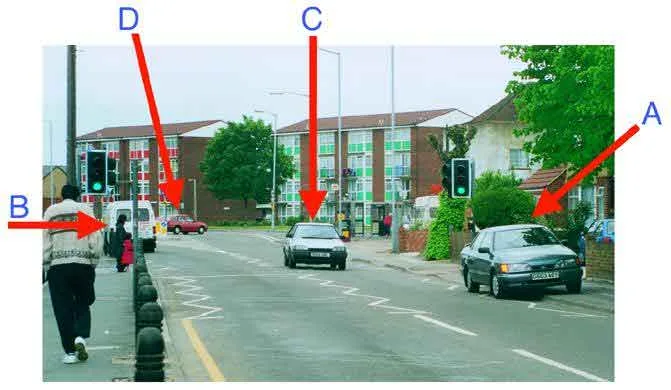
Which road user has caused a hazard?
The parked car (arrowed A)
The pedestrian waiting to cross (arrowed B)
The moving car (arrowed C)
The car turning (arrowed D)
Show the answer
The parked car (arrowed A)This was the right answer
The car arrowed A is parked within the area marked by zigzag lines at the pedestrian crossing. Parking here is illegal. It also
• blocks the view for pedestrians wishing to cross the road
• restricts the view of the crossing for approaching traffic.
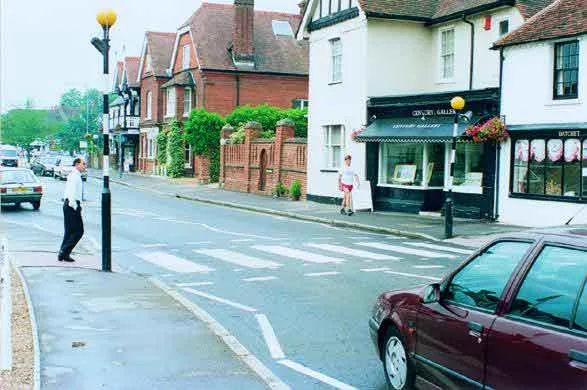
What should the driver of the car approaching the crossing do?
Continue at the same speed
Sound the horn
Drive through quickly
Slow down and get ready to stop
Show the answer
Slow down and get ready to stopThis was the right answer
Look well ahead to see whether any hazards are developing. This will give you more time to deal with them in the correct way. The man in the picture is clearly intending to cross the road. You should be travelling at a speed that allows you to check your mirror, slow down and stop in good time. You shouldn't have to brake harshly.
What should the driver of the grey car be especially aware of?
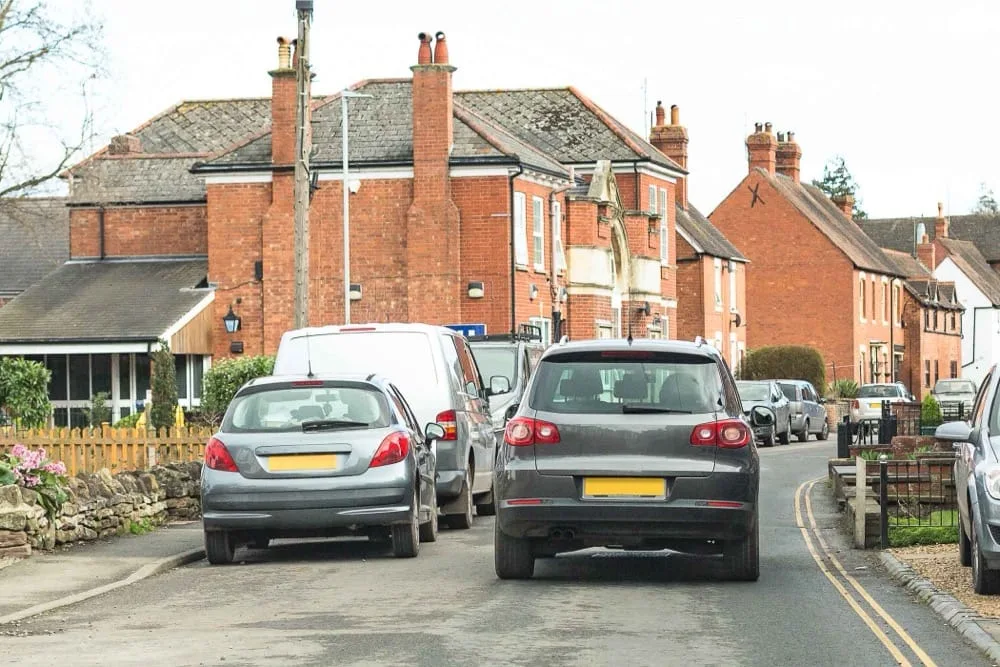
The uneven road surface
Traffic following behind
Doors opening on parked cars
Empty parking spaces
Show the answer
Doors opening on parked carsThis was the right answer
When passing parked cars, there's a risk that a driver or passenger may not check before opening the door into the road. A defensive driver will drive slowly and be looking for people who may be about to get out of their car.
What should you expect if you see this sign ahead?
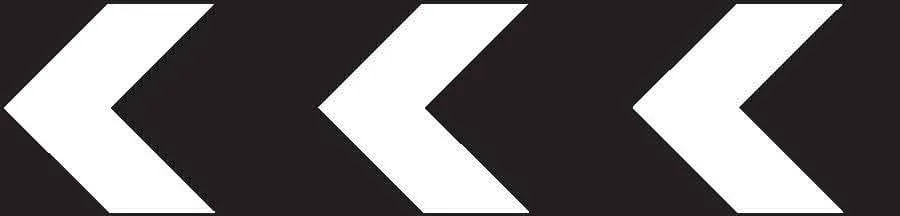
The road will go steeply uphill
The road will go steeply downhill
The road will bend sharply to the left
The road will bend sharply to the right
Show the answer
The road will bend sharply to the leftThis was the right answer
This sign indicates that the road will bend sharply to the left. Slow down in plenty of time and select the correct gear before you start to turn. Braking hard and late, while also sharply changing direction, is likely to cause a skid.
What should you do as you approach this cyclist?
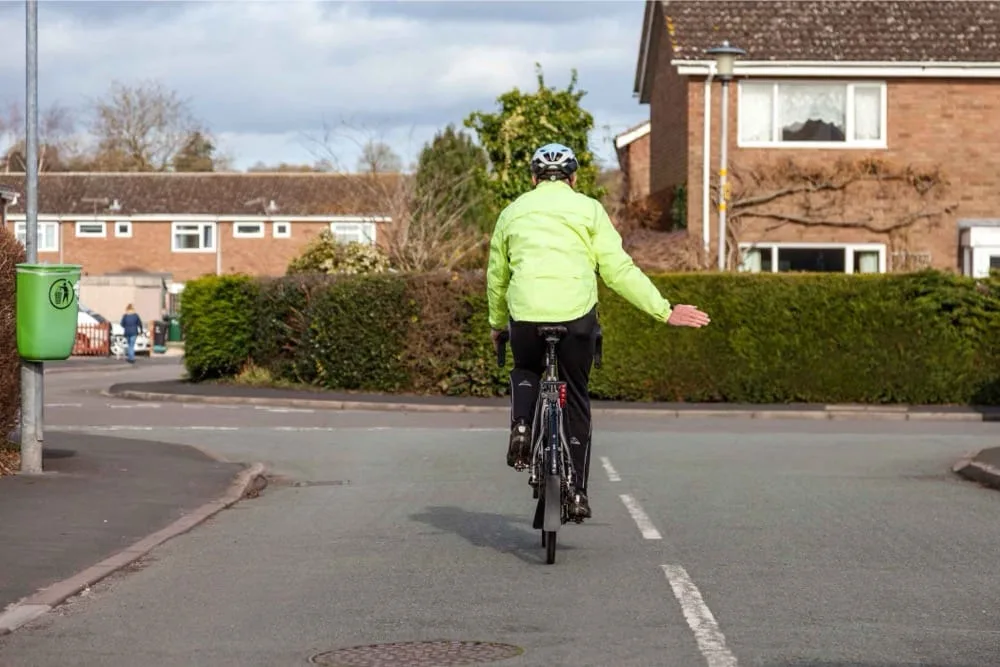
Try to overtake before the cyclist gets to the junction
Flash your headlights at the cyclist
Slow down and allow the cyclist to turn
Rev your engine so the cyclist knows you're following behind
Show the answer
Slow down and allow the cyclist to turnThis was the right answer
Keep well back and give the cyclist time and room to turn safely. Don’t intimidate them by getting too close or trying to squeeze past.
Why must you take great care when emerging from this junction?
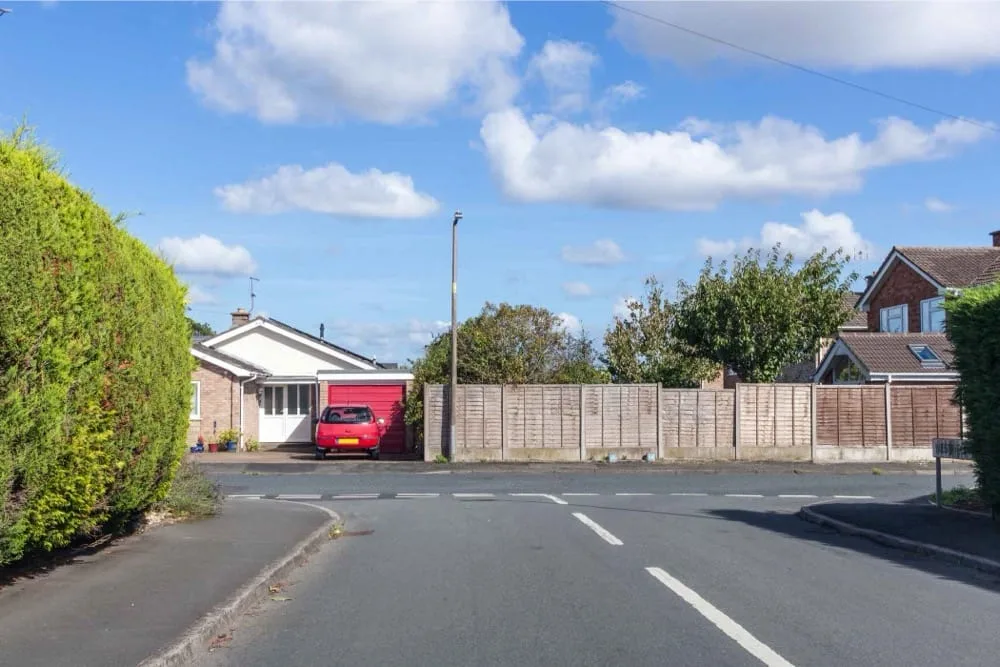
The road surface is poor
The footpath is narrow
The kerbs are high
The view is restricted
Show the answer
The view is restrictedThis was the right answer
You may have to pull forward slowly until you can see up and down the road. Be aware that the traffic approaching the junction can’t see you either. If you don’t know that it’s clear, don’t go.
Which type of vehicle should you be ready to give way to as you approach this bridge?
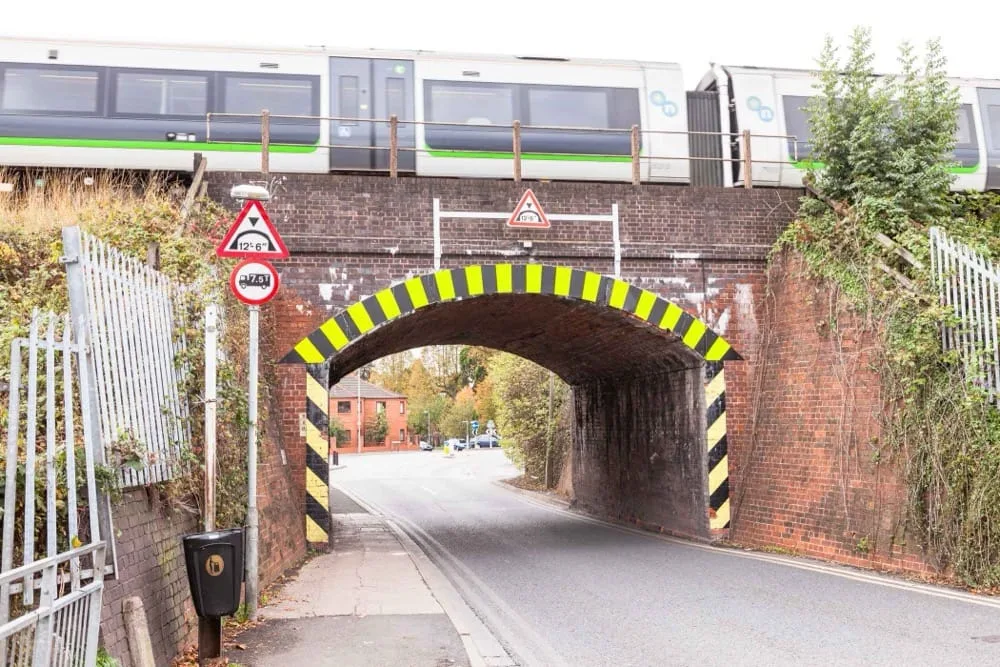
Bicycles
Buses
Motorcycles
Cars
Show the answer
BusesThis was the right answer
A bus or high-sided lorry will have to take a position in the centre of the road to clear the bridge. There's normally a sign to show this. Look well ahead, past the bridge and be ready to stop and give way to large oncoming vehicles.
What type of vehicle could you expect to meet in the middle of the road?
Lorry
Bicycle
Car
Motorcycle
Show the answer
LorryThis was the right answer
The highest point of the bridge is in the centre, so a large vehicle might have to move to the centre of the road to have enough room to pass safely under the bridge.
What must you do at this junction?
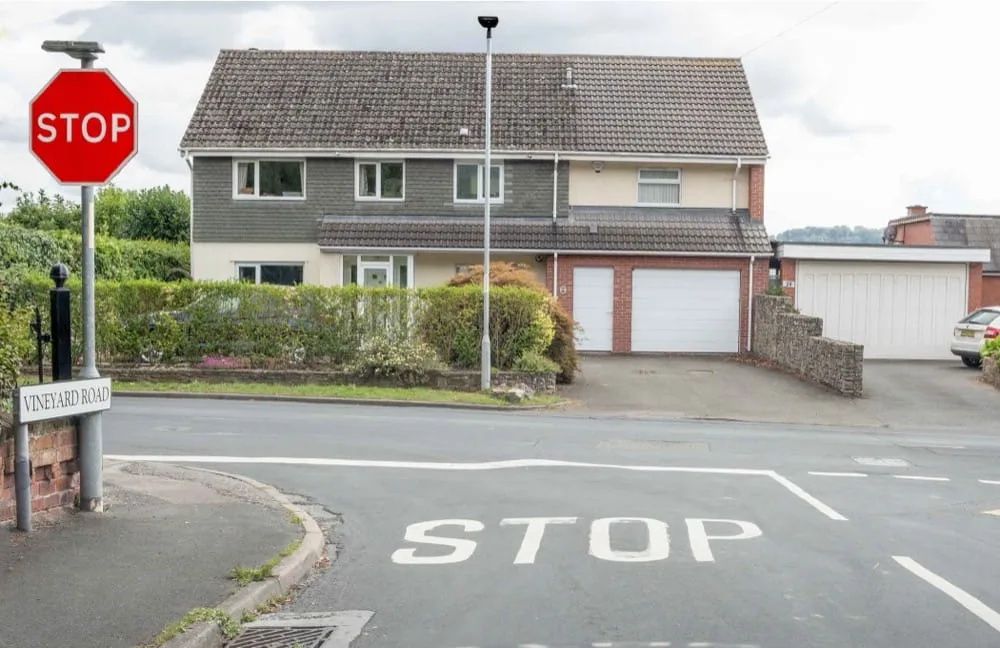
Stop behind the line, then edge forward to see clearly
Stop beyond the line, at a point where you can see clearly
Stop only if there's traffic on the main road
Stop only if you're turning right
Show the answer
Stop behind the line, then edge forward to see clearlyThis was the right answer
The ‘stop’ sign has been put here because the view into the main road is poor. You must stop because it won't be possible to take proper observation while you're moving.
What should you do if a driver pulls out of a side road in front of you, causing you to brake hard?
Ignore the error and stay calm
Flash your lights to show your annoyance
Sound your horn to show your annoyance
Overtake as soon as possible
Show the answer
Ignore the error and stay calmThis was the right answer
Be tolerant if a vehicle emerges and you have to brake quickly. Anyone can make a mistake, so don’t react aggressively. Be alert where there are side roads and be especially careful where there are parked vehicles, because these can make it difficult for emerging drivers to see you.
Why should you make allowances for older drivers?
Older drivers are exempt from wearing seat belts
Older drivers can only drive cars that have automatic gearboxes
Older drivers’ reactions may be slower than other drivers
Older drivers take more risks than other drivers
Show the answer
Older drivers’ reactions may be slower than other driversThis was the right answer
As people age, their reaction time gets slower. The rate of decline varies from person to person but you can expect them to take longer to react to a hazard and they may be hesitant in some situations – for example, at a junction.
Do you need to plan rest stops when you’re planning a long journey?
Yes, you should plan to stop every half an hour
Yes, regular stops help concentration
No, you’ll be less tired if you get there as soon as possible
No, only fuel stops will be needed
Show the answer
Yes, regular stops help concentrationThis was the right answer
Try to plan your journey so that you can take rest stops. It’s recommended that you take a break of at least 15 minutes after every two hours of driving or riding. This should help to maintain your concentration.
What should you do if the red lights start flashing as you approach a level crossing?
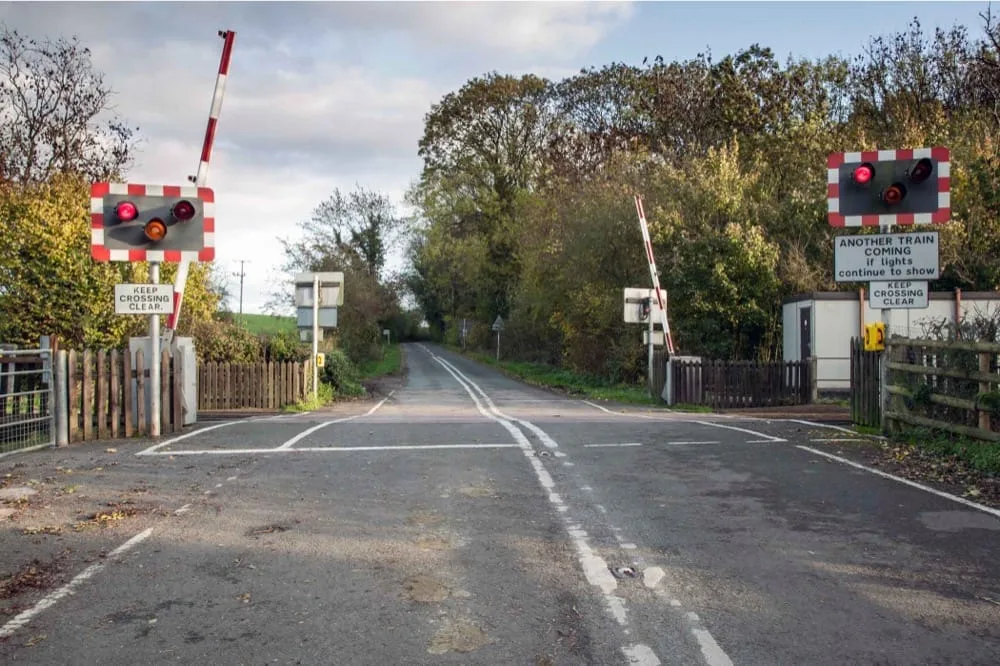
Go over it quickly
Go over it carefully
Stop before the barrier
Switch on your hazard warning lights
Show the answer
Stop before the barrierThis was the right answer
At level crossings, the red lights flash before and while the barrier is down. At most crossings, an amber light will precede the red lights. You must stop behind the white line unless you've already crossed it when the amber light comes on. Don't be tempted to zigzag around half-barriers.
You're approaching a crossroads. What should you do if the traffic lights have failed?
Brake and stop only for large vehicles
Brake sharply to a stop before looking
Be prepared to brake sharply to a stop
Be prepared to stop for any traffic
Show the answer
Be prepared to stop for any trafficThis was the right answer
When approaching a junction where the traffic lights have failed, you should proceed with caution. Treat the situation as an unmarked junction and be prepared to stop.
What should the driver of the red car (arrowed) do?
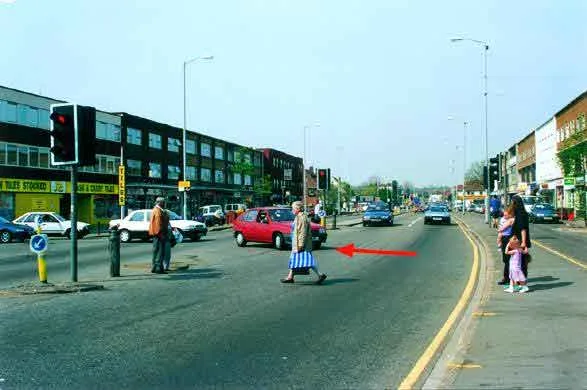
Wave towards the pedestrians who are waiting to cross
Wait for the pedestrian in the road to cross
Quickly drive behind the pedestrian in the road
Tell the pedestrian in the road she shouldn't have crossed
Show the answer
Wait for the pedestrian in the road to crossThis was the right answer
Some people might take a long time to cross the road. They may be older or have a disability. Be patient and don't hurry them by showing your impatience. If pedestrians are standing at the side of the road, don't signal or wave them to cross. Other road users might not have seen your signal and this could lead the pedestrians into a hazardous situation.
You're following a slower-moving vehicle. What should you do if there's a junction just ahead on the right?
Overtake after checking your mirrors and signalling
Only consider overtaking when you're past the junction
Accelerate quickly to overtake before reaching the junction
Slow down and prepare to overtake on the left
Show the answer
Only consider overtaking when you're past the junctionThis was the right answer
You should never overtake as you approach a junction. If a vehicle emerged from the junction while you were overtaking, a dangerous situation could develop very quickly.
What should you do as you approach this overhead bridge?
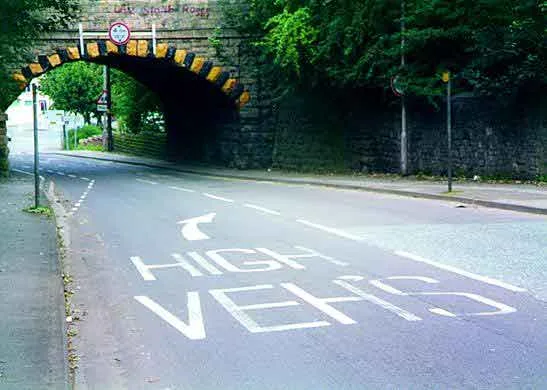
Move out to the centre of the road before going through
Find another route; this one is only for high vehicles
Be prepared to give way to large vehicles in the middle of the road
Move across to the right-hand side before going through
Show the answer
Be prepared to give way to large vehicles in the middle of the roadThis was the right answer
Oncoming large vehicles may need to move to the middle of the road to pass safely under the bridge. There won't be enough room for you to continue, so you should be ready to stop and wait.
Why are vehicle mirrors often slightly curved (convex)?
They give a wider field of vision
They totally cover blind spots
They make it easier to judge the speed of the traffic behind
They make the traffic behind look bigger
Show the answer
They give a wider field of visionThis was the right answer
Although a convex mirror gives a wide view of the scene behind, you should be aware that it won't show you everything behind or to the side of your vehicle. Before you move off, you'll need to look over your shoulder to check for anything not visible in the mirrors.
More car topics
13 moreEvery question in this bank sits in one of these, and each one is a page like this.
Alertness26 questionsAttitude39 questionsEssential documents28 questionsIncidents, accidents and emergencies48 questionsMotorway rules57 questionsOther types of vehicle22 questionsRoad and traffic signs133 questionsRules of the road67 questionsSafety and your vehicle77 questionsSafety margins34 questionsVehicle handling45 questionsVehicle loading21 questionsVulnerable road users71 questionsAll car questionsThe whole bank, in 14 topics