Loading the question bank
Car · DVSA-based revision questions
Rules of the road
67 car theory test questions on rules of the road. Preview the questions below, or open one to read its answer and continue through the whole topic.
Practise
Be marked as you go
A session draws from all 67 of these, weakest first, and marks each answer the moment you give it. Nothing here needs an account.
The questions
20 of 67The first 20 in the order the pack holds them. Open the answer when you want to check yourself; a session draws from all 67 and marks you instead.
What's the meaning of this sign?
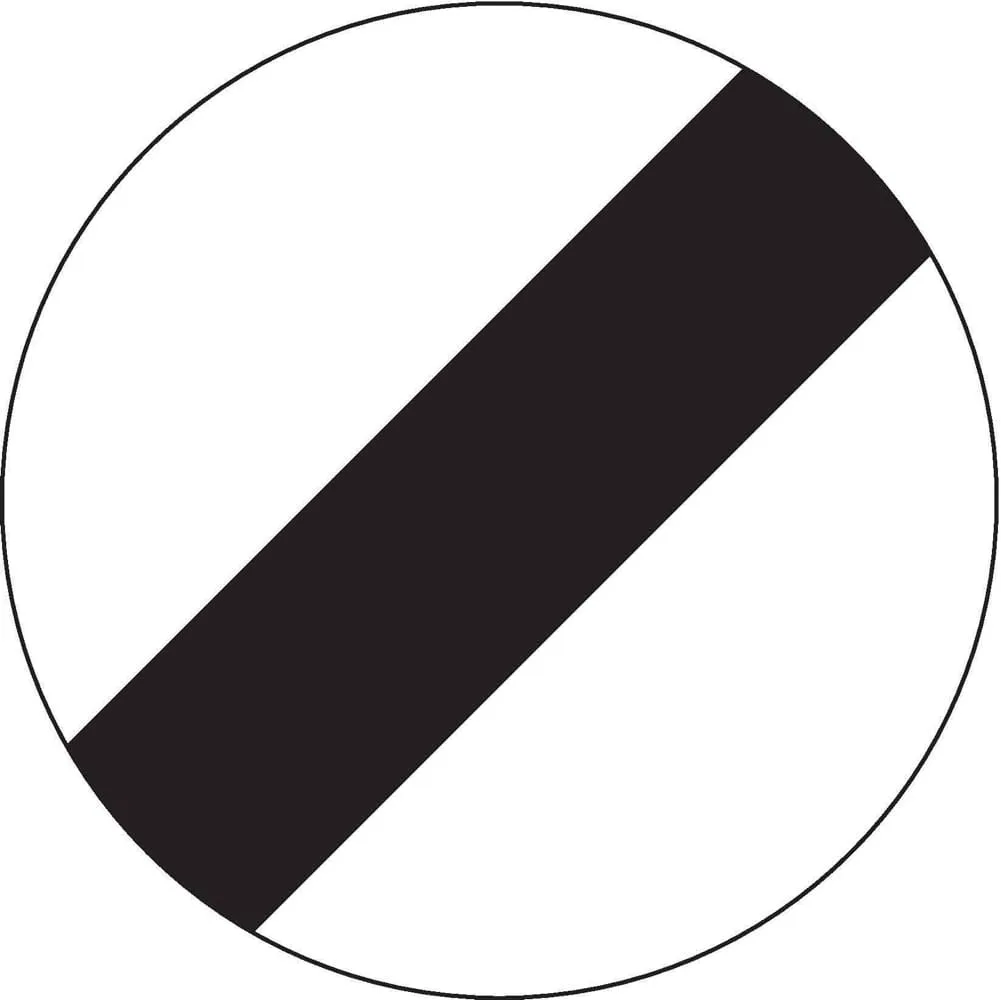
Local speed limit applies
No waiting on the carriageway
National speed limit applies
No entry for vehicles
Show the answer
National speed limit appliesThis was the right answer
This sign doesn't tell you the speed limit in figures. You should know the speed limit for the type of road that you're on and the type of vehicle that you're driving or riding. Study your copy of The Highway Code.
What's the national speed limit for cars and motorcycles on a dual carriageway?
30 mph
50 mph
60 mph
70 mph
Show the answer
70 mphThis was the right answer
Make sure that you know the speed limit for the road that you're on. The speed limit on a dual carriageway or motorway is 70 mph for cars and motorcycles, unless signs indicate otherwise. The speed limits for different types of vehicle are listed in The Highway Code.
There are no speed-limit signs on the road. In England, Scotland and Northern Ireland how is a 30 mph limit generally indicated?
By hazard warning lines
By street lighting
By pedestrian islands
By double or single yellow lines
Show the answer
By street lightingThis was the right answer
In England, Scotland and Northern Ireland, there's a 30 mph speed limit where there are street lights unless signs show another limit.
In Wales street lights indicate the limit is 20 mph unless signs show otherwise.
In England, Scotland and Northern Ireland what will the speed limit usually be where you can see street lights but no speed-limit signs?
30 mph
40 mph
50 mph
60 mph
Show the answer
30 mphThis was the right answer
In England, Scotland and Northern Ireland the presence of street lights generally indicates that there's a 30 mph speed limit, unless signs tell you otherwise.
In Wales street lights indicate a 20 mph limit unless signs show otherwise.
What does this sign mean?
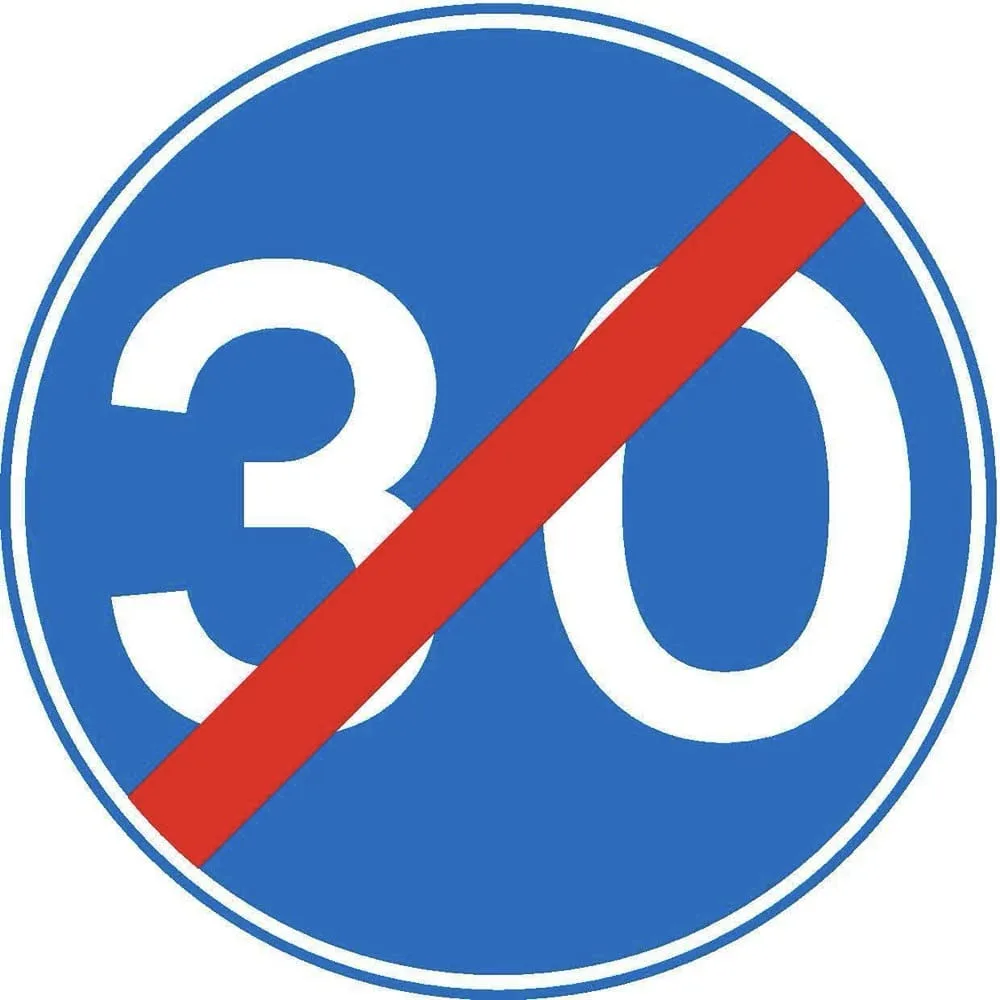
Minimum speed 30 mph
End of maximum speed
End of minimum speed
Maximum speed 30 mph
Show the answer
End of minimum speedThis was the right answer
The red slash through the sign indicates that the restriction has ended. In this case, the restriction was a minimum speed limit of 30 mph.
What should you do if you want to overtake a tractor but aren't sure that it's safe?
Follow another vehicle as it overtakes the tractor
Sound your horn to make the tractor driver pull over
Speed past, flashing your lights at oncoming traffic
Stay behind it if you're in any doubt
Show the answer
Stay behind it if you're in any doubtThis was the right answer
Following a tractor can be frustrating, but never overtake if you’re unsure whether it’s safe. Ask yourself: 'Can I see far enough down the road to ensure that I can complete the manoeuvre safely?' It's better to be delayed for a minute or two than to take a chance that may cause a collision.
Which vehicle is most likely to take an unusual course at a roundabout?
Estate car
Taxi
Delivery van
Long vehicle
Show the answer
Long vehicleThis was the right answer
Long vehicles might have to take a slightly different position when approaching the roundabout or going around it. This is to stop the rear of the vehicle cutting in and mounting the kerb.
When may you stop on a clearway?
Never
When it's busy
In the rush hour
During daylight hours
Show the answer
NeverThis was the right answer
Clearways are in place so that traffic can flow without the obstruction of parked vehicles. Just one parked vehicle can cause an obstruction for all other traffic. You mustn't stop where a clearway is in force, not even to pick up or set down passengers.
What's the meaning of this sign?
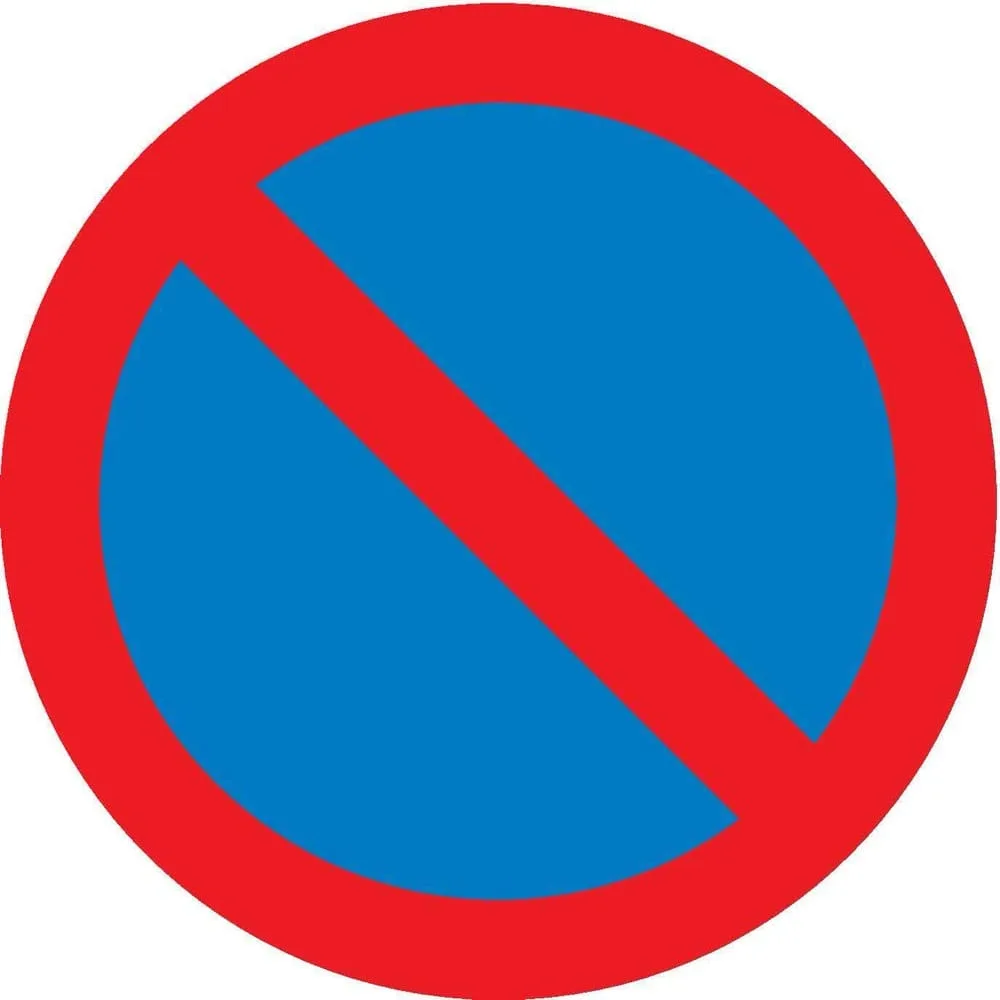
No entry
Waiting restrictions
National speed limit
School crossing patrol
Show the answer
Waiting restrictionsThis was the right answer
This sign indicates that there are waiting restrictions. It's normally accompanied by details of when the restrictions are in force.
Details of most signs in common use are shown in The Highway Code. For more comprehensive coverage, see Know Your Traffic Signs.
You're looking for somewhere to park at night. When may you park on the right-hand side of the road?
When you're in a one-way street
When you have your sidelights on
When you're more than 10 metres (32 feet) from a junction
When you're under a lamppost
Show the answer
When you're in a one-way streetThis was the right answer
Red rear reflectors show up when headlights shine on them. These are useful when you're parked at night, but they'll only reflect if you park in the same direction as the traffic flow. Normally you should park on the left, but in a one-way street you may also park on the right-hand side of the road.
When should you use the right-hand lane of a three-lane dual carriageway?
When you're overtaking only
When you're overtaking or turning right
When you're using cruise control
When you're turning right only
Show the answer
When you're overtaking or turning rightThis was the right answer
You should normally use the left-hand lane on any dual carriageway unless you're overtaking or turning right.
When overtaking on a dual carriageway, look for vehicles ahead that are turning right. They may be slowing or stopped. You need to see them in good time so that you can take appropriate action.
You're approaching a busy junction. What should you do when, at the last moment, you realise you're in the wrong lane?
Continue in that lane
Force your way into the lane you need
Stop until the area has cleared
Use arm signals to help you change lane
Show the answer
Continue in that laneThis was the right answer
There are times when road markings are obscured by queuing traffic, or you're unsure which lane to use. If, at the last moment, you find you're in the wrong lane, don’t cut across or bully other drivers to let you in. Follow the lane you’re in and find somewhere safe to turn around and rejoin your route.
Where may you overtake on a one-way street?
Only on the left-hand side
Overtaking isn't allowed
Only on the right-hand side
On either the right or the left
Show the answer
On either the right or the leftThis was the right answer
You can overtake other traffic on either side when travelling in a one-way street. Make full use of your mirrors and ensure it's clear all around before you attempt to overtake. Look for signs and road markings, and use the most suitable lane for your destination.
What signal should you give when you're going straight ahead at a roundabout?
Signal left before leaving the roundabout
Don't signal at any time
Signal right when you're approaching the roundabout
Signal left when you're approaching the roundabout
Show the answer
Signal left before leaving the roundaboutThis was the right answer
When going straight ahead at a roundabout, don’t signal as you approach it. Signal left just after passing the exit before the one you wish to take.
Which vehicle might have to take a different course from normal at a roundabout?
Sports car
Van
Estate car
Long vehicle
Show the answer
Long vehicleThis was the right answer
A long vehicle may have to straddle lanes either on or approaching a roundabout so that the rear wheels don’t mount the kerb.
If you’re following a long vehicle, stay well back and give it plenty of room.
When may you enter a box junction?
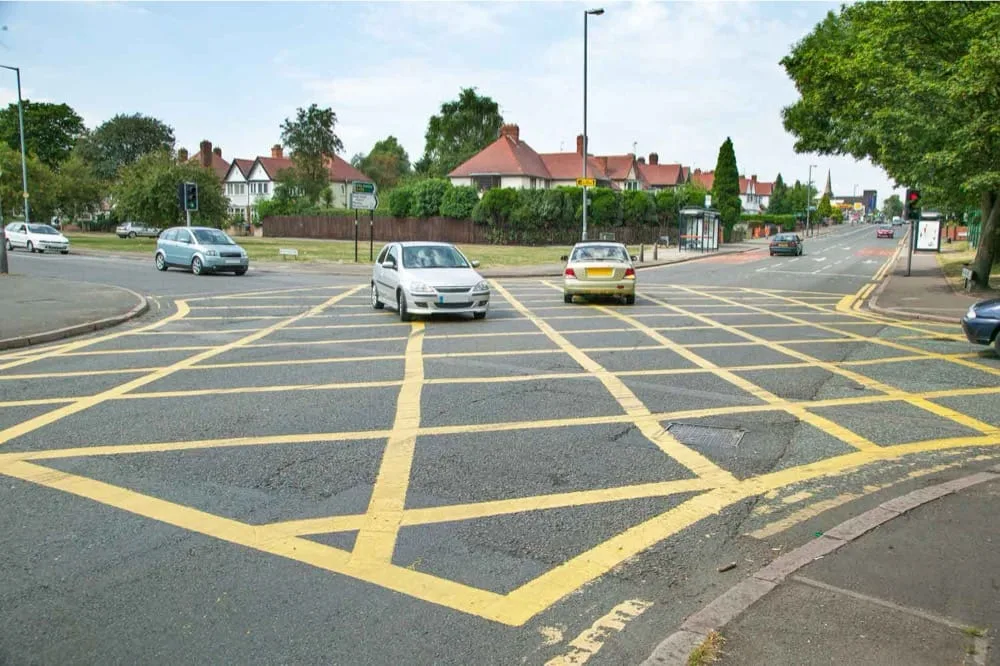
When there are fewer than two vehicles ahead
When signalled by another road user
When your exit road is clear
When traffic signs direct you
Show the answer
When your exit road is clearThis was the right answer
Yellow box junctions are marked on the road to prevent the road becoming blocked. Don’t enter the box unless your exit road is clear. You may wait in the box if you want to turn right and your exit road is clear but oncoming traffic or other vehicles waiting to turn right are preventing you from making the turn.
When may you stop and wait in a box junction?
When oncoming traffic prevents you from turning right
When you're in a queue of traffic turning left
When you're in a queue of traffic going ahead
When you're on a roundabout
Show the answer
When oncoming traffic prevents you from turning rightThis was the right answer
The purpose of yellow box markings is to keep junctions clear of queuing traffic. You may only wait in the marked area when you’re turning right and your exit lane is clear but you can’t complete the turn because of oncoming traffic or other traffic waiting to turn right.
Who is authorised to signal you to stop?
A motorcyclist
A pedestrian
A police officer
A bus driver
Show the answer
A police officerThis was the right answer
You must obey signals to stop given by police and traffic officers, traffic wardens and school crossing patrols. Failure to do so is an offence and could lead to prosecution.
What should you do if you see a pedestrian waiting at a zebra crossing?
Go on quickly before they step onto the crossing
Stop before you reach the zigzag lines and let them cross
Be ready to slow down or stop to let them cross
Ignore them as they're still on the pavement
Show the answer
Be ready to slow down or stop to let them crossThis was the right answer
By standing on the pavement, the pedestrian is showing an intention to cross. By looking well ahead, you'll give yourself time to see the pedestrian, check your mirrors and respond safely.
Which road users benefit from toucan crossings?
Car drivers and motorcyclists
Cyclists and pedestrians
Bus and lorry drivers
Tram and train drivers
Show the answer
Cyclists and pedestriansThis was the right answer
Toucan crossings are similar to pelican crossings but there's no flashing amber phase. Cyclists share the crossing with pedestrians and are allowed to cycle across when the green cycle symbol is shown.
More car topics
13 moreEvery question in this bank sits in one of these, and each one is a page like this.
Alertness26 questionsAttitude39 questionsEssential documents28 questionsHazard awareness78 questionsIncidents, accidents and emergencies48 questionsMotorway rules57 questionsOther types of vehicle22 questionsRoad and traffic signs133 questionsSafety and your vehicle77 questionsSafety margins34 questionsVehicle handling45 questionsVehicle loading21 questionsVulnerable road users71 questionsAll car questionsThe whole bank, in 14 topics