Loading the question bank
Motorcycle · DVSA-based revision questions
Hazard awareness
51 motorcycle theory test questions on hazard awareness. Preview the questions below, or open one to read its answer and continue through the whole topic.
Practise
Be marked as you go
A session draws from all 51 of these, weakest first, and marks each answer the moment you give it. Nothing here needs an account.
The questions
20 of 51The first 20 in the order the pack holds them. Open the answer when you want to check yourself; a session draws from all 51 and marks you instead.
What’s likely to happen if you get cold and wet when you're riding a motorcycle?
Your concentration will be impaired
Your riding will improve
Your visor will freeze up
Your reactions will be quicker
Show the answer
Your concentration will be impairedThis was the right answer
When riding, make sure you wear suitable clothing for the conditions. Getting cold and wet will make you uncomfortable. This can cause you to lose concentration and considerably slow down your reaction time. Stop in a safe place to have a hot drink and warm up before this happens.
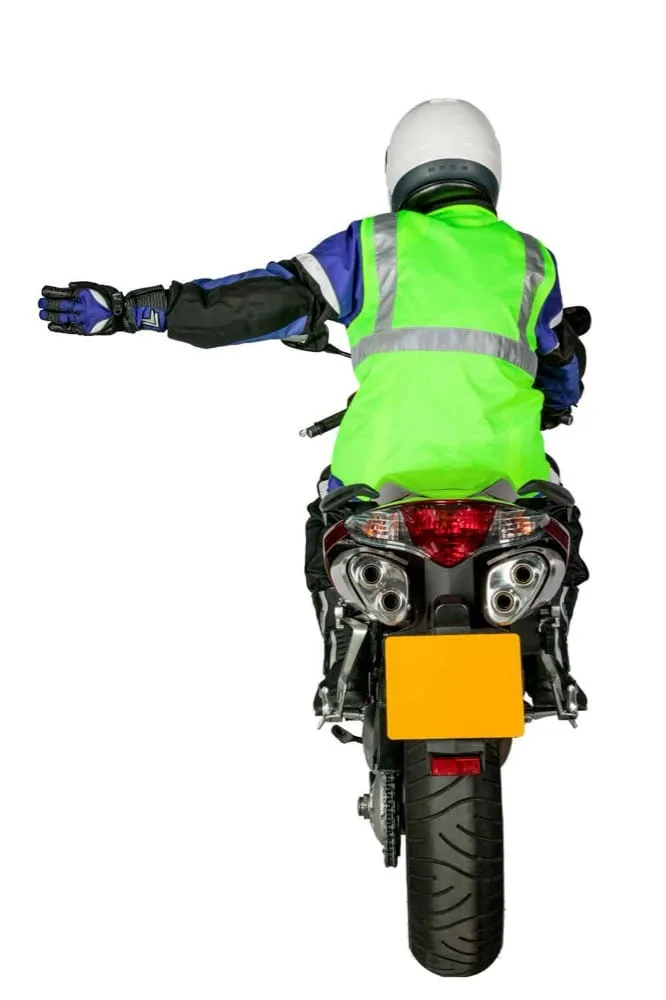
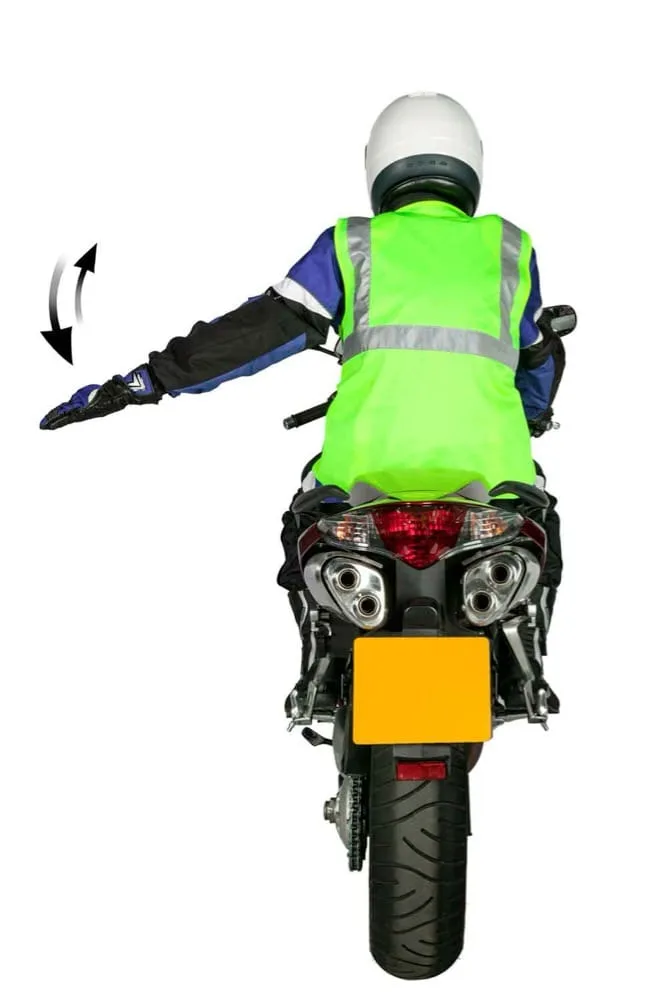
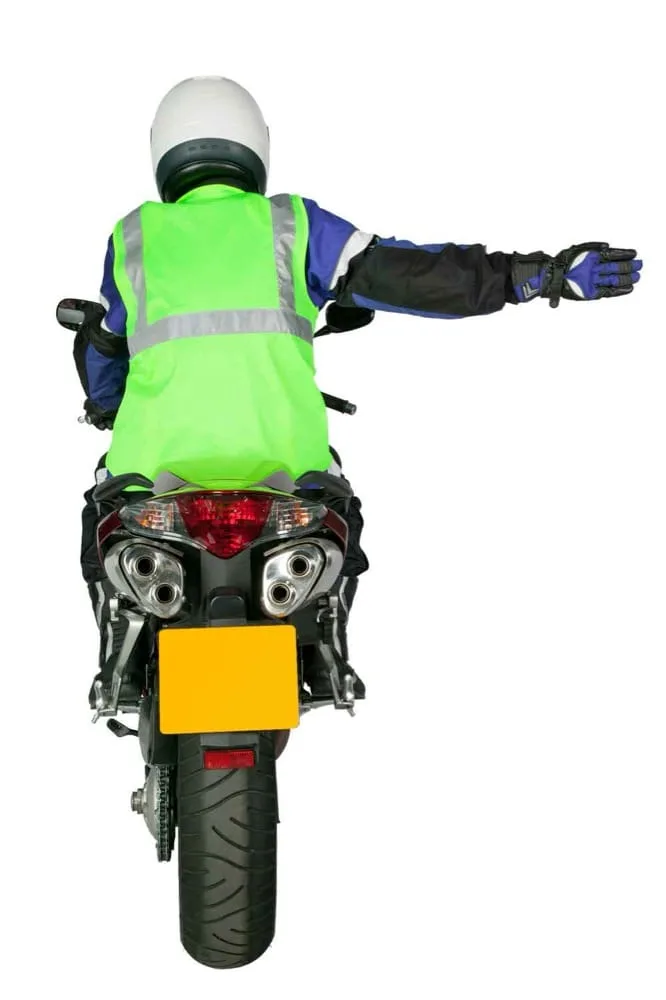
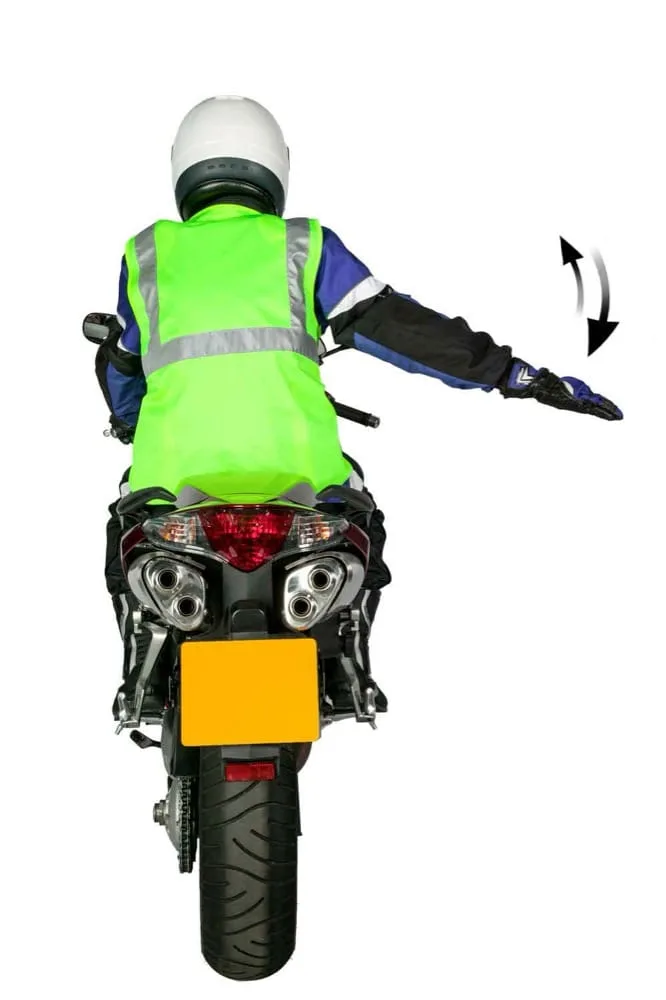
Which arm signal means 'I intend to slow down or stop'?
Show the answer
This was the right answerGive your signal in good time and return your hand to the handlebars before changing speed or direction. While you're giving an arm signal you have reduced steering control and you're unable to operate some controls. If you're travelling at speed, it's generally safer to rely on your direction indicators and brake lights.
What should you do if you're about to ride home, but you can't find the glasses you need to wear?
Ride home slowly, keeping to quiet roads
Borrow a friend’s glasses and use those
Ride home at night, so that the lights will help you
Find a way of getting home without riding
Show the answer
Find a way of getting home without ridingThis was the right answer
If you need glasses to bring your eyesight up to the legal standard for driving or riding, you must wear them whenever you ride. Don’t be tempted to ride if you’ve lost or forgotten your glasses; you'll endanger yourself and other road users, and you’ll be breaking the law.
What is a known effect of drinking alcohol?
Faster reactions
Colour blindness
Poor judgement
Increased concentration
Show the answer
Poor judgementThis was the right answer
Even a small amount of alcohol will impair a person’s judgement. It can increase confidence to a point where a person’s behaviour may become ‘out of character’. Someone who normally behaves sensibly may take risks and could endanger themselves and others. Don’t drink and ride, or accept a lift from anyone who’s been drinking.
When must you wear your glasses if you need them to read vehicle number plates at the required distance?
Only in bad weather conditions
At all times when riding
Only when you think it's necessary
Only in bad light or at night time
Show the answer
At all times when ridingThis was the right answer
Have your eyesight tested before you start your practical training. Then have checks periodically throughout your riding life, as your vision may change.
How are you likely to be affected by drinking alcohol?
You'll be more cautious and perceptive
The speed of your reactions will increase
Your judgement of speed will be worse
Your awareness of danger will improve
Show the answer
Your judgement of speed will be worseThis was the right answer
Never drink if you're going to drive or ride. Your judgement can be seriously affected, even if you aren't over the drink-drive limit. Don't take risks; it isn't worth it.
Which type of glasses shouldn't be worn when riding at night?
Half-moon
Round
Bifocal
Tinted
Show the answer
TintedThis was the right answer
If you're riding at night or in poor visibility, tinted lenses or a tinted visor will reduce the amount of available light reaching your eyes, making you less able to see clearly.
When may you use your motorcycle's hazard warning lights?
When you're riding on a motorway, to warn traffic behind of a hazard ahead
When you’re double parked on a two-way road
When your direction indicators aren't working
When you're riding in town, to warn oncoming traffic that you intend to stop
Show the answer
When you're riding on a motorway, to warn traffic behind of a hazard aheadThis was the right answer
Hazard warning lights are an important safety feature. Use them when you're riding on a motorway to warn following traffic of danger ahead. You should also use them if your motorcycle has broken down and is causing an obstruction.
Why should you wear ear plugs when you're riding a motorcycle?
To help prevent hearing damage
To make you less aware of traffic
To help keep you warm
To make your helmet fit better
Show the answer
To help prevent hearing damageThis was the right answer
The use of ear plugs is recommended to protect your hearing from being damaged by the noise of air turbulence around your helmet. Staying within the national speed limit, a rider may experience noise levels in excess of 100 decibels.
You're going to a social event and alcohol will be available. What's the safest thing to do if you'll be riding your motorcycle shortly afterwards?
Stay just below the legal limit
Have soft drinks and alcohol in turn
Don’t go beyond the legal limit
Stick to non-alcoholic drinks
Show the answer
Stick to non-alcoholic drinksThis was the right answer
Drinking even the smallest amount of alcohol can affect your judgement and reactions. The safest and best option is to avoid any alcohol at all when you know you'll be riding or driving afterwards.
How could your insurance be affected if you're convicted of riding after drinking too much alcohol?
Your insurance may become invalid
The amount of excess you pay will be reduced
You'll only be able to get third-party cover
Cover will only be given for riding smaller motorcycles
Show the answer
Your insurance may become invalidThis was the right answer
A drink-riding conviction can affect cover and future premiums. An alcohol exclusion may mean the insurer will not cover your own loss. That does not simply erase its statutory duties towards third parties; in some cases it can seek recovery of payments from you. Check the actual policy and never ride while impaired.
Why should you check over your shoulder before turning right into a side road?
To make sure the side road is clear
To check for emerging traffic
To check for overtaking vehicles
To confirm your intention to turn
Show the answer
To check for overtaking vehiclesThis was the right answer
Take a check over your shoulder before committing yourself to a manoeuvre. This is especially important when turning right, as other road users may not have seen your signal or may not understand your intentions.
What should you do if you aren't sure whether your cough medicine will affect your ability to ride safely?
Ask your doctor
Don't take the medicine
Ride if you feel all right
Ask a friend or relative for advice
Show the answer
Ask your doctorThis was the right answer
If you’re taking medicine or drugs prescribed by your doctor, check to make sure they won’t make you drowsy. If you forget to ask when you’re at the surgery, check with your pharmacist.
When should you use hazard warning lights?
When you're double-parked on a two-way road
When your direction indicators aren't working
When warning oncoming traffic that you intend to stop
When your motorcycle has broken down and is causing an obstruction
Show the answer
When your motorcycle has broken down and is causing an obstructionThis was the right answer
Hazard warning lights are an important safety feature and should be used if you've broken down and are causing an obstruction. Don't use them as an excuse to park illegally, even for a short time. You may also use them on motorways to warn following traffic of danger ahead.
What hazard would you expect if you ride on a very hot day?
Mud on the road
A soft road surface
Queuing traffic
Brake fade
Show the answer
A soft road surfaceThis was the right answer
In very hot weather, the road surface can become soft and may melt. Take care when braking and cornering on soft tarmac, as this can lead to reduced grip and cause skidding.
Where would you expect to see these markers?
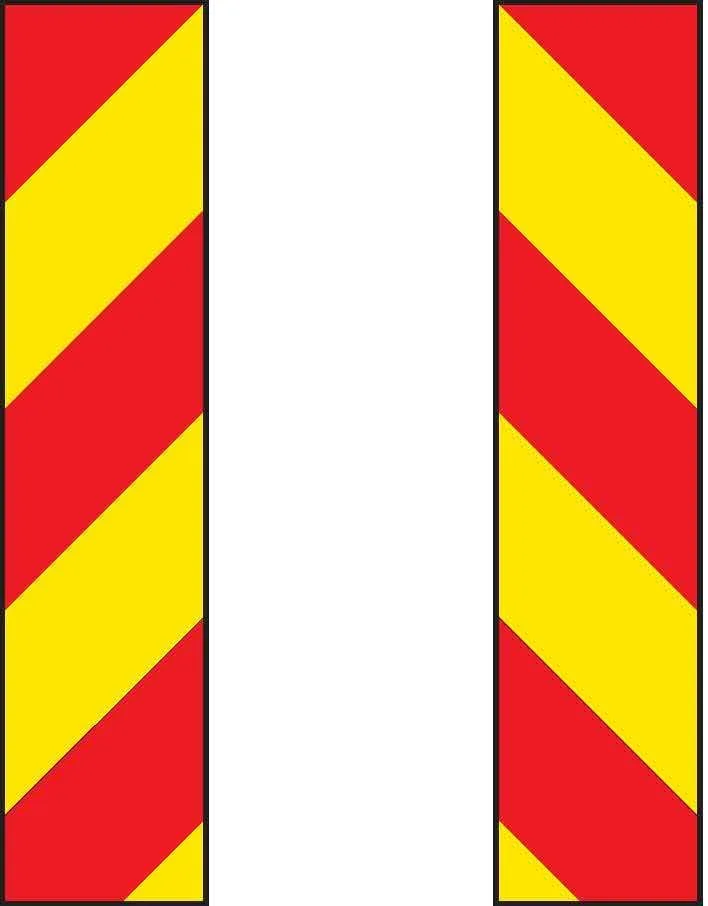
On a motorway sign
On a railway bridge
On a heavy goods vehicle
On a diversion sign
Show the answer
On a heavy goods vehicleThis was the right answer
These markers must be fitted to vehicles over 13 metres long, heavy goods vehicles, and rubbish skips placed in the road. They're reflective to make them easier to see in the dark.
What's the main hazard shown in this picture?
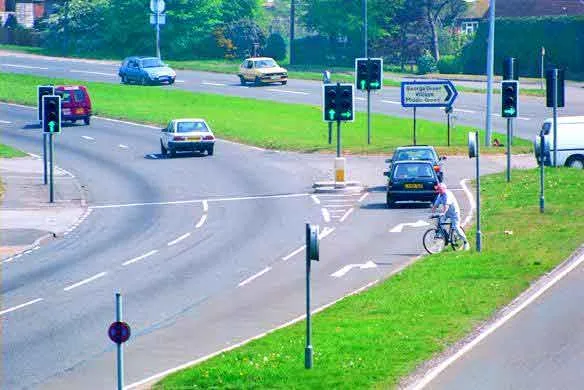
Vehicles turning right
Vehicles doing U-turns
The cyclist crossing the road
Parked cars around the corner
Show the answer
The cyclist crossing the roadThis was the right answer
Look at the picture carefully and try to imagine you're there. The cyclist in this picture appears to be trying to cross the road. You must be able to deal with the unexpected, especially when you're approaching a hazardous junction. Look well ahead to give yourself time to deal with any hazards.
Which road user has caused a hazard?
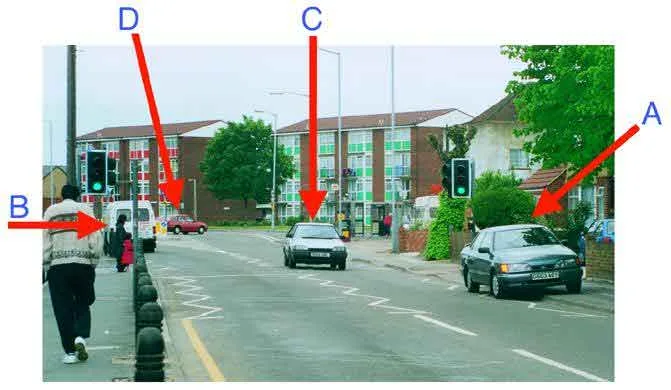
The parked car (arrowed A)
The pedestrian waiting to cross (arrowed B)
The moving car (arrowed C)
The car turning (arrowed D)
Show the answer
The parked car (arrowed A)This was the right answer
The car arrowed A is parked within the area marked by zigzag lines at the pedestrian crossing. Parking here is illegal. It also
• blocks the view for pedestrians wishing to cross the road
• restricts the view of the crossing for approaching traffic.
What should the driver of the car approaching the crossing do?
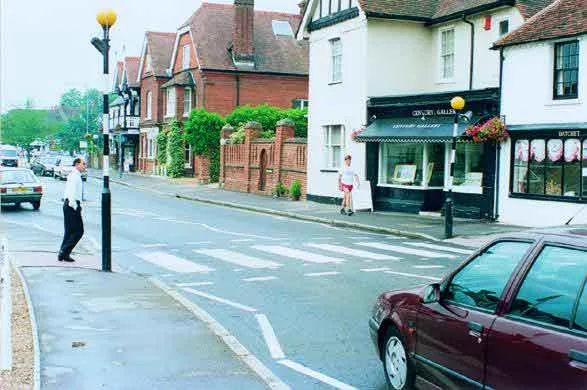
Continue at the same speed
Sound the horn
Drive through quickly
Slow down and get ready to stop
Show the answer
Slow down and get ready to stopThis was the right answer
Look well ahead to see whether any hazards are developing. This will give you more time to deal with them in the correct way. The man in the picture is clearly intending to cross the road. You should be travelling at a speed that allows you to check your mirror, slow down and stop in good time. You shouldn't have to brake harshly.
What should the driver of the grey car be especially aware of?
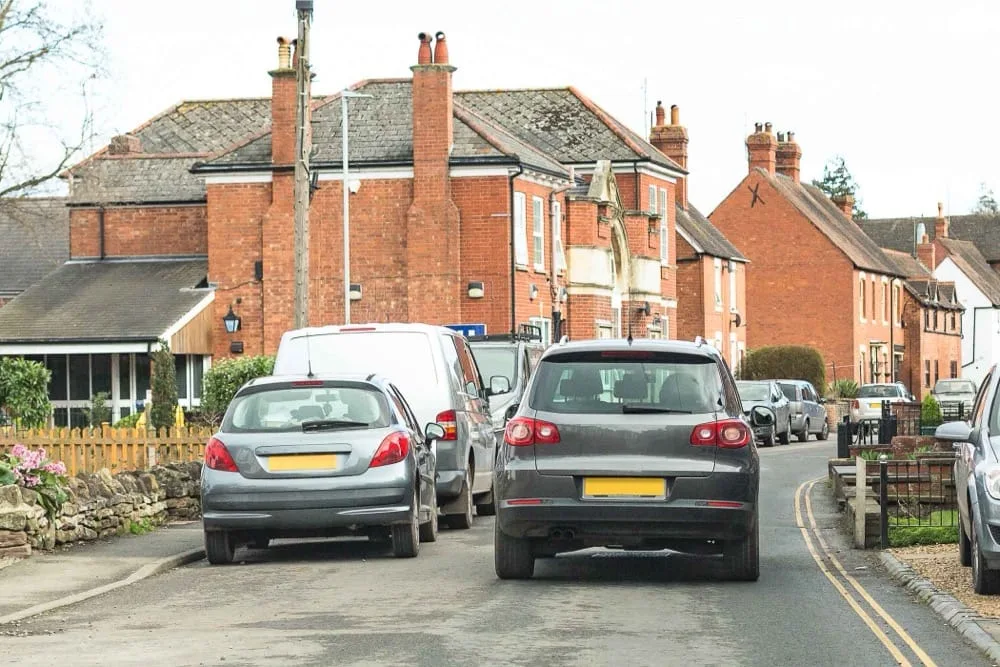
The uneven road surface
Traffic following behind
Doors opening on parked cars
Empty parking spaces
Show the answer
Doors opening on parked carsThis was the right answer
When passing parked cars, there's a risk that a driver or passenger may not check before opening the door into the road. A defensive driver will drive slowly and be looking for people who may be about to get out of their car.
More motorcycle topics
13 moreEvery question in this bank sits in one of these, and each one is a page like this.
Alertness33 questionsAttitude28 questionsEssential documents32 questionsIncidents, accidents and emergencies38 questionsMotorcycle handling51 questionsMotorcycle loading32 questionsMotorway rules51 questionsOther types of vehicle17 questionsRoad and traffic signs134 questionsRules of the road52 questionsSafety and your motorcycle79 questionsSafety margins38 questionsVulnerable road users67 questionsAll motorcycle questionsThe whole bank, in 14 topics