Loading the question bank
Motorcycle · DVSA-based revision questions
Motorcycle handling
51 motorcycle theory test questions on motorcycle handling. Preview the questions below, or open one to read its answer and continue through the whole topic.
Practise
Be marked as you go
A session draws from all 51 of these, weakest first, and marks each answer the moment you give it. Nothing here needs an account.
The questions
20 of 51The first 20 in the order the pack holds them. Open the answer when you want to check yourself; a session draws from all 51 and marks you instead.
What should you do before starting a motorcycle engine?
Check that the neutral lamp shows when the ignition is switched on
Select first gear and apply the rear brake lightly
Select first gear and apply the front brake firmly
Check that your dipped headlights and tail light are on
Show the answer
Check that the neutral lamp shows when the ignition is switched onThis was the right answer
Before starting the engine, make sure the motorcycle is in neutral. Do this by checking that the neutral warning light is lit when you switch on the ignition. If no neutral light is fitted, push the motorcycle forward to check that the rear wheel turns freely.
What should the motorcyclist do as they approach this junction?
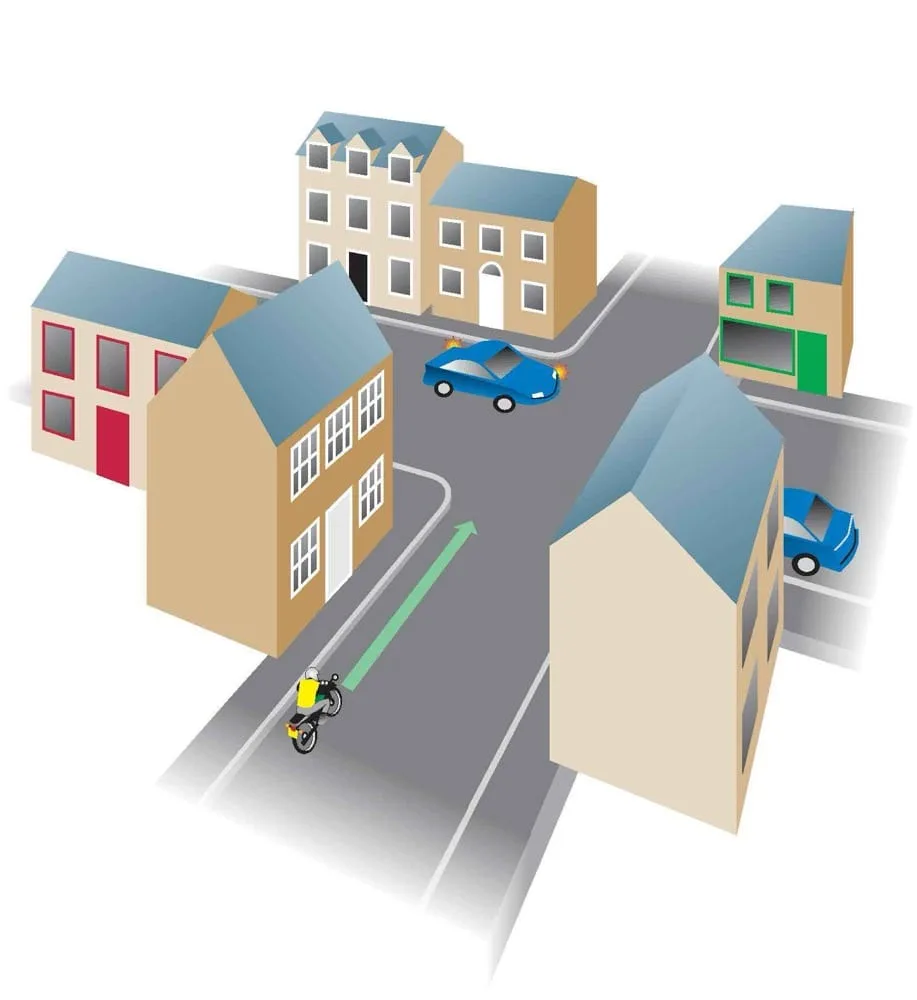
Stop, as the car has right of way
Slow down and be ready to stop
Dip their headlights and keep near the left-hand kerb
Speed up to clear the junction without delay
Show the answer
Slow down and be ready to stopThis was the right answer
Look out for road signs warning of side roads. A driver who's emerging may not be able to see a motorcyclist due to parked cars or heavy traffic. Ride defensively, slow down and be prepared to stop if necessary. Remember, no-one has priority at an unmarked crossroads.
What can motorcyclists do to improve their safety on the road?
Anticipate the actions of others
Stay just above the speed limit
Keep positioned close to the kerb
Remain well below the speed limit
Show the answer
Anticipate the actions of othersThis was the right answer
Always ride defensively. This means looking and planning ahead, as well as anticipating the actions of other road users.
What can cause a motorcycle to skid?
Braking too gently
Feathering the throttle
Staying upright when cornering
Braking too hard
Show the answer
Braking too hardThis was the right answer
To keep control of your motorcycle and prevent skidding, you should plan well ahead and avoid late, harsh braking. Try to avoid braking while changing direction, as the tyres may not have enough grip to cope with both together. Always consider how the road and weather conditions may affect your tyres’ grip.
It's very cold and the road looks wet. What should you do if you can't hear any road noise as you ride?
Continue riding at the same speed
Ride slowly in as high a gear as possible
Ride in as low a gear as possible
Brake sharply to see if the road is slippery
Show the answer
Ride slowly in as high a gear as possibleThis was the right answer
Frozen rain on the road is called black ice. It can be hard to see, but it can be indicated by a lack of road noise and your steering may also feel very light. Reduce your speed and avoid harsh braking or steering. Riding in as high a gear as possible can help reduce the risk of wheelspin.
When should you wear full protective clothing while riding a motorcycle?
At all times
Only on faster, open roads
Just on long journeys
Only during bad weather
Show the answer
At all timesThis was the right answer
Protective clothing is designed to protect you from the cold and wet. It also gives you some protection from injury, so it's important that you always wear protective clothing when you ride.
What should you do before you start a journey in foggy conditions?
Make sure that you have a spare visor with you
Make sure that you have a warm drink with you
Check that your lights are working
Check that the battery is fully charged
Show the answer
Check that your lights are workingThis was the right answer
It's best to avoid riding in foggy weather. However, if you have to, there are some precautions you can take before setting off to help make your journey as safe as possible. These include checking that all your lights are clean and working, and that your visor is clean.
Where's the best place to park your motorcycle?
On soft tarmac
On bumpy ground
On grass
On firm, level ground
Show the answer
On firm, level groundThis was the right answer
Parking your motorcycle on soft ground might cause the stand to sink in, and the machine could fall over. The ground should be level, as well as firm, to keep the motorcycle stable. Use off-road parking or motorcycle parking areas when they're available.
What should you do when you're riding in windy conditions?
Stay close to large vehicles
Keep your speed up
Keep your speed down
Stay close to the gutter
Show the answer
Keep your speed downThis was the right answer
Strong winds can blow a motorcycle off course, and even across the road. In windy conditions, you need to slow down and avoid riding on exposed roads. You should also watch for gaps in buildings and hedges, where you may be affected by a sudden gust of wind.
Where should you normally position your motorcycle while you're riding on the road?
Close to the kerb
In the centre of your lane
On the right of your lane
Near the centre of the road
Show the answer
In the centre of your laneThis was the right answer
When you’re riding a motorcycle, it’s very important to ride where other road users can see you. In normal weather, you should ride in the centre of your lane. This will help you avoid uneven road surfaces in the gutter, and allow others to overtake on the right if they wish.
Your motorcycle is parked near the left kerb, facing the direction of traffic on a two-way road. How should you get on the machine?
From the right and apply the rear brake
From the left and leave the brakes alone
From the left and apply the front brake
From the right and leave the brakes alone
Show the answer
From the left and apply the front brakeThis was the right answer
From this parking position, mounting on the left keeps you away from passing traffic. Hold the handlebars and apply the front brake so the motorcycle cannot roll as you get on. Check stability and surroundings before moving.
What will happen if you ride with your clutch lever pulled in for longer than is necessary?
It will increase wear on the gearbox
It will increase petrol consumption
It will reduce your control of the motorcycle
It will reduce the grip of the tyres
Show the answer
It will reduce your control of the motorcycleThis was the right answer
Riding with the clutch lever pulled in is known as coasting. If you coast, you lose the benefits of engine braking and you'll have reduced control of your motorcycle.
What should you do when you're approaching a road that has a surface of loose chippings?
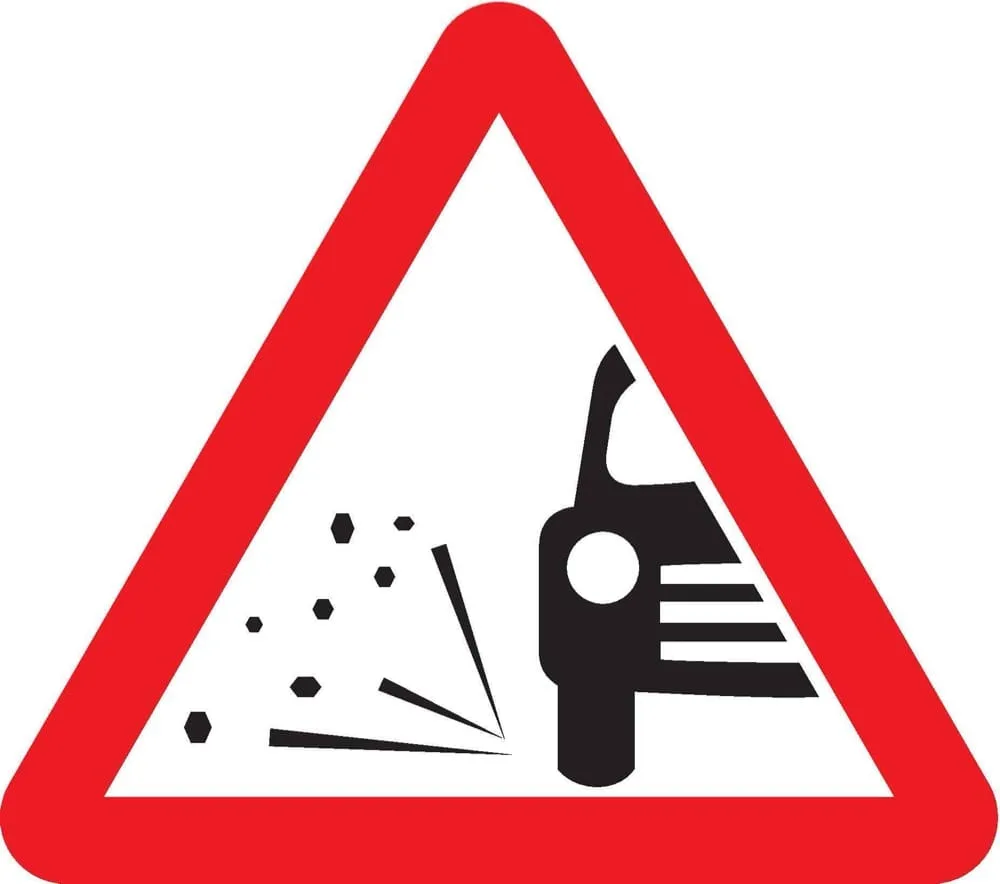
Ride normally
Speed up
Slow down
Stop suddenly
Show the answer
Slow downThis was the right answer
The handling of your motorcycle will be greatly affected by the road surface. Look well ahead and be especially alert if the road looks uneven or you see a loose chippings warning sign. Slow down in good time, as braking harshly on a loose surface could easily cause you to skid. For the same reason, avoid making sudden changes of direction.
How is the road surface affected when it rains after a long, dry, hot spell?
It can become unusually slippery
It can give better grip
It can become covered in grit
It can melt and break up
Show the answer
It can become unusually slipperyThis was the right answer
Oil and rubber can build up on the road during long spells of dry weather. When it rains, this can make the road surface very slippery.
What’s most likely to cause a motorcycle to skid?
Riding in wet weather
Catching your foot on the ground
Cornering too fast
Riding in the winter
Show the answer
Cornering too fastThis was the right answer
Riders cause skids when they push their tyres to the point that they can no longer grip the road. This happens when changing direction, braking and accelerating. The point at which tyres loose grip will vary with road, weather and tyre condition. Riding at a suitable speed for the conditions, planning, looking ahead for hazards and braking in good time will all help you to avoid skidding and losing control.
Your motorcycle doesn't have linked brakes. In an emergency, what should you do to stop quickly?
Apply the rear brake only
Apply the front brake only
Apply the front brake just before the rear brake
Apply the rear brake just before the front brake
Show the answer
Apply the front brake just before the rear brakeThis was the right answer
You should plan ahead to avoid the need to stop suddenly, but if an emergency arises, you must be able to stop safely. Applying the front brake just before the rear brake will help you to stop safely and quickly.
What will happen if you look down at the front wheel while riding?
It will make your steering lighter
It will improve your balance
You'll use less fuel
You'll upset your balance
Show the answer
You'll upset your balanceThis was the right answer
When riding, look ahead and around you. Don't look down at the front wheel, as this can severely upset your balance.
In normal riding conditions, when should you brake?
When the motorcycle is exceeding the speed limit
When the motorcycle is being turned or ridden through a bend
When the motorcycle is travelling below 20 mph
When the motorcycle is upright and moving in a straight line
Show the answer
When the motorcycle is upright and moving in a straight lineThis was the right answer
A motorcycle is most stable when it’s upright and moving in a straight line. This is the best time to brake. With independent front and rear brakes, both brakes should be used, with the front brake being applied just before the rear brake.
What will affect the stopping distance of your motorcycle?
The drive-chain adjustment
The condition of the tyres
The time of day
The street lighting
Show the answer
The condition of the tyresThis was the right answer
Tyres are a major factor in the handling, stability and stopping distance of a motorcycle. Make sure they’re in a safe and legal condition. The weather and road surface also play a part. Always anticipate well ahead and take account of the conditions when you’re braking.
You're on a motorway at night. When may you have your headlights switched off?
When there are vehicles close in front of you
When you're travelling below 50 mph
When the motorway is lit
When your motorcycle is broken down on the hard shoulder
Show the answer
When your motorcycle is broken down on the hard shoulderThis was the right answer
Always use your headlights at night on a motorway, unless you've had to stop on the hard shoulder. If you have to use the hard shoulder, switch off your headlights but leave your parking lights on, so that your motorcycle can be seen by other road users.
More motorcycle topics
13 moreEvery question in this bank sits in one of these, and each one is a page like this.
Alertness33 questionsAttitude28 questionsEssential documents32 questionsHazard awareness51 questionsIncidents, accidents and emergencies38 questionsMotorcycle loading32 questionsMotorway rules51 questionsOther types of vehicle17 questionsRoad and traffic signs134 questionsRules of the road52 questionsSafety and your motorcycle79 questionsSafety margins38 questionsVulnerable road users67 questionsAll motorcycle questionsThe whole bank, in 14 topics