Loading the question bank
Motorcycle · DVSA-based revision questions
Safety margins
38 motorcycle theory test questions on safety margins. Preview the questions below, or open one to read its answer and continue through the whole topic.
Practise
Be marked as you go
A session draws from all 38 of these, weakest first, and marks each answer the moment you give it. Nothing here needs an account.
The questions
20 of 38The first 20 in the order the pack holds them. Open the answer when you want to check yourself; a session draws from all 38 and marks you instead.
When will your overall stopping distance be increased?
When you're riding at night
When you're riding in fog
When you're riding with a passenger
When you're riding up a hill
Show the answer
When you're riding with a passengerThis was the right answer
When you're carrying a passenger on a motorcycle, the overall weight will be much more than when you're riding alone. This additional weight will make it harder for you to stop quickly in an emergency, so you'll need to increase the distance between your motorcycle and the vehicle in front.
What's the safest way to stop when the road is wet?
Change gear without braking
Use the back brake only
Use the front brake only
Use both brakes
Show the answer
Use both brakesThis was the right answer
Motorcyclists need to take extra care when stopping on wet road surfaces. Plan well ahead so that you’re able to brake in good time. For maximum stability, you should use both brakes, and brake when your motorcycle is upright and travelling in a straight line.
You're riding in heavy rain. Your rear wheel skids as you accelerate. What must you do to regain control?
Change down to a lower gear
Ease off the throttle
Brake to reduce speed
Put your feet down
Show the answer
Ease off the throttleThis was the right answer
If you feel your back wheel beginning to skid as you accelerate, ease off the throttle. This will give your rear tyre the chance to grip the road and stop the skid.
What should you do before starting a journey in the snow?
Consider whether your journey is essential
Try to avoid taking a passenger
Plan a route avoiding towns
Have a hot drink and a meal
Show the answer
Consider whether your journey is essentialThis was the right answer
Don't ride in snowy or icy conditions unless your journey is essential. If you must go out, try to keep to main roads, which are more likely to be treated and clear.
Why should you ride with dipped headlights on in the daytime?
They help other road users to see you
They mean that you can ride faster
Other vehicles will get out of the way
So that they’re already on when it gets dark
Show the answer
They help other road users to see youThis was the right answer
Making yourself as visible as possible is a positive step towards defensive riding. Having your headlights on, even in good daylight, makes it easier for other road users to see you approaching.
When are motorcyclists allowed to use high-intensity rear fog lights?
When a pillion passenger is being carried
When they ride a large touring machine
When visibility is 100 metres (328 feet) or less
When they're riding on the road for the first time
Show the answer
When visibility is 100 metres (328 feet) or lessThis was the right answer
If your motorcycle is fitted with high-intensity rear fog lights, you must only use them when visibility is seriously reduced. That's when you can see no further than 100 metres (328 feet). This rule about high-intensity rear fog lights applies to all motor vehicles.
When must you use your headlights?
When riding in a group
When visibility is poor
When carrying a passenger
When parked on an unlit road
Show the answer
When visibility is poorThis was the right answer
Your headlights help you to see in the dark, and help other road users to see you. Use your headlights whenever visibility is poor. Using them at other times may also help other road users to see you. On modern motorcycles, the headlights are switched on automatically when you start the engine.
You're riding in town at night. The roads are wet after rain. How will the reflections from wet surfaces affect your safety?
They’ll make it easier to stop
They’ll make it harder to accelerate
They’ll make it easier to see unlit objects
They’ll make it harder to see unlit objects
Show the answer
They’ll make it harder to see unlit objectsThis was the right answer
After rain, the reflections from wet surfaces will make it hard to see unlit objects. Make sure that your visor or goggles are clean, so your vision is as clear as possible. Pedestrians will be difficult to see, especially if they're wearing dark clothing.
What should you test when you've just ridden through shallow flood water?
The starter motor
The headlights
The steering
The brakes
Show the answer
The brakesThis was the right answer
Water can make your brakes less effective. When you're clear of the water, ride slowly while gently applying the brakes; this will dry the brakes and normal braking performance will be restored. Never ride into deep flood water because unseen hazards and strong currents can be dangerous.
You have checked that shallow water is safe for your motorcycle to cross. How should you ride through it?
Ride quickly, in a high gear
Ride slowly, in a high gear
Ride quickly, in a low gear
Ride slowly, in a low gear
Show the answer
Ride slowly, in a low gearThis was the right answer
Do not enter water unless its depth, current and surface are safe for the motorcycle. Deep or fast-flowing water and hidden hazards can make crossing unsafe; choose another route if unsure. Only in a safe, shallow crossing, use a low gear and a slow, steady pace. Afterwards, test the brakes gently in a safe place. Engine speed does not make deep water safe.
What lights should you use if you're riding at night on a busy main road?
Main-beam headlights
Daytime running lights
Dipped-beam headlights
Rear fog lights
Show the answer
Dipped-beam headlightsThis was the right answer
If there's other traffic on the road at night, use your headlights on dipped beam. Only switch to main beam when you won't dazzle other road users. At night, don't wear tinted glasses or contact lenses, or use a tinted visor, because these make it more difficult to see the road ahead.
What should you do to help stay safe when you're riding in fog?
Keep close to the vehicle in front
Keep the vehicle in front in view
Keep close to the centre of the road
Keep your visor or goggles clear
Show the answer
Keep your visor or goggles clearThis was the right answer
You must use your dipped headlights when visibility is seriously reduced. In fog, a film of mist can form over the outside of your visor or goggles. This can further reduce your ability to see. Be aware of this hazard and keep your visor or goggles clear; anti-mist sprays can help.
You’re riding in heavy rain. Why should you try to avoid this marked area?
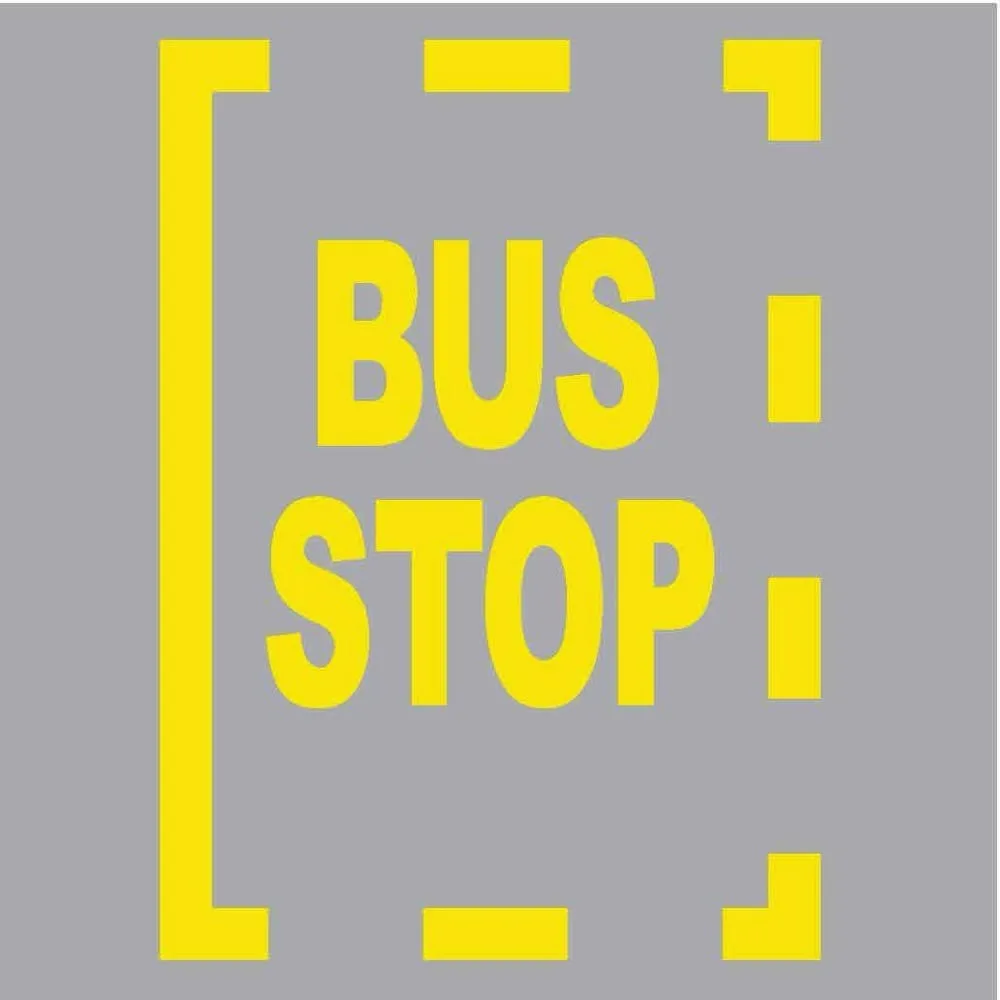
It’s illegal to ride over bus stops
The painted lines may be slippery
Cyclists may be using the bus stop
Only emergency vehicles may drive over bus stops
Show the answer
The painted lines may be slipperyThis was the right answer
Painted lines and road markings can be very slippery, especially for motorcyclists. Try to avoid them if you can do so safely.
What should you do to make yourself more visible when riding at night?
Wear reflective clothing
Wear a tinted visor
Ride in the middle of the road
Give arm signals
Show the answer
Wear reflective clothingThis was the right answer
You need to make yourself as visible as possible - from the front and back, and also from the side. Don’t just rely on your headlight and tail light. Wear clothing with reflective material, as this stands out in other vehicles’ headlights.
What should you do to keep warm when you're riding in extremely cold conditions?
Stay close to the vehicles in front
Wear suitable clothing
Lie flat on the tank
Put one hand on the exhaust pipe
Show the answer
Wear suitable clothingThis was the right answer
Motorcyclists are exposed to the elements and can become very cold when riding in wintry conditions. It’s important to keep warm or your concentration could be affected. The only way to stay warm is to wear suitable clothing. If you do find yourself getting cold, then stop at a suitable place to warm up.
What can you do to be seen more easily when you're riding at night?
Wear reflective clothing
Wear waterproof clothing
Keep your motorcycle clean
Stay well out to the right
Show the answer
Wear reflective clothingThis was the right answer
It's vital to make yourself as visible as you can. Use the correct lights on your motorcycle. Wear reflective clothing and a light or brightly coloured helmet. Fluorescent clothing is effective in daytime but won't show up as well at night. Most high-visibility clothing will have a combination of fluorescent and reflective materials.
When will your overall stopping distance increase?
When it's raining
When it's sunny
When it's dark
When it's windy
Show the answer
When it's rainingThis was the right answer
Wet roads reduce tyre grip, and stopping distances will be at least double those on a dry road. Leave a larger gap, slow down and brake smoothly while upright. Standing water, mud or other poor conditions can require still more space.
Which road surface is most likely to reduce the stability of your motorcycle?
Tarmac
Shellgrip
Concrete
Loose gravel
Show the answer
Loose gravelThis was the right answer
Loose gravel can reduce tyre grip and unsettle a motorcycle. Watch well ahead so you can reduce speed and choose a safe course before reaching it. Keep steering, throttle and braking smooth; an abrupt swerve or harsh brake application on loose material can make the motorcycle less stable.
You're riding past queuing traffic. Why should you be more cautious when you approach this road marking?

Lorries will be unloading here
Schoolchildren will be crossing here
Pedestrians will be standing in the road
Traffic could be turning here
Show the answer
Traffic could be turning hereThis was the right answer
A KEEP CLEAR marking may protect access to a side road or entrance. When passing a queue, slow down and watch for traffic turning through a gap or emerging across your path. Do not assume that vehicles waiting in the queue have checked for a filtering motorcycle.
What can cause your motorcycle's tyres to lose their grip on the road surface and skid?
Giving hand signals
Riding one-handed
Looking over your shoulder
Heavy braking
Show the answer
Heavy brakingThis was the right answer
You can cause your motorcycle to skid by heavy braking, as well as excessive acceleration, swerving or changing direction too sharply, and leaning over too far.
More motorcycle topics
13 moreEvery question in this bank sits in one of these, and each one is a page like this.
Alertness33 questionsAttitude28 questionsEssential documents32 questionsHazard awareness51 questionsIncidents, accidents and emergencies38 questionsMotorcycle handling51 questionsMotorcycle loading32 questionsMotorway rules51 questionsOther types of vehicle17 questionsRoad and traffic signs134 questionsRules of the road52 questionsSafety and your motorcycle79 questionsVulnerable road users67 questionsAll motorcycle questionsThe whole bank, in 14 topics