Loading the question bank
Motorcycle · DVSA-based revision questions
Vulnerable road users
67 motorcycle theory test questions on vulnerable road users. Preview the questions below, or open one to read its answer and continue through the whole topic.
Practise
Be marked as you go
A session draws from all 67 of these, weakest first, and marks each answer the moment you give it. Nothing here needs an account.
The questions
20 of 67The first 20 in the order the pack holds them. Open the answer when you want to check yourself; a session draws from all 67 and marks you instead.
You're following a lorry. Why should you stay well back from these vehicles?
So you don't breathe in the lorry’s exhaust fumes
So wind from the lorry won't slow you down
So drivers behind can see you
So your view ahead isn't obstructed
Show the answer
So your view ahead isn't obstructedThis was the right answer
If you follow a large vehicle too closely, your view beyond it will be restricted. Drop back. This will help you to see more of the road ahead. It will also help the driver of the large vehicle to see you in their mirrors and will give you a safe separation distance if the lorry needs to stop suddenly.
You're riding a motorcycle along a country lane. What should you do if you come across cattle on the road?
Ride up close behind them
Rev your engine
Give them plenty of room
Sound your horn
Show the answer
Give them plenty of roomThis was the right answer
Try not to startle the animals. They can be easily frightened by noise or by traffic passing too closely. Slow down, give them plenty of room and be prepared to stop if necessary. Obey any directions given by people in charge of the animals.
What should you do if a driver begins to emerge into your path from a side road on the left?
Slow down and be ready to stop
Let them emerge, then ride close behind
Turn into the side road
Brake hard, then wave them out
Show the answer
Slow down and be ready to stopThis was the right answer
You should always be looking for vehicles emerging from side roads as you approach them. If you see another vehicle begin to emerge into your path, be ready to slow down or stop if necessary.
What should you do when you're following a car that's being driven by a learner?
Keep calm and be patient
Ride close behind
Put your headlights on main beam
Sound your horn and overtake
Show the answer
Keep calm and be patientThis was the right answer
Learner drivers might take longer to react to traffic situations, so be patient and give them time. Don’t unnerve them by riding close behind or showing signs of impatience.
You're riding in fast-flowing traffic. What should you do if the vehicle behind is following too closely?
Slow down gradually to increase the gap in front of you
Slow down as quickly as possible by braking
Accelerate to get away from the vehicle behind you
Apply the brakes sharply to warn the driver behind
Show the answer
Slow down gradually to increase the gap in front of youThis was the right answer
By increasing the separation distance between you and the vehicle in front, you have a greater safety margin. If the vehicle in front of you brakes suddenly to avoid a hazard, you'll have time to reduce speed gradually. This will reduce the risk of the close-following vehicle running into you.
You're riding towards a zebra crossing. What should you do if there's a person in a wheelchair waiting to cross?
Continue on your way
Wave to the person to cross
Wave to the person to wait
Be prepared to stop
Show the answer
Be prepared to stopThis was the right answer
Approach a zebra crossing slowly enough to stop. You should give way to pedestrians waiting to cross, and must give way once they have moved onto the crossing. Allow everyone enough time and do not wave or flash them across: another road user may not have stopped.
Why should you allow extra room when overtaking another motorcyclist on a windy day?
The rider may turn off suddenly to get out of the wind
The rider may be blown across in front of you
The rider may stop suddenly
The rider may be travelling faster than normal
Show the answer
The rider may be blown across in front of youThis was the right answer
On a windy day, be aware that the blustery conditions might blow you or other motorcyclists out of position. Think about this before deciding to overtake.
You've stopped at a pelican crossing, where a disabled person is crossing very slowly in front of you. What should you do when the lights change to green?
Allow the person to finish crossing
Edge forward slowly
Ride behind the person
Sound your horn
Show the answer
Allow the person to finish crossingThis was the right answer
At a pelican crossing, the green light means you may proceed as long as the crossing is clear. If someone hasn't finished crossing, be patient and wait until the road is clear.
Where should you take particular care to look out for other motorcyclists and cyclists?
On dual carriageways
At junctions
At zebra crossings
On one-way streets
Show the answer
At junctionsThis was the right answer
Other motorcyclists and cyclists may be difficult to see on the road, particularly at junctions. If your view is blocked by other traffic, you may not be able to see them approaching.
Why is it recommended for a rider to make a lifesaver check before turning right?
To check for any overtaking traffic
To confirm that they're about to turn
To make sure the side road is clear
To check that the rear indicator is flashing
Show the answer
To check for any overtaking trafficThis was the right answer
The lifesaver glance makes you aware of what's happening behind and alongside you before you alter your course. This glance must be timed so that you still have time to react if it isn’t safe to carry out your manoeuvre.
You're about to overtake a group of horse riders. What's most likely to scare the horses?
Your dipped headlights
Giving arm signals
Riding slowly
Revving your engine
Show the answer
Revving your engineThis was the right answer
When passing horses, allow them plenty of space and slow down. Animals can be frightened by sudden or loud noises, so don't sound your horn or rev your engine.
Why are young and new motorcyclists involved in more incidents than other motorcyclists?
They use borrowed equipment
They lack experience and judgement
They ride in bad weather conditions
They don't maintain their motorcycles
Show the answer
They lack experience and judgementThis was the right answer
Young and inexperienced motorcyclists are far more likely to be involved in incidents than more experienced riders. The reasons for this include natural exuberance, showing off, competitive behaviour and overconfidence. Don’t overestimate your abilities and never ride too fast for the conditions.
Why is someone new to motorcycling especially vulnerable?
They're not used to wearing motorcycling gear
They're more alert than older riders
They lack experience
They don't understand the rules of the road
Show the answer
They lack experienceThis was the right answer
Young and inexperienced motorcyclists often have more confidence than ability. It takes time to gain experience and become a good rider. Make sure you have the right attitude and put safety first.
The road outside this school is marked with yellow zigzag lines. What do these lines mean?
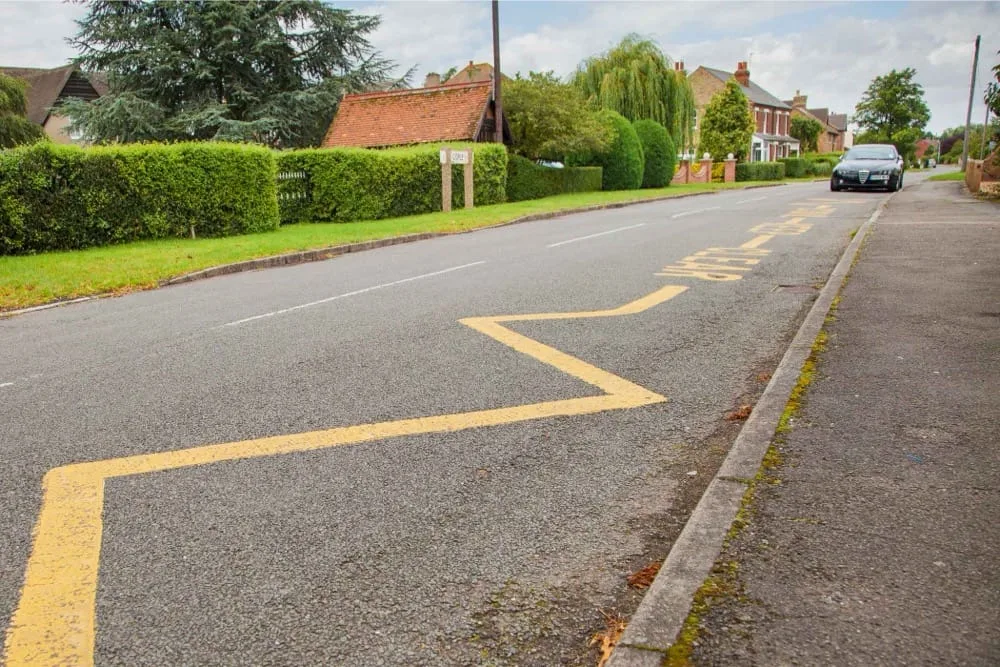
You may park on the lines when dropping off schoolchildren
You may park on the lines when picking up schoolchildren
You must not wait or park your motorcycle here
You must stay with your motorcycle if you park here
Show the answer
You must not wait or park your motorcycle hereThis was the right answer
Parking here will block the view of the road, endangering the lives of children crossing the road on their way to and from school.
Which sign means that there may be people walking along the road?
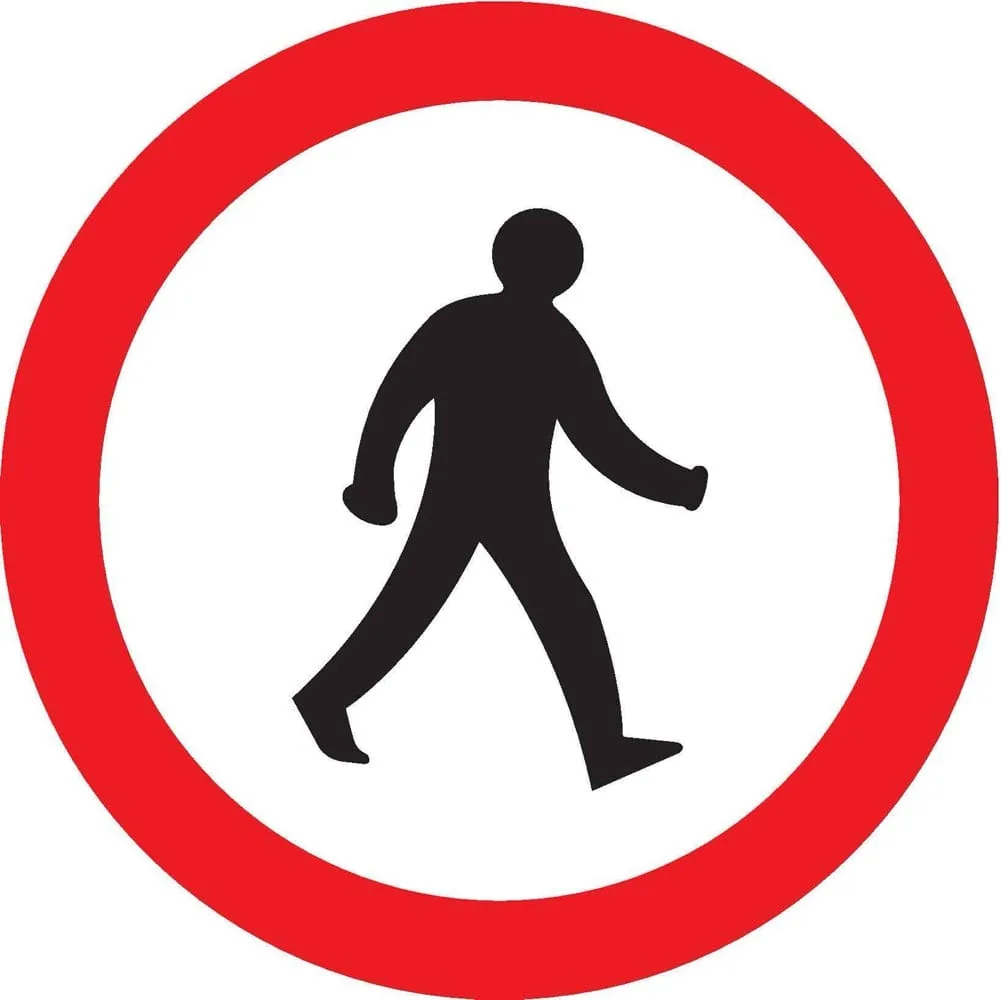
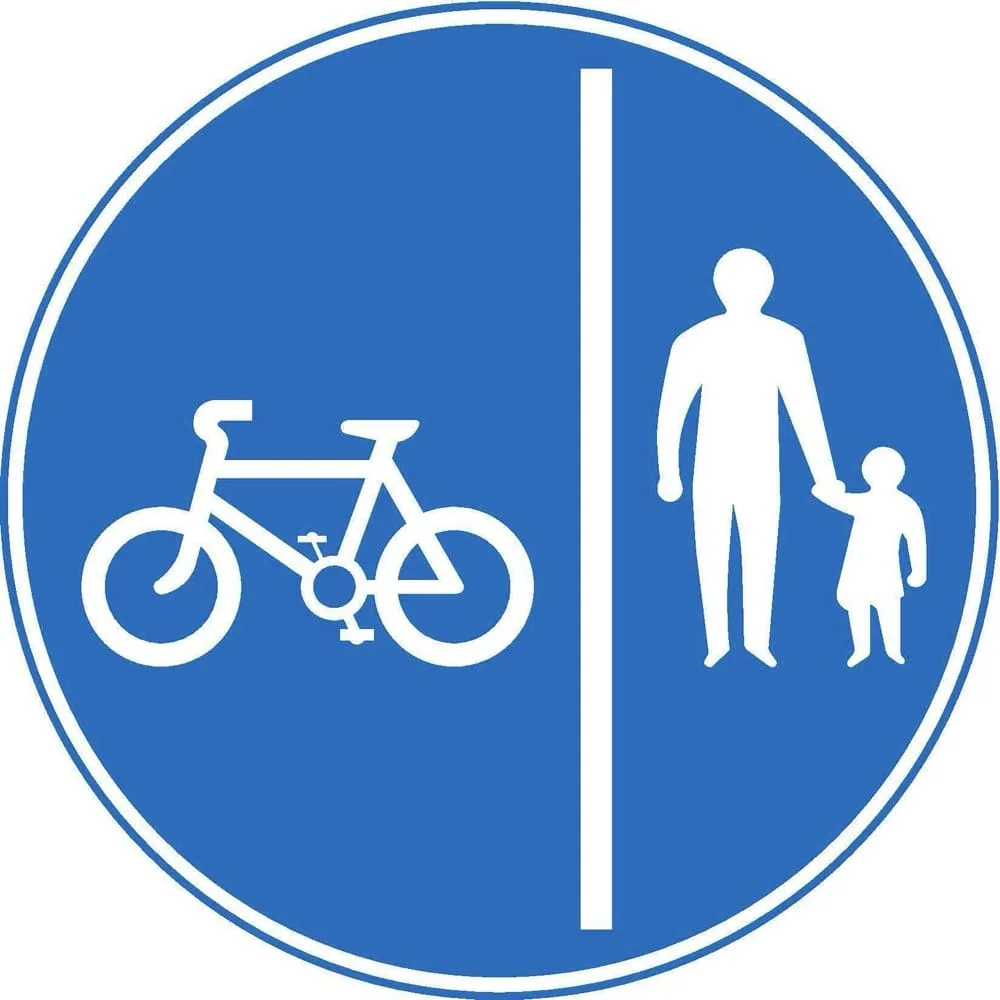
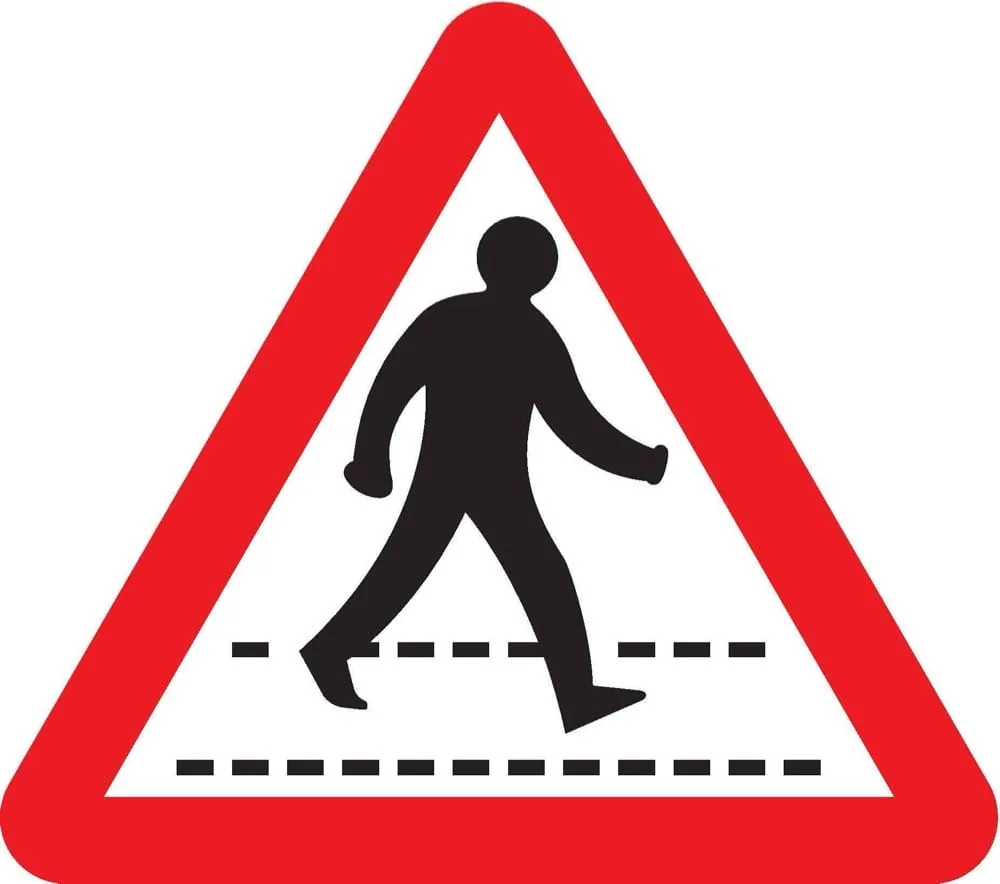
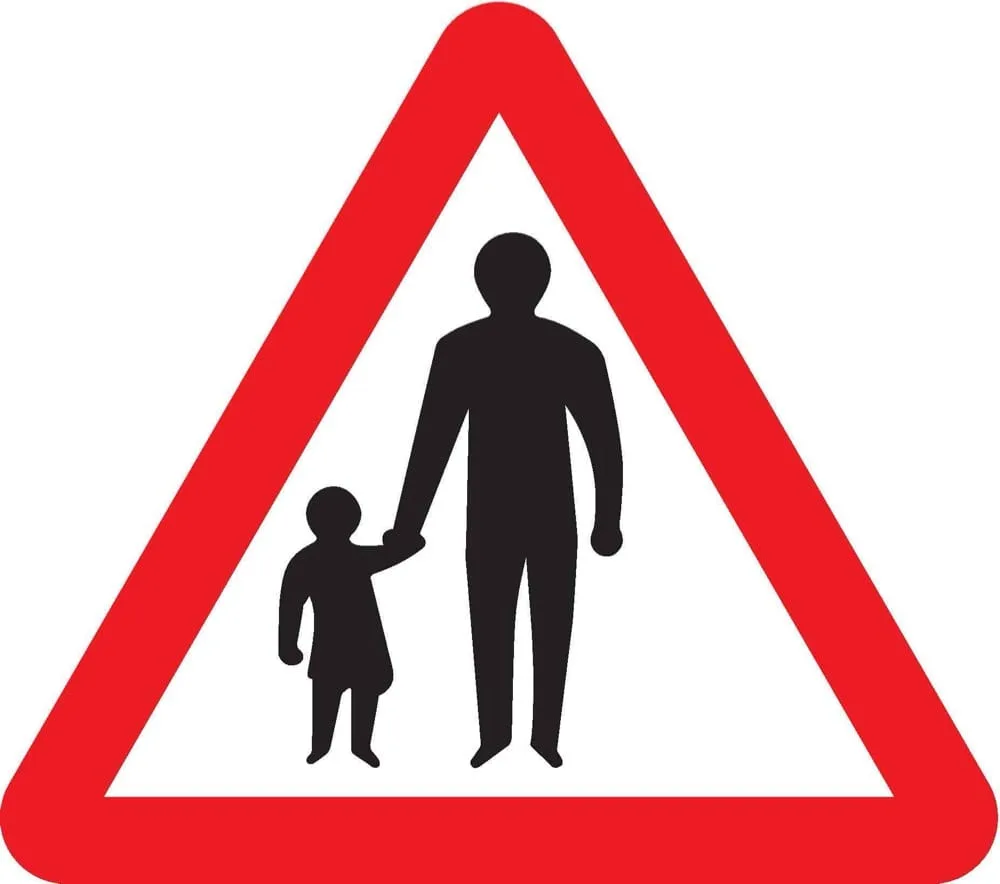
Show the answer
This was the right answerAlways check the road signs. Triangular signs are warning signs: they inform you about hazards ahead and help you to anticipate any problems. There are a number of different signs showing pedestrians. Learn the meaning of each one.
What should you do if you want to turn left at a junction where pedestrians have started to cross?
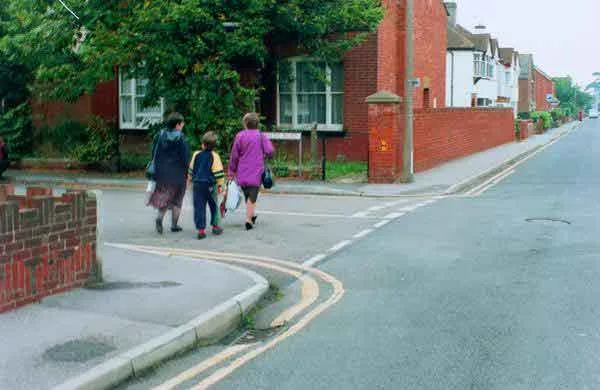
Go around them, leaving plenty of room
Stop and wave at them to cross
Sound your horn and proceed
Give way to them
Show the answer
Give way to themThis was the right answer
When you’re turning into a side road, pedestrians who are crossing have priority. You should wait to allow them to finish crossing safely. Be patient if they're slow or unsteady. Don't try to rush them by sounding your horn, flashing your lights, revving your engine or giving any other inappropriate signal.
What hazard should you be especially aware of if you're turning left into a side road?
One-way street
Pedestrians
Traffic congestion
Parked vehicles
Show the answer
PedestriansThis was the right answer
Make sure that you've reduced your speed and are in the correct gear for the turn. Look into the road before you turn and always give way to any pedestrians who are crossing.
Why should you check for motorcyclists just before turning right into a side road?
They may be overtaking on your left
They may be following you closely
They may be emerging from the side road
They may be overtaking on your right
Show the answer
They may be overtaking on your rightThis was the right answer
Never attempt to change direction to the right without first checking your right-hand mirror and blind spot. A motorcyclist might not have seen your signal and could be hidden by other traffic. This observation should become a matter of routine.
Why is a toucan crossing different from a puffin crossing?
Moped riders can use it
It's controlled by a traffic warden
It's controlled by two flashing lights
Pedestrians and cyclists can use it together
Show the answer
Pedestrians and cyclists can use it togetherThis was the right answer
Puffin crossings are for use by pedestrians. Cyclists must dismount and push their bicycle over the crossing. Toucan crossings are shared by pedestrians and cyclists, who are permitted to cycle over the crossing. Toucan roadside signals show an icon of a pedestrian and a cyclist together.
How will a school crossing patrol signal you to stop?
By pointing to children waiting to cross
By displaying a red light
By displaying a 'stop' sign
By giving you an arm signal
Show the answer
By displaying a 'stop' signThis was the right answer
If a school crossing patrol steps out into the road with a 'stop' sign, you must stop. Don’t wave anyone across the road and don’t get impatient or rev your engine.
More motorcycle topics
13 moreEvery question in this bank sits in one of these, and each one is a page like this.
Alertness33 questionsAttitude28 questionsEssential documents32 questionsHazard awareness51 questionsIncidents, accidents and emergencies38 questionsMotorcycle handling51 questionsMotorcycle loading32 questionsMotorway rules51 questionsOther types of vehicle17 questionsRoad and traffic signs134 questionsRules of the road52 questionsSafety and your motorcycle79 questionsSafety margins38 questionsAll motorcycle questionsThe whole bank, in 14 topics