Loading the question bank
Driving instructor · DVSA-based revision questions
Band 2 traffic signs and signals, car control, pedestrians, mechanical knowledge
266 ADI part one theory test questions on band 2 traffic signs and signals, car control, pedestrians, mechanical knowledge. Preview the questions below, or open one to read its answer and continue through the whole topic.
Practise
Be marked as you go
A session draws from all 266 of these, weakest first, and marks each answer the moment you give it. Nothing here needs an account.
The questions
20 of 266The first 20 in the order the pack holds them. Open the answer when you want to check yourself; a session draws from all 266 and marks you instead.
The traffic light ahead is showing an amber light. Which colour light(s) will it show next?
Red alone
Red and amber together
Green and amber together
Green alone
Show the answer
Red aloneThis was the right answer
At junctions controlled by traffic lights, you must stop and wait behind the white line until the lights change to green. You may then proceed unless your exit road is blocked or it's not safe to do so, such as when pedestrians are crossing in front of you. After the green light, the amber light will show on its own for a short period, followed by the red light. When the amber light shows on its own, you should stop, providing it's safe to do so.
What's the purpose of the yellow lines painted across the road?
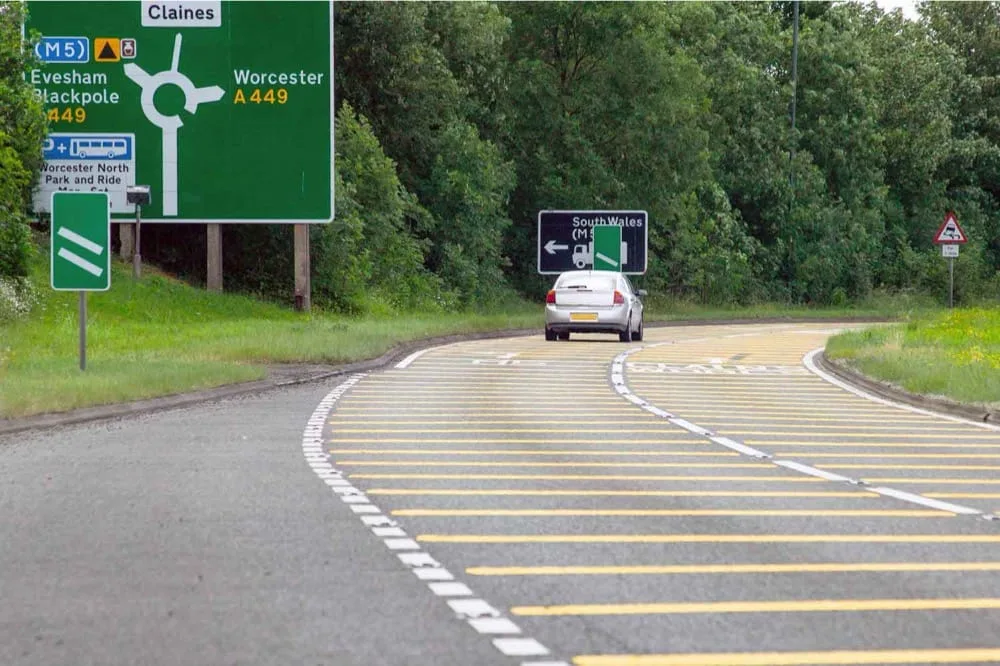
To help you choose the correct lane
To help you keep the correct separation distance
To warn you to slow down
To tell you the distance to the roundabout
Show the answer
To warn you to slow downThis was the right answer
These lines are a device often found on the approach to a roundabout or a dangerous junction. They become closer together as you approach the hazard, warning you to slow down.
You're at a pelican crossing. What does the flashing amber light mean?
Stop and wait for the green light
Stop and wait for the red light
Give way to pedestrians waiting to cross
Give way to pedestrians on the crossing
Show the answer
Give way to pedestrians on the crossingThis was the right answer
Pelican crossings are signal-controlled crossings operated by pedestrians. Push-button controls change the signals. Pelican crossings have no red-and-amber stage before green. Instead, they have a flashing amber light, which means you must give way to pedestrians on the crossing, but if it's clear, you may continue.
Why should you never wave people across at pedestrian crossings?
Because there may be another vehicle coming
Because they may not be looking
Because it's safer for you to carry on
Because they may not be ready to cross
Show the answer
Because there may be another vehicle comingThis was the right answer
If people are waiting to use a pedestrian crossing, slow down and be prepared to stop. Don't wave them across the road, as another driver may not have seen them or your signal and may not be able to stop.
At a puffin crossing, which colour traffic light follows the green light?
Steady red
Flashing amber
Steady amber
Flashing green
Show the answer
Steady amberThis was the right answer
Puffin crossings have infra-red sensors that detect when pedestrians are crossing and hold the red traffic signal until the crossing is clear. The use of a sensor means there's no flashing amber phase, as there is with a pelican crossing; the lights follow the same sequence as traffic lights.
What should you do when you're being followed by an ambulance showing a flashing blue beacon?
Move over as soon as it's safe to do so
Accelerate hard to get away from it
Maintain your speed and course
Brake harshly and immediately stop in the road
Show the answer
Move over as soon as it's safe to do soThis was the right answer
When an emergency vehicle is behind with its blue lights flashing, you must remain calm and look ahead for a safe place to move over to let it pass. If you're waiting at red traffic lights, don't attempt to clear the way by driving past the red light; this is both dangerous and a traffic offence.
What type of emergency vehicle is fitted with a green flashing beacon?
Fire engine
Road gritter
Ambulance
Doctor's car
Show the answer
Doctor's carThis was the right answer
A green flashing beacon on a vehicle means the driver or passenger is a doctor on an emergency call. Give way to them if it's safe to do so. Be aware that the vehicle may be travelling quickly.
Diamond-shaped signs give instructions to drivers of which vehicles?
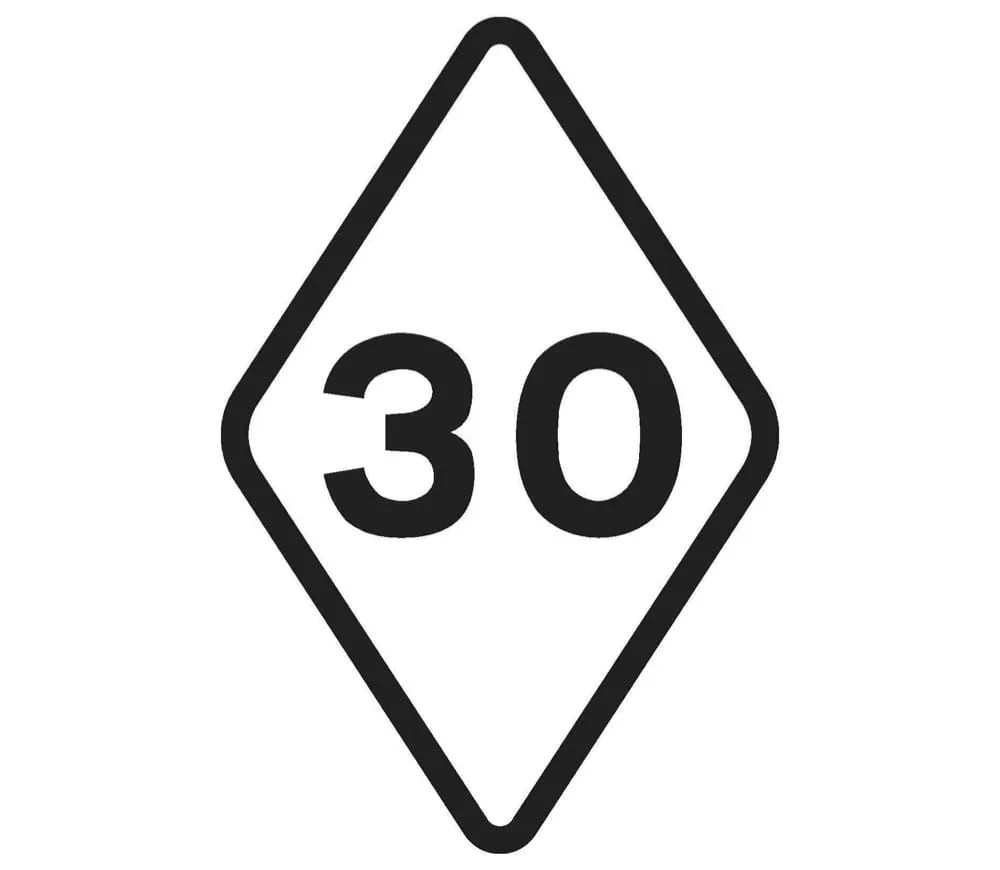
Trams
Buses
Lorries
Taxis
Show the answer
TramsThis was the right answer
Diamond-shaped signs apply to tram drivers. You should know their meaning so that you're aware of the priorities and are able to anticipate the actions of the driver.
Apart from routine maintenance, when should you check your engine's oil level?
Before a long journey
When the engine is hot
Early in the morning
Before carrying a passenger
Show the answer
Before a long journeyThis was the right answer
Before setting out on a long journey, check the oil level, as an engine can use more oil on a long journey than on shorter trips. Insufficient oil can lead to excessive wear and engine damage.
Why have 'Red Routes' been introduced into major cities?
To raise the speed limits
To help the traffic flow
To provide better parking
To allow lorries to load more freely
Show the answer
To help the traffic flowThis was the right answer
Traffic signs and continuous red lines painted along the edge of the road identify a Red Route. Parking is banned along these routes and enforcement officers have powers to remove any vehicle that's illegally parked. These powers are in place to ensure the route remains unobstructed and so help the free flow of traffic.
What's the purpose of these road humps?
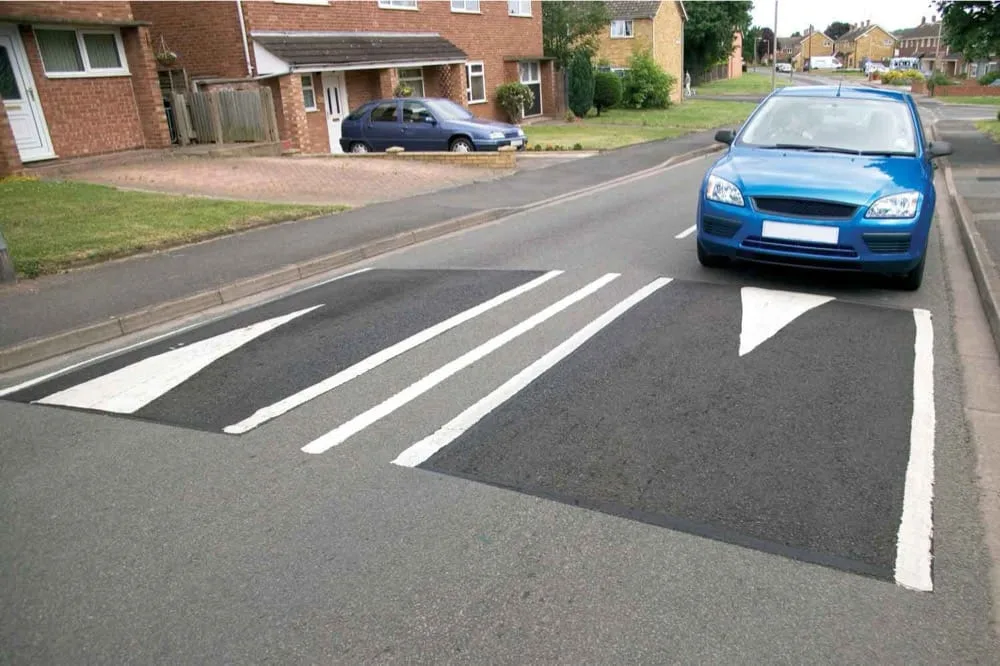
To prevent buses from using these roads
To test vehicle suspension units
To calibrate satellite navigation systems
To slow traffic
Show the answer
To slow trafficThis was the right answer
Road humps, chicanes and narrowings are all traffic-calming measures designed to keep vehicle speeds low. They're used to protect vulnerable road users near areas such as housing estates and shopping centres.
What does this sign mean?

The road goes steeply uphill
The road goes steeply downhill
The road bends sharply to the left
The road is closed further ahead
Show the answer
The road bends sharply to the leftThis was the right answer
A black-and-white chevron sign gives an advance warning to drivers that the road ahead bends sharply in the direction indicated by the chevron. This advance information allows drivers to adjust their speed in good time and select the correct gear for their speed.
What should you do if you're driving behind a cyclist who's giving a right turn signal?
Overtake before the cyclist gets to the junction
Flash your headlights at the cyclist
Slow down and allow the cyclist to turn
Squeeze past the cyclist on the left-hand side
Show the answer
Slow down and allow the cyclist to turnThis was the right answer
Keep well back and allow the cyclist room to take up the correct position for the turn. Don't get too close behind or try to squeeze past.
Why is a toucan crossing different from a puffin crossing?
Moped riders can ride across it with pedestrians
It's controlled by a traffic warden
It's controlled by two flashing lights
Pedestrians and cyclists can use it together
Show the answer
Pedestrians and cyclists can use it togetherThis was the right answer
Puffin crossings are for use by pedestrians. Cyclists must dismount and push their bicycle over the crossing. Toucan crossings are shared by pedestrians and cyclists, who are permitted to cycle over the crossing. Toucan roadside signals show an icon of a pedestrian and a cyclist together.
How is a toucan crossing different from a pelican crossing?
At a toucan crossing, cyclists can cross with pedestrians
There are no road markings at a toucan crossing
There's a continuously flashing amber beacon at a toucan crossing
At a toucan crossing, you only stop if someone is waiting to cross
Show the answer
At a toucan crossing, cyclists can cross with pedestriansThis was the right answer
There are some crossings where cycle routes lead cyclists to cross at the same place as pedestrians. These are called toucan crossings. Always look out for cyclists, as they're likely to be approaching faster than pedestrians.
How will a school crossing patrol signal you to stop?
By pointing to children on the opposite pavement
By displaying a red light
By displaying a 'stop' sign
By giving you an arm signal
Show the answer
By displaying a 'stop' signThis was the right answer
As you approach a school crossing patrol, you may see two amber lights, one above the other and flashing alternately. This will be accompanied by a 'school' warning sign. The school crossing patrol will display a 'stop' sign, so you must stop. Don't wave anyone across the road, get impatient or rev your engine.
What does it mean when you see a pedestrian carrying a white stick that has a red band or bands?
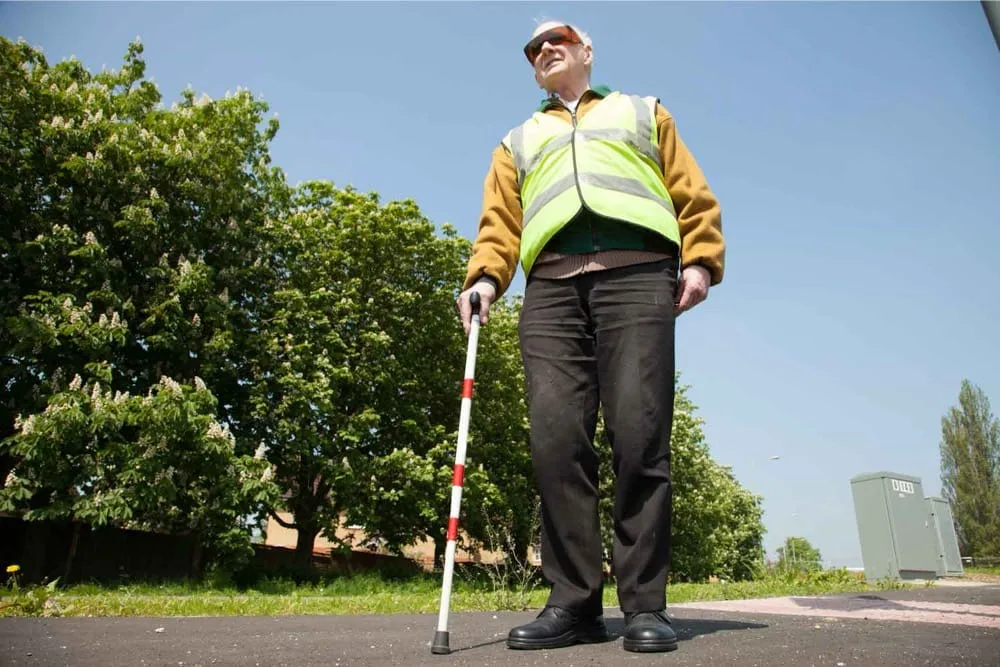
The person is physically disabled
The person is a pensioner
The person has memory problems
The person is deaf and blind
Show the answer
The person is deaf and blindThis was the right answer
If someone is deaf as well as blind, they may be carrying a white stick with a red reflective band or bands.
You can't know whether a pedestrian is deaf. Don't assume that everyone can hear you approaching.
What should you do if you see two elderly pedestrians about to cross the road ahead?
Expect them to wait for you to pass
Speed up to get past them quickly
Stop and wave them across the road
Be careful; they may misjudge your speed
Show the answer
Be careful; they may misjudge your speedThis was the right answer
Elderly people may misjudge how far away you are and how fast you're travelling. This may cause them to step into the road when you would expect a pedestrian to wait. They may also walk slowly and so could take a long time to cross the road.
What should you do when you approach a bus signalling to move away from a bus stop?
Get past before it moves
Allow it to move off, if it's safe to do so
Flash your headlights as you approach
Signal left and wave the bus on
Show the answer
Allow it to move off, if it's safe to do soThis was the right answer
Give way to buses if you can do so safely, especially when they signal to move off from a bus stop. Look out for people who've just got off the bus, as they may try to cross the road. Don't try to accelerate past before the bus starts moving, and don't flash your headlights; other road users may be misled by this signal.
Which vehicle is least likely to be affected by side winds?
Bicycle
Motorcycle
High-sided vehicle
Car
Show the answer
CarThis was the right answer
Although cars are the least likely to be affected, side winds can affect anyone, especially
• after overtaking a large vehicle
• when passing gaps between hedges or buildings
• on exposed sections of road.
More driving instructor topics
3 moreEvery question in this bank sits in one of these, and each one is a page like this.